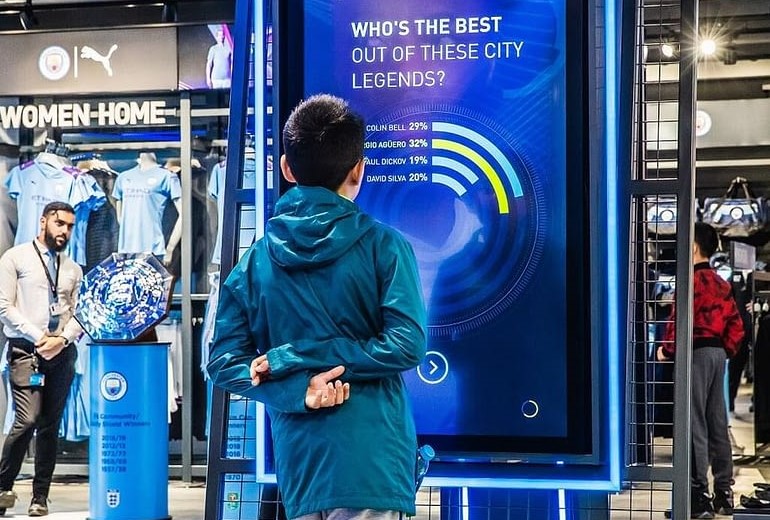
COVID-19 has accelerated the transformation of retail faster than we would ever have predicted. Now, marketing teams need to work harder to encourage consumers off their sofas and back into stores.
Both established and emerging brands need to compete with each other in order to direct footfall into their shops. They need to show that what they are delivering offers over and above what others may be able to offer, potentially for a cheaper price, via online and alternative sales and promotional methods.
Influencer marketing and PR stunts are right for some brands – and may be viewed as more exciting or innovative forms of marketing. However, I believe this does not have to be the case and definitely should not be a brand’s only focus of investment.
The case for digital display marketing
 Marketing has always been a vital part of business and the diversity of the options available has grown hugely over the last decade. The types of marketing activity that businesses invest in can vary hugely but in the current period of reduced economic security, the effort to build trust between retailers and their consumer is vital.
With the challenges of the last 18 months, it is vital that marketing is used clearly and intelligently.
Creative use of experiential technology gives retailers the ability to virtually transport customers into a scenario or location which allow customers to fully embrace the brand in an immersive way.
Impactful visual installations can also make certain products stand out. When done correctly, customers can quickly and easily locate what they are looking for with just a few taps of a screen! However, for all of these solutions to have impact, there are a few steps all marketeers should consider.
The past year has transformed how people shop for all sorts of products. We have seen the fall of some of the biggest names on the high street, including the Arcadia group in the UK and JCPenney and Sears in the US. We’ve also seen the huge growth in online and alternative retail methods.
As stores closed their doors due to government restrictions, consumers have grown used to browsing on the internet rather than in person. The ease of next day delivery and the ability to buy without interacting with salespeople – or stores at all – has also left more people reluctant to venture out for products they can buy from home.
The value of traditional sales techniques, such as knowledgeable salespeople and convenient browsing are no longer enough and have been replaced in priority by people’s desire for convenience.
Brands need to make consumers rethink their priorities…
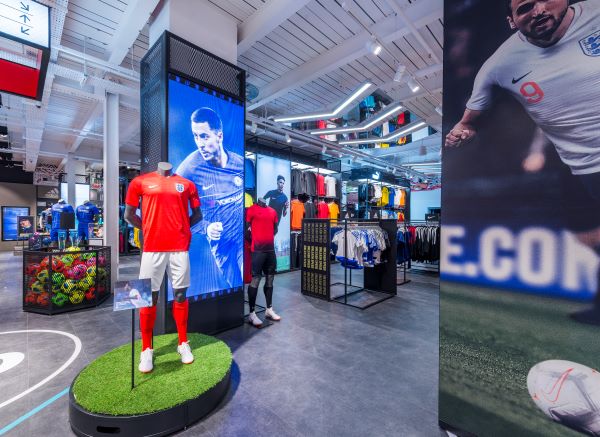 …This means re-introducing real life shopping as an attractive option and reminding people of its benefits. A click-and-receive retail offering is limited in its scope for producing memorable experiences.
The physical retail space, however, can provide a multi-dimensional experience which blends the physical and the digital in limitless ways.
The priority for in-store marketing is to shout out at the consumer and make them want to cross the threshold. Their efforts need to ensure traditional stores add value to a brand, justifying the rent and offering more than their competitors who operate solely online. They need to demonstrate that by entering a store you are getting more and risking less.
It is likely that the next few years will see a reduction in the number of stores kept open, yet the investment in those which remain will also likely increase.
The concept of flagship stores will become all the more relevant for those looking for additional support and engagement in their purchase and competition between brands in this space will be more evident than ever.
Marketing within these stores will help define the identity of a brand and ensure it stands out from the competition. Tthis marketing is multi-level. It is about getting people through the door but then ensuring they stay, make a purchase and return in the future.
Clever use of technology, such as the use of informational totems or touch screen devices help cross the divide between the physical and the digital. Moreover, they provide an improved means of communicating advice and information.
Case study: the digitalised service station
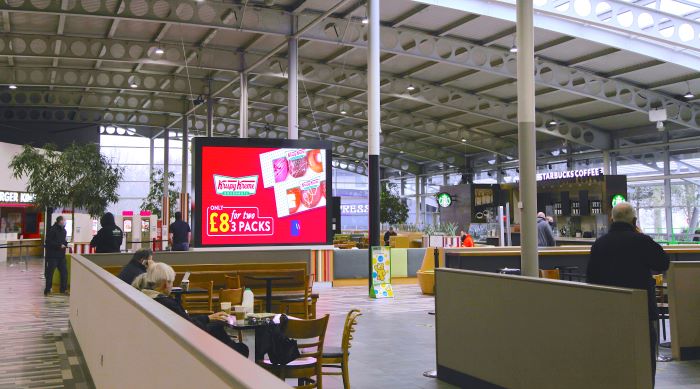
 At inurface we have used these solutions at sites, including over 13 Welcome Break service stations, throughout the UK. Here, integrated and clear signage, both large scale and small, have been used to display menus, brand content and news to ensure that people can quickly and easily locate the facilities they need, in an environment they may not visit often or be familiar with.
The placement of these at the front of stores, and throughout, means that shopper’s confidence in a brand is elevated from the offset and then maintained throughout their visit. While it may not fall within the obvious marketing and promotional concept it is about demonstrating that a brand is taking their customers seriously and investing to ensure their safety and enjoyment within stores.
Given the current climate, careful consideration of what technology is used and the information they display for their users is essential. Correctly executed installations like this, alongside clear branding, can reassure visitors and increase how comfortable they feel in the setting and how likely they might be to return.
Clever marketing in this way can potentially and subconsciously increase customer trust and alliance for a brand. This could be as simple as ensuring messaging is up-to-date and relevant for shoppers or that exciting deals and best products are displayed in an engaging manner. However, a bad experience, where information is unclear or confusing, will be enough to put individuals off returning to a store for good.
Lighting up the shop window
With multiple retailers jostling for space, creative and professional marketing can be the difference between individuals entering a store or walking by and visiting a competitor.
The shop window, one of the oldest sales tools available to a business, continues to be pivotal. But that doesn’t mean it can stand still…
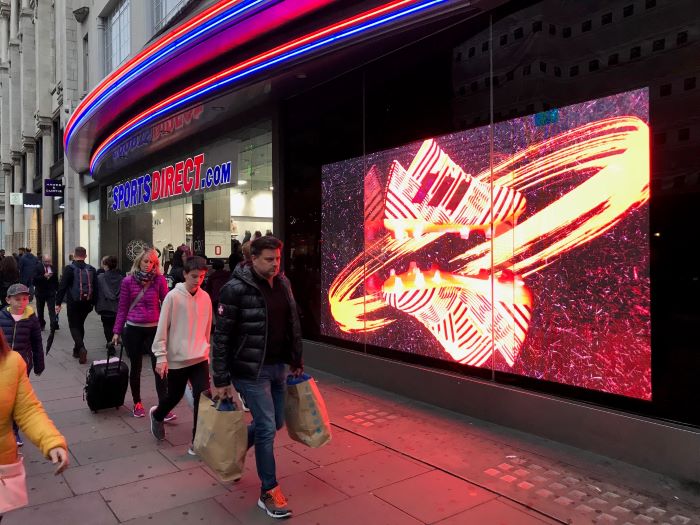
A shop window can now provide the focal point of a wider creative campaign. Bright, bold and high quality visuals highlighting brand offerings can link to their other multi-platform marketing activity. They can also demonstrate products in real life settings to help sell the aspirational lifestyle, in a much more visually engaging way than is possible on a small laptop or computer screen.
Screens can be installed in otherwise dead space, making a useful tool of an otherwise wasted area.
However, not all digital displays are equal. Pixilated images or outdated clunky displays based on creaky technology are more likely to undermine a retail experience.
Inside the store
Concessionary retail is another where we’ve seen the use of engaging technology having a transformative effect. Although scale is sometimes limited, we can instead focus on both audio and visual solutions which draw customers to one stand over another. Recently we worked with KYLESKIN as they moved to the UK and into Harrods and Selfridges.
KYLESKIN needed to stand out from the other more established brands they were sitting alongside. We used screens to not only highlight products but also encourage interaction through tutorials, promotional offers, and reviews. This meant shoppers were able to engage with the brand and learn about its unique selling points in a fun and interactive way.
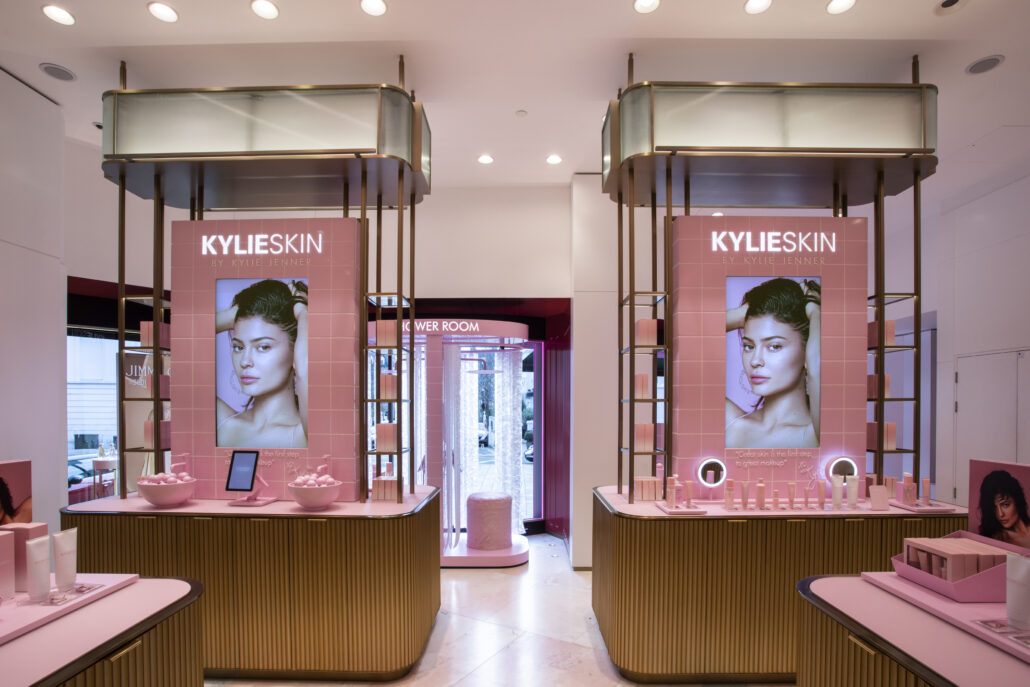
Displays and screens can also have a transformative effect on the look and feel of the physical space and a customer’s experience. Thinking about where people are most likely to be a captive audience; by elevators, on escalators or while queuing at a till point can help shape where it is most logical to invest in high impact signage and displays where products can be marketed to a receptive audience.
Delivering virtual worlds to real customers
Events-based experiential installations can make a store a destination rather than merely a service provider. Visitors can be transported into a brand’s world via virtual reality, 4D technology and bespoke programming capability. Whether it’s the ability to see yourself within a branded setting, or the opportunity to engage in a unique way with the brand, it’s about moving away from the hard sell, letting the concept do the work and winning brand loyalty through impactful and tailored engagement.
A great example of this is our work with Sports Direct where we have focused on bringing elements of experiential to their physical flagship stores. We’ve introduced concepts such as “interactive selfie stations” and “boomerang mirrors” which encourage brand interaction and increase average visit time to stores, which in turn can increase the likelihood of purchase.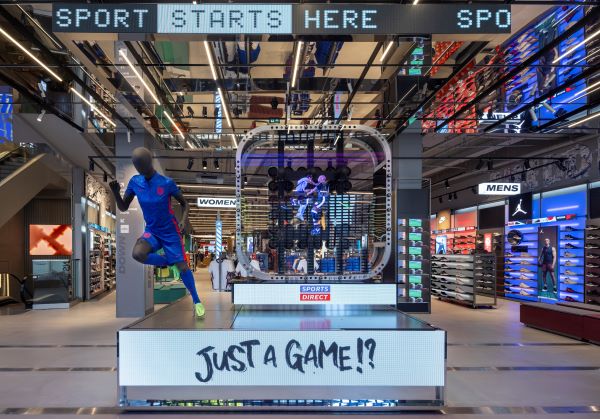
Data-driven digital displays
From a marketeer’s perspective these installs can have an additional benefit. The technology we can offer today allows us to gather information as well as provide it. Whether that’s engagement with a certain product or the translation between use of certain technologies and sales. Over time businesses can learn from their approaches, tailoring them to maximise the most effective strategies.
Sports Direct’s flagship installs gather data and measure audience engagement with every interaction. This ensures their marketing team are able to accurately analyse their customers, their movements through a store and levels of engagement. Based on the results, they can tweak current installations and shape future campaigns.
Can digital displays help save physical stores?
We’re at a pivotal time for retail. Sadly, some stores are unlikely to survive. Investment at a time of financial uncertainly is a daunting prospect. But we need to look at the longer-term future of the industry and the trends will likely shape it.
In-store marketing technology, which can be built on, adapted, and updated over time, is not only a useful sales tool but demonstrates to prospective buyers that you are investing in them just as you would like them to invest in you.
For traditional bricks-and-mortar retailers, an investment in in-store marketing is as vital as investing in the store itself, the staff employed to work there and the brand.
A combination of traditional and innovative approaches, linked through a cohesive marketing plan, will ensure the strongest offering and the best chance for prospering into the future.