Tony Kemp shares top tips for companies wanting to make the most of their direct mail opportunities to engage with customers in a busy marketplace.

Tony Kemp shares top tips for companies wanting to make the most of their direct mail opportunities to engage with customers in a busy marketplace.
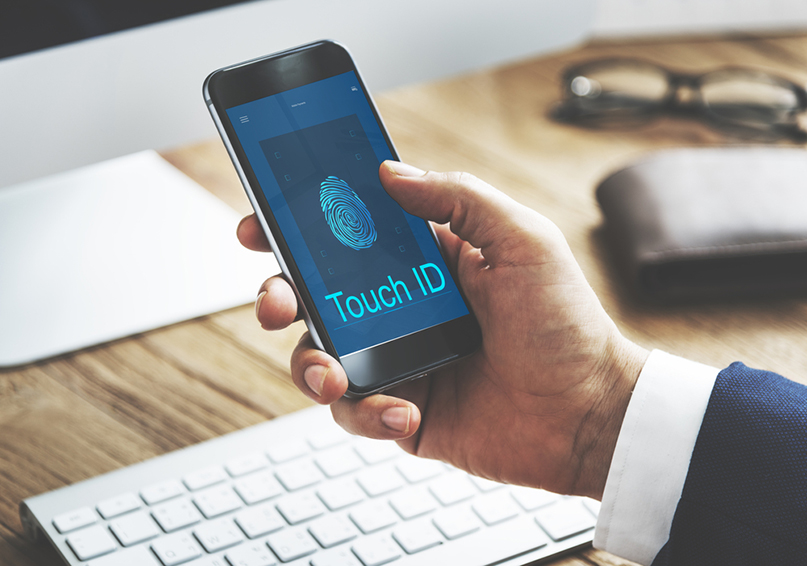
Do ‘digital natives’ care about privacy? Whether they do or not, Richard Beaumont says its a deep-seated cultural expectation that businesses should remain well aware of.
Katharine Hulls (pictured) says the barriers to personalisation – both cultural and technical – are being dismantled one by one. First they said customers didn’t want personalisation. Nonsense – not only do customers want it, they expect it. Then there was no affordable way of storing the depth of granular data required to deliver that personal…
A disgruntled IT chief working at UK supermarket chain Morrisons has been handed an eight-year prison sentence for exposing the company’s 100,000-strong payroll database – including staff names, addresses and bank details – in revenge for being disciplined. Bradford Crown Court had heard how IT auditor Andrew Skelton had been incensed when bosses accused him…
44% of men paid £21,000-£30,000 while 43% of women earn less than £20,000 80% of top salaries go to men A new study by digital recruitment agency, The Candidate, has revealed that men are paid on average 9% more than women across a variety of roles in the thriving digital industry. Data generated for the…
Despite the clear benefits of aligning sales and marketing teams, 40 per cent of British companies have yet to align their sales goals with their marketing activities, according to research conducted by specialist recruiter Randstad Sales, Marketing and Retail. Four in ten of sales and marketing professionals surveyed across the country say their companies have yet…

A campaign that offers 97 Swedish people once-in-a-lifetime opportunities that will turn them into brand ambassadors for Estonia, has been designed to celebrate the wide variety of activities that the country has to offer.
But new research reveals emotional connections are harder to achieve with increasingly cynical consumers in today’s complex, multi-channel media landscape. The Smash Martians (pictured), BT’s ‘you got an ology?’ and Yellow Pages’ ‘J.R. Hartley’ have been voted the UK’s most memorable ‘pre-internet’ ads, in a poll of 2,000 UK consumers that also highlights the challenges…

What is big data? Simply put, it refers to an extremely large set of information, and by association its growth and availability, and its implied subsequent usage. We have never previously lived in a world where we have such a potential to share information about ourselves and mine information about others; their thoughts and feelings, their buying and voting habits; their likes and dislikes; and the amount of time spent on each of these things.
Research from Visa Europe reveals that UK mobile payments are projected to hit some £1.2bn a week by 2020, with six in ten expecting to use their mobile devices in the UK for payments at least once a week in the next five years.
The average shopper reckons they will spend £27 via mobile each week by 2020, £10 more than today, and nearly a quarter predict they will spend around £50 a week using their mobile by 2020.
While apps and music are still the items purchased most frequently via mobile devices now, Visa has seen an increasing number of consumers already buying higher-ticket items, with electronics (23%) and clothes (22%) among their top-five most bought m-commerce items.
The British embrace of digital payments is a sign of shoppers’ growing comfort with new methods to pay as they become more widely available, easier to use and better understood. With the increasing publicity around m-commerce options, digital wallets and contactless payments, 43% of shoppers say they would be interested in using a mobile wallet service and nearly half (47%) are interested in using their smartphone to make everyday contactless payments in a shop.
Jeremy Nicholds (pictured), executive director for mobile, Visa Europe, said: “While we’re excited to see consumers saying they expect to triple their weekly spend using mobile payments over the next five years, we at Visa think those  numbers could be rather conservative and that the actual adoption rate will be much higher.
“This is particularly true when you look at the growth in contactless usage, which saw European usage grow by 2x and spend grow by 3x over the last 12 months.
“Contactless and online commerce enhancements have been key in paving the way for the next generation of mobile payment technology. The environmental conditions are already in place to meet the demands and expectations for digital payments.
“It’s no longer a question of ‘if’ consumers will embrace this new way to pay – it’s when – and for us the next 12 months are when mobile payments become mainstream.”
People who are already using their mobile devices to make transactions are also open to other mobile money services. The research highlights that these ‘mobile money’ users are five times more likely to be interested in paying friends through a smartphone app compared to non-users (48% vs. 9%). One in five would be open to social media payments too, compared with only one in twenty non-users.
When looking at the main concerns about mobile payments, a third of respondents admitted that they simply didn’t know enough about it. As with other new technologies, this has resulted in apprehension about issues like privacy, fraud and security.
Nicholds continued: “We’re witnessing a huge surge in interest from consumers in the UK for faster and more convenient payment methods as mobile and online commerce technologies continue to evolve at pace. This is why Visa Europe spends more than €200 million in on innovation including a number of secure payment technologies such as tokenisation to address security and convenience.
“When it comes to money, concerns over control and security are understandable though a simple lack of knowledge is often an underlying cause and consumers are quick to see the benefits of convenience. We’ve seen this with contactless card adoption – once people learn about the technology, see others using it and get used to paying with it, usage soars.”