Categories
Europe In the News UK

‘Impatience Index’ shows digital consumers expect responses in 10 minutes

New research reveals that consumers’ patience has, in some cases, truncated from 10 days to 10 minutes in the space of a generation. It also showsBedPhone that men are generally more impatient than women.

Omnibus research commissioned by customer service specialists KANA Software reveals that the proliferation of digital devices and social networks has transformed British consumers’ tolerance of waiting times. What KANA calls the ‘expectation reflex’ has truncated, in a generation, responses measured in working days to a matter of minutes.

David Moody, head of worldwide product strategy at KANA, said: “Little more than a decade ago, 10 working days was the conventional commitment of businesses and organisations when responding to complaints; and also the span of consumer tolerance. This no longer applies.”

KANA asked a statistically representative sample of UK adults how frequently they checked for communication responses on their devices.

The key findings:  

  • Men are generally more impatient than women. Men will check a device for responses on average every 22 minutes, 30 seconds. Women will check every 26 minutes, 15 seconds.
  • The 65+ age group checks devices more frequently than the 45-64-year-old group, reflecting the time they have available and their newly developed digital capabilities. This suggests digitally enabled pensioners will become the prolific and demanding complainants within five years.
  • One-fifth of all social media users will check for a response at least once an hour, with one in 20 checking every 10 minutes or more.

The most frequently checked devices across all age groups:

  • Email on smartphone – every 36 minutes
  • Checking Twitter for replies – every 39 minutes
  • Checking phones for texts – every 48 minutes
  • Checking for missed calls – every 49.25 minutes
  • Checking PC or laptop for email – every 54 minutes
  • Checking Facebook for messages – every 57 minutes
  • Checking voicemail – every 1 hour, 5 minutes

The frequency by age with which consumers check for responses on any device:

  • 18-24: Every 9 minutes, 50 seconds
  • 25-34: Every 9 minutes, 55 seconds
  • 35-44: Every 21 minutes
  • 45-54: Every 36 minutes
  • 65-plus: Every 47 minutes
  • 55-64: Every 1 hour, 30 minutes

KANA’s David Moody said: “In the past 10 years, organisations have lost the ‘time shield’ previously offered by postal services. The sense that a letter was on a journey and could be anywhere between the sender and the recipient has been lost. Our impression today is that as soon as we press send, ‘Mr or Ms Cosgrove in Complaints’ should be reading our complaint and working out how to respond. If we don’t hear back quickly, our impatience rises.”

He added: “Public-facing organisations have to recognise the adoption of social channels is truncating customer service processes. With smartphones acting as digital umbilical cords, the modern consumer is always connected. Unfortunately for service desks, ‘working days’ are an outdated concept.”

“Running a customer service operation is as complex as running air traffic control. Reductions in consumer tolerance can and should be met with a level of service that meets revised expectation. The technology already exists to support organisations that wish to monitor all channels and deal with queries and complaints in a rapid and personal fashion. Companies that don’t adjust their processes in the age of the adept digital consumer will be the losers.”

Additional findings  

KANA’s polling also found that the average UK consumer has routinely used more than seven digital communication channels in the past year, challenging most customer-facing businesses. The explosion of social media platforms targeted at consumers in the past 10 years and ease of adoption are creating headaches for businesses as more consumers take to social platforms, such as Facebook and Twitter, to seek help and air their grievances about poor service.

The average UK adult spends a ‘fraughtnight’ — or nearly two weeks — each year waiting for service, making complaints and using digital channels to direct their ire at companies that provide poor service.

The average UK consumer has used 7.4 channels of electronic communication in the past six months. Among18-to-24-year-olds, this figure rises to 8.4 channels. The figure is lowest in the 65+ age bracket, but even this age band uses 6.2 methods of electronic communication.

The poll found that an astonishing two weeks each year – equivalent to the amount of time typically taken for a summer holiday – are lost by every adult simply trying to get the service they need or expect from private and public sector organisations.

Categories
In the News

2014: a year of digital maturity with a rise in adoption rather than innovation, says report

Key trends emerging: the rise of niche social networks and social media in schools and an increasing emphasis on privacy in a post-Snowden era. 33     

This year will see the death of anonymity, social media in schools, pre-emptive computing and more. So says UK-based global communications agency Hotwire and digital specialists 33 Digital, who have announced the launch of the fifth annual Digital Trends Report 2014.

Each year, their specialist teams examine the concepts, applications, and mindsets that they predict will change communications for good. Last year they highlighted the rise of big data, digital health and social business. This year, the trends are focused on digital maturity rather than the emergence of new technology.

They predict that, for anyone in communications, 2014 will be a world where privacy will be built into services, artificial intelligence will take over from human advisors, digital artisans will take centre stage and companies will be able to serve each and every customer individually, thanks to the adoption of social business principles. They sum up: we are at the top of an exciting year!

Their ten trends for 2014 are:

  1. Niche social networks – networks such as Strava for cyclists, StyledOn for fashionistas, Jelly for knowledge-sharing and Current for businesspeople have emerged, meaning that social media management for clients will have to examine the relevant industry-specific networks as well as Facebook, Twitter and LinkedIn;
  2. Data for the moment – the infamous Oreo Superbowl tweet has gone down in social media history, but in 2014 reacting to audience and other data immediately will become commonplace; the trick will be in combining that data and creativity for flawless campaign execution;
  3. Digitisation of retail – shoppers are no longer limited to the digital versions of bricks and mortar stores or online ecommerce behemoths. Instead content providers will become virtual storefronts, where producers sell directly to interested consumers;
  4. Death of anonymity – in the wake of the NSA revelations, brands will strive to regain our trust in privacy. For communicators, this means ensuring transparency, accountability and instilling confidence in use of data;
  5. Pre-emptive computing – Google Now already predicts what information you need at any given time, and this level of pre-emptive computing will come into its own in 2014;
  6. Social media in school – instead of shunning social media, schools will start to use it to their advantage, with platforms like Edmodo and Skype in the Classroom specifically designed to improve education;
  7. The digital artisans – as the public have fallen in love with aged effects from Instagram, sketching on iPads and USB typewriters, this penchant for the vintage will have a knock on effect for companies as brands strive to create the same feel for homely authenticity revealing the story behind the brand;
  8. From customers to community – customer services and social media have been coming together for years, but 2014 will be the year that customer services loses its reputation for starched-collar-stuffiness and community managers gain the authority of the organisation;
  9. Big media is back – business models for the media are shifting, but the biggest opportunity is the change in expectations for the media consumer: we’re all big media now;
  10. Measurement – it will become essential to properly provide ROI on communications activities, and the breadth of digital tools available mean that measurement will become commonplace across communications strategies.

Peter Sigrist, editor of the report and MD, 33 Digital, said: “This year, we expect our clients to be impacted less by new service launches, and more by the opportunities presented by those that exist. This technology has now passed the fascination period of ‘how it works’, and instead brands and communicators will simply ask ‘what can we do with it?’”

Alex MacLaverty, UK Group MD at Hotwire, said: “Our annual report represents some of the most forward-thinking and specialist knowledge that our team has to offer. Over the last five years we have correctly identified many of the technologies and behaviours that have shaped the communications industry, and the shift to wide-scale adoption now is just as significant. What is most exciting is how we translate this knowledge into more effective ways of engaging with our clients’ customers and the wider influencer base.”

Visit the Digital Trends Report website to view excerpts from the report or download the full PDF.

Categories
In the News

Mobile augmented reality revenues to exceed $1bn annually by 2015, says researcher

‘Smart glasses offer longer term monetisation opportunities’

A new report from Juniper Research has found that annual revenues from mobile augmented reality (AR) services and applications will reach $1.2 billionScreenshots Partners with background.Funda by 2015, up from just over $180 million last year.

The report, Mobile Augmented Reality: Smartphones, Tablets and Smart Glasses 2013-2018, found that games (which accounted for more than 40% of AR downloads in 2013) will continue to deliver the largest revenue stream for the foreseeable future. However, it observed that with AR increasingly deployed within mainstream lifestyle, enterprise and general entertainment applications, each of these sectors should achieve annual mobile AR revenues in excess of $1 billion within 5-6 years.

Brand engagement boosting consumer adoption

According to the report, consumer adoption of AR applications was being increasingly fuelled by the wider engagement of brands and retailers with mobile channels over the past 12-18 months. With mobile now recognised as a primary engagement channel, brands such as Unilever, Nestle and Heinz have identified AR as a key means of enhancing and increasing engagement within campaigns.

It also highlighted the fact that while revenues would primarily be driven via smartphones, there was considerable potential for AR app monetisation through smart wearables: Google Glass will be launched later this year, while Samsung is rumoured to be showcasing its own smart glasses before the end of 2014.

However, the report cautioned that AR stakeholders needed to continue to increase consumer awareness of the technology, while the prospect remained for the introduction of legislation constraining or even prohibiting certain applications of AR on safety, privacy and libel grounds.

Other findings from the report include:

  • AR app user numbers will approach 200 million by 2018.
  • Developers must be aware of device limitations when scoping out AR apps.

The complimentary Mobile Augmented Reality ~ The 8th Mass Medium whitepaper is available to download from the Juniper website together with further details of the full report and the attendant Interactive Forecast Excel, which enables clients to interrogate the assumptions behind Juniper’s forecasts and create alternative future outputs.

Categories
In the News USA

Safeguard consumer data – USA DMA re-issues rallying cry

Board approves new ethical guidelines; calls for new measures to enhance data security 

In response to the recent spate of data security breaches on retailers and others, the USA Direct Marketing Association (DMA) has issued a call to actionLinda Woolley DMA2012 (WEB)to all data-driven marketers to recommit to the organisation’s long-standing commitment to ensuring the security of consumer data.

The call to action derived from the approval of new Business Ethical Guidelines around data security by the association’s board of directors, and outlines several new steps that the DMA will take to guide industry best practices and advocate strong data security protections before policymakers at the federal and state levels.

DMA president/CEO Linda Woolley (pictured) said: “Earning consumer trust requires proactive, purposeful action.

“Recent headlines have been full of news about data breaches and, while such situations are a risk of modern business and difficult to prevent, DMA believes that the best defence is a strong offence. DMA standards help businesses ensure that they are protected and ready.”

DMA has championed the setting of guidelines and representing the business community before Congress and the Federal Trade Commission (FTC) on issues of data security and breach notification. It is now calling on every data-driven marketer to take proactive measures to further enhance data security across the industry, and to:

  • Develop and implement a data integrity and governance programme;
  • Read and utilise in all marketing practices the principles and guidance outlined in the updated Ethical Guidelines for data security and other marketing practices issues by DMA as part of our public trust with consumers;
  • Continue to work as part of DMA with policymakers to enact a national standard for data breach notification. DMA has been supportive of a federal breach notification law; and
  • Work with internal and industry stakeholders to identify additional data security measures and practices to help reduce the risk of data breaches across the ecosystem.

The DMA board has approved revisions to DMA’s Guidelines for Ethical Business Practice, which have provided data-driven marketers with generally accepted principles of conduct and formed the basis for industry-wide self-regulatory enforcement for more than 40 years. The updates are in the areas of data security, mobile applications and retailer data.

Categories
UK

Planning UK football-linked promos during the World Cup? New research reveals fans’ buying plans

David Cole (pictured) shares the results of research undertaken last month.  davidcole-md-fastmap-262

If you’re looking to place ads, run promotions or centre campaigns around World Cup match viewing in the UK, these consumer insights may help you to maximise the effectiveness of your budget.
It is worth bearing in mind that 47% of adults are not planning to watch the World Cup at all and three-quarters of these plan to watch other channels instead. So, if your target market includes non-fans, advertising/promoting around the strongest competing programmes could both save you money and help you to avoid clutter.

But 71% of those who are planning to watch the games, intend to take advantage of offers from brands they don’t normally use to enhance their viewing experience and to use the profitable betting tips for each game– a great opportunity for companies to achieve high levels of sampling.

When online research company fast.MAP asked a demographically-balanced panel of 2,500 adults in January about their plans to buy extra snacks, drinks and foods to enjoy around World Cup matches, firstly, we discovered that English fans have a pretty realistic view of our team’s chances of winning.

  • 83% expect our elimination before the semi-finals and only 5% expect us to win.
  • 26% expect England to be eliminated at the group stage and after that, a third will watch fewer matches. Half expect elimination before the quarter finals and a quarter of these will then stop watching.
  • Overall, a quarter of those intending to watch will stop viewing once England is eliminated, but 43% will watch whatever happens.

So marketers who share this pessimistic view of England’s chances and are planning UK TV campaigns might want to capitalise on those early matches, because 75% plan to buy extra crisps, snacks and drinks to eat while viewing.

And meat and beer brands might want to tight-target football fanatics for the best chance of increasing sales, because the keener the football fan the more likely he/she is to buy beer and barbeque meat for World Cup games. Male football addicts under-34 are the most likely to try promoted brands. Altogether, 15% are planning barbeques.

The over-55s are least likely to buy extra food and drink; only 13% plan to buy for use before and13% for during games.

And carry-out food establishments should prepare for a World Cup take-away bonanza, because 40% plan to eat takeaways and 49% pizza, while viewing games.

Similarly, crisp, snack and drinks retailers would be wise to keep the shelves stacked because 75% plan to buy these (especially the 18 to 24s, a quarter of whom intend to consume them before and 4% during the game. 57% across all demographics will consume beer.

For more at-a-glance insights click here  to view the fast.MAP World Cup Buying infographic.
David Cole is MD of online research company fast.MAP.

Categories
In the News

Cannes Lions community helps fight poverty

Eight projects selected to receive $100,000 for development and to attend workshop in March

The selection process of the third Cannes Chimera global communications challenge, set by the Cannes Chimera Initiative, has concluded with eightFP different projects from diverse countries around the world being chosen to each receive a prize of up to US$100,000.

The creative brief was launched during the 60th Cannes Lions International Festival of Creativity in June 2013, with a bid for new communication concepts that can incite the public to support an emerging international agenda to ensure that extreme poverty is virtually eliminated by 2030.

The Cannes Chimera initiative is a partnership and a competition focused on finding innovative communication approaches that can help address critical global development problems.

Nine hundred ideas from 79 countries were received answering to the ‘Help Lead the Fight Against Extreme Poverty’ brief. Facilitated by Cannes Lions, the entries have gone through a vigorous judging process by the Cannes Chimera, comprising the Cannes Lions 2013 Grand Prix winners.

Each winner will take part in a unique mentoring workshop next month with the Cannes Chimera, who will help take the ideas to a new level. Each winner is invited to go back to the Bill & Melinda Gates Foundation with a proposal for further funding of up to US$1 million to implement the idea.

The winning projects are:

The Share Exchange by Dentsu, Young & Rubicam, Singapore:

Facebook users become media owners by allowing brands to buy their personal Facebook space. Money paid by brands is then contributed to funds set up to eradicate extreme poverty. Additionally, each time an online activist opts to share a brand’s message, they will also share the latest facts on the fight against extreme poverty. Facebook users are therefore empowered to take action while their shares create awareness and generate funds.

Good Cents by Joe Public, South Africa:

Devising a ‘Good Cents’ button at the bottom of all online bank statements would allow users to round their bank balance and donate their surplus of cents to a dedicated fund with just one click.

The GAP index by venturethree, United Kingdom:

Develop the Global Anti Poverty index (GAP), the first global measure of extreme poverty to be carried on all major media outlets around the world. Based on the total number of people living in extreme poverty, the frequently updated GAP number will decrease in response to development programmes, economic progress and other positive factors, or will increase in response to war, crop failure or other catastrophic events.

The Act Button by Naked Communications, Australia:

In partnership with a major online news provider, the Act Button can be activated after an extreme poverty news story, allowing the user to share positive solutions that could play a role in changing the outcome of a particular news story.

$1.25 cube experience by JWT, Israel:

Create a pay-to-enter multi-sensory experience cube to get people in the Western World involved in the life struggle of people living in extreme poverty.

Gamers VS Poverty by DFCB Digital, The Philippines:

The Gamers for Poverty will provide users with in-game content information based on extreme poverty – new storylines, item upgrades, information linked to game and poverty – so by changing their view of the world, gamers can be heroes inside and outside the game world. Additionally the project aims to change the perception of gamers from being negative to positive.

One Two Five by PHD International, United Kingdom:

Create an internationally recognisable code to signal extreme poverty, which has the ability to transcend language and borders. As the numbers 911 or 999 signal emergency, #125 will be recognised as representing extreme poverty around the world. This simple, powerful, global campaign will be used to springboard a number of global awareness initiatives.

We See Women by Vital Voices Global Partnership, USA:

70% of extreme poverty sufferers are women and girls and there is an underlying pervasive cultural bias that relegates women and girls to secondary status or worse. As such, deeply ingrained beliefs about women first need to change. By harnessing strategic information available through Big Data, this project aims to distribute perception changing stories about women into places where women are marginalised and where existing mass communication channels don’t reach.

Philip Thomas, CEO of Lions Festivals, said: “It’s fantastic to see how our industry has risen to the latest Cannes Chimera challenge. We have such talented people in the business and to see how they are applying their creative abilities to really help others less fortunate but on a very ambitious and global scale is truly inspiring.

“These eight ideas will now go on to benefit from the forthcoming workshop with the Cannes Chimera with everybody working to the common goal of helping eradicate extreme poverty.”

Tom Scott, director of Global Brand & Innovation at the Bill & Melinda Gates Foundation, said: “Building greater public awareness and understanding of tough problems like extreme poverty is an important part of global progress—and ultimately, saving lives.

“We believe that tapping into the best creative minds can help us develop communications ideas that can change the world.”

The Cannes Chimera Initiative was launched by the Cannes Lions International Festival of Creativity, which brings together the global advertising and communications industry and the Bill & Melinda Gates Foundation, the world’s largest philanthropic foundation, in an effort to generate communications ideas that motivate global audiences to support change and take actions that address critical development issues.

The initiative issues a competitive brief to the creative community each year, with the next brief being launched at the Cannes Lions International Festival of Creativity in June. For more information about Cannes Chimera, click here. 

Categories
In the News

New domain endings – risk of cybersquatting

General availability of generic Top Level Domains (gTLDs) such as .bike, .clothing, .singles and .ventures means organisations need to be vigilant of new infringements.

Online businesses are being advised to be wary of cybersquatters and fraudsters as the first wave of new domain endings are made available to the general public for purchasing. Over the next few weeks, more than 30 new gTLDs will go on sale through registrars and online brand protection and domain name management specialist, NetNames, predicts there will be a spike in the volume of online threats that brands are facing.

As cyber-criminals take advantage of the trademark sunrise period coming to an end, major threats include:

  • Cybersquatting – with up to 20 new gTLDs being released in the coming months, there will be a vast increase in the number of web addresses that can be registered by ‘cybersquatters’ and infringe on well-known trademarks. Cybersquatters can then sell web addresses back to the trademark owners at an inflated price.
  • Fraud – the availability of domain endings, such as .clothing and .ventures, give cyber-criminals an opportunity to register reputable domains that trick consumers into thinking illegitimate websites are affiliated with a well-known brand. Fraudulent websites can then be used to distribute counterfeit goods and dilute the value of a brand online.
  • Phishing – with new web addresses effectively resetting the internet, there is a chance that brand owners will experience the return of phishing as new domains are launched. Fraudulent websites that look real can be infected by malware designed to steal personal information, such as passwords or credit card details, from unsuspecting customers. In addition, the availability of the first internationalised domain name (IDN), .shabaka which means .web in Arabic, will open up the internet and require businesses to monitor for fraudulent websites and domain name infringements across new international territories.

Stuart Fuller, director of commercial operations and communications at NetNames, tells of the highs and lows surrounding new domain endings: “The introduction of gTLDs offers brands a golden opportunity to exploit the online channels and strengthen their web presence. However, the availability of new web addresses that are open for anyone to register will change the online risk landscape and existing brand protection strategies.

“Online businesses need to develop a cost-effective trademark policing programme that balances registering trademarks in the Clearinghouse, identifying relevant domains and monitoring for any infringements.” He adds: “Determining the opportunities and threats that each gTLD represents to your business will provide a clearer picture of what domains to register and which trademarks need to be submitted to the Clearinghouse.

“Our advice is to focus on the gTLDs that are applicable to your business or sector and focus on developing an effective domain name policy that allows your organisation to register and operate the most relevant domains that will deliver benefits back to the business through increased online revenues or greater customer engagement.”


Categories
Uncategorised

Big data for marketing – tackling the challenges

Yves de Montcheuil (pictured) has tips to help you gain advantage for your business.Yves de Montcheuil (WEB)

Marketing has been one of the first business departments to appreciate the value of big data as a tool for commercial advantage.

Marketers were quick to recognise the benefit of getting instant insight into customers and using that understanding to influence behaviour at the point of sale. They were also ahead of the game in seeing the potential of analysing vast volumes of data to drive analysis and segmentation of different groups and achieve more accurate targeting of customers and prospects.

Understanding the theoretical benefits of big data is one thing. However, translating the theory into real commercial benefit is quite another. Here are five top tips, outlined to help marketing departments achieve this shift and deliver successful big data projects:

  1. Don’t worry too much about volume – Remember, big data is diverse in origin, style, consistency and quality. Size is not always important. Some organisations have to handle massive quantities of data. Others have smaller data sets to manage but more sources and formats to deal with. Always make sure you focus on the ‘right’ data. Whether you are looking at social media feeds, CRM records or sales performance: identify every relevant source and don’t get too worried if it’s not necessary to instantly expand your processes to manage vast quantities of data.
  2. Don’t waste the potential of your data – Some of the data needed for big data projects is easy to identify, such as transactional data used or generated by CRM or performance measurement tools. Much more is hidden on servers, log files or desktops and is often neglected. Some even goes to waste in the ‘exhaust fumes’ of IT. Typical examples are activity or sensor data that are not processed until errors or exceptions occur, but which can provide great insight even in normal operating conditions. All of this data is potentially relevant. Don’t limit your project to the first group: record it all and deploy collection mechanisms so that it adds business value.
  3. Don’t move everything – Too many marketing departments focus on breaking down data silos and bringing all the data together in one central location. Remember, it’s not always necessary to duplicate everything. Businesses need to think about making distribution as easy as possible beyond the data processing phase. You don’t need all the data physically in the same place in order to get a single view of it, as long as a logical layer exists that enables this data to be accessed transparently.
  4. Don’t focus on storage alone – Software frameworks should not just be repositories for big data. They also need to give marketers the opportunity to extract meaningful information from that data. Unfortunately, today’s businesses are not making full use of the processing tools and capabilities available to them. In order to draw out the intelligence needed, they should be applying the latest technology to harness that data, through data processing and analytics.
  5. Don’t treat big data in isolation – Sandboxes for testing technologies work well for proof-of-concepts, but when big data projects for marketing go live they need to be managed as an integral part of the business architecture rather than an isolated project. Your business will need to integrate big data applications with other systems – both upstream and downstream – and at the same time ensure big data is part of the business’s overall IT and information governance policy. Marketers may only be one constituent of this overall strategy, but it will have a big impact on them.

Forward thinking

Interest in big data for marketing is growing rapidly. In line with this we are seeing more companies rolling out strategies that address this core business need.

Leading-edge technologies are lowering the adoption barrier, making it easier for marketing departments to get started. Yet, moving pilot projects into mainstream IT requires more than just technology. If marketers take note and follow the five tips above, they should ensure their big data projects get off the ground and help drive success for the business as a whole.

Yves de Montcheuil is VP Marketing Talend.

Categories
Uncategorised

With big brands embracing Native Advertising, how do SMEs join the party?

Native advertising is set to dominate the content marketing landscape in 2014 as it emerges as a new and exciting way for businesses to revolutionise the way they advertise, says Rob Taylor (pictured)..

Often involving large brands, agencies and publishers, native advertising is one of the most innovative advertising platforms for 2014 and has the potential to help brands start new and rewarding conversations with many customers through valuable content. According to content marketing agency TAN Media, Native ad campaigns are now more accessible than ever to SMEs and independent business owners.

In this introduction to native advertising, we provide an overview of the practice and discuss what steps SMEs can take to start developing native projects.

So what exactly is native advertising?

There are a variety of definitions of native advertising. One way to describe it is as an evolution of the traditional advertorial that exists as a sub-set of content marketing.robert-taylor (WEB)

Typically, a piece of native content will be a blog, feature, case study or white paper that is ‘sponsored’ or ‘promoted’ by a company and hosted on the site of a publisher. The content looks and feels like a natural part of its surroundings and is not designed to be an intrusive advert.

Big brands are using publishers like Vanity Fair and Forbes. But as well as the big players, there are a whole host of publishers looking to work with firms of all sizes.

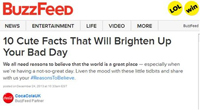
What does native advertising look like?BuzzFeed image

BuzzFeed is often held up as an exemplar of native, so let’s start there. Take a look at this post from Coca-Cola to get an idea. Notice the reference to Coca-Cola as a BuzzFeed ‘partner’ at the head of the piece.

Other examples are sponsored updates on social networks like Facebook, LinkedIn and Twitter.

According to Hexagram’s State of Native Advertising 2014 report, the most popular formats for native advertising projects are blog posts, used by 65% of its respondents, articles (63%), Facebook (56%), videos (52%), tweets (46%) and infographics (35%).

Why the rise of native?

On-site content marketing will remain a growth area, but when it comes to advertising on external sites, it is becoming more and more challenging for companies to succeed.

Display ads, once touted as the future of digital marketing, are declining in their impact. Put simply, many consumers have taught themselves to subconsciously ignore the ads while reading or watching digital content. Research from Adobe shows 68% of consumers find online ads “annoying” and “distracting” and 54% say online banner ads simply don’t work.

So, for some time, better, more effective advertising avenues have been needed. Into this space steps native advertising.

Adam Rock, managing director of TAN Media says: “Importantly, native content should not be overly promotional. It’s a post from BMW on five motoring trends for 2014, not a sales piece for its latest vehicle. It’s also an editorial piece by a local estate agent on the dos and don’ts of selling your home, not something about how great they are at marketing your home. It’s honest content that appeals to people.”

Why do native advertising? Does it work?

Research suggests that it works – when done properly. Importantly, native advertising is not just about generating click-throughs or views. It’s about developing strong relationships with consumers by offering them content they will want to read.

Research shows that native advertising is valued by brands. According to the Hexagram research:

  • The vast majority of publishers (84%), agencies (81%), and brands (78%) believe native advertising adds value for consumers
  • Brands and marketers use native advertising because it provides a more relevant message (67%), increases consumer engagement (63%), generates awareness or buzz (62%) and creates word of mouth (48%)
  • Publishers expect revenues from native advertising to increase by approximately 10% within a year: from an average of 20.4% of overall revenue today to 30.1% in one year’s time

How best to succeed with native advertising?

We think native advertising is an exciting way to develop relationships with customers over the long-term. But the number of companies jumping aboard the native train means that brands need to stand out from the competition.

Remember that there are just as many examples of bad native advertising as there are good, so it’s crucial that firms adopt effective native strategies. Key focus areas are transparency and making sure you offer high-value content. Transparency because it is crucial that consumers do not feel they are being fooled; excellent content because it needs to be good enough to be read and shared.

How can I take it to the next level?

Some large companies, with their own in-house marketing teams, are working directly with publishers on native advertising projects.

But smaller companies don’t always have the same resources. Some may start with writing and publishing their own news features and blogs on their own site. These can then be promoted using social media native advertising services, from Twitter, Facebook or LinkedIn.

Another option is to work with a specialist agency to develop and produce native content. They find that agencies have the ability to provide native content strategies, generate ideas, write and deliver good content and establish connections with publishing partners.

Is it time you got involved?

Rob Taylor is assistant content editor, the Press Association.

Categories
Uncategorised

The rise of merchandising 2.0 – how a simple T-shirt could help promote your brand

Philip Rooke (pictured) looks at how merchandising has evolved for marketing teams in the digital era.
As the CEO of an e-commerce platform, I spend most of my time trying to balance the things we could do with the diminishing ROI caused by too much complexity or doing too much.

Many CEOs and marketers faced with this issue have opted to drop old school basic marketing tools such as merchandising in favour of new trends without properly considering its ROI.Philip Rooke, CEO, Spreadshirt

Building a good brand is hard. The internet came along with the promise to make it easier but also added complexity with the need of a digital identity, multi-channels, social media and instant CRM to name a few – all with the aim of reaching new and engaging existing customers. Ironically, the internet is now also the driver behind the re-emergence of traditional tools of customer engagement such as merchandising, turning the humble T-shirt into an effective brand building weapon.

Modern print-on-demand combined with ecommerce techniques now mean that your brand can offer an infinite number of design and clothing options that customers will actually want to wear. There are few forms of lasting advertising that are as effective as T-shirts in building brand awareness. With the right material combined with a quality printing your message can last longer than a magazine advert or how long someone may remember a 30-second TV or radio spot.

So how exactly does a T-shirt help promote your brand?

Encourages brand loyalty

There is a huge social media industry behind getting customers to Like or follow your brand. This is considered the pinnacle of marketing and relationship building. And yet the act of following a brand is so easy it is almost meaningless. That a friend has Liked X or Y brand on Facebook barely registers in the mind of a consumer and even the follower rapidly sees the updates as wallpaper.

Nothing says ‘I Like’ more than wearing merchandising. By giving them something they love, the customer is not just following you but making you part of their everyday existence. They are likely to immediately feel more a part of what you’re doing and that means they’re more likely to stay loyal to your brand, because you have genuinely rewarded them for being part of it.

Your loyal fans can even be invited to post ideas for slogans and designs, and become part of the building campaign. Modern print-on-demand techniques via the internet now allow an infinite number of variations or designs.

Creates walking billboardsMerchandising 2

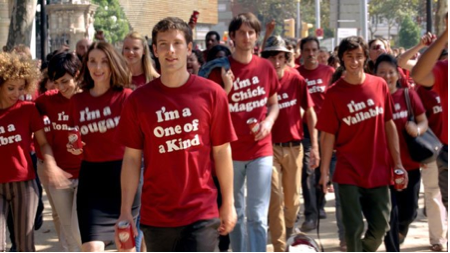
As well as engaging your loyal customer, you have also created an advertising medium in its own right. Your customer is now a walking billboard. A T-shirt travels as far as the person wearing it and can be seen in places traditional marketing campaigns cannot reach; such as work and social situations. And what’s more, it’s a billboard that comes with a large degree of personal endorsement from the wearer.

Customers will gladly showcase your brand if you let them. And they do not just stop there – they engage others, as advocates they often share pictures of themselves on Twitter and Facebook. Social marketing doesn’t get better than this. However, it is not just about having your logo or company name on shirts – it is about a creative and engaging way of showing your brand – sometimes this might be as minimal as the brand colours used in a design or a retro-version of the logo. Creates team spirit

Don’t forget people who work for you can be your biggest fans. Merchandising not only helps signal the social tribe but also who belongs to the corporate family. Employees are valuable assets but they’re rarely used to physically promote a brand. Printed T-shirts are a great way to utilise this and make your team feel valued.

When employees are totally engaged with your brand and feel great pride to be a part of it, they become part of your marketing arsenal. They will happily wear customised T-shirts with special seasonal offers, product launches or #hashtag campaigns so can reap the extra mileage your brand gets out of this.

Makes you stand out from the competition

Thanks to new technology, you no longer have to have big budget. Print-on-demand means that there is no longer need to bulk-buy or worry about storage. Or wait for that big campaign. From small local or internal projects to full international campaigns it is possible to create as many options as you like with no commitment to print runs. The best brands use this to experiment and really find the exciting messages that customers will actively want to wear.

And it’s simple to doMerchandising

The right platform can even provide the ecommerce website to put the campaign into. This reduces all the major costs and commitments that traditionally prevent marketers from trying new things. You don’t need to be a design techie, you simply upload the designs and the online platform takes care of the rest. You often don’t have to invest a single penny – it can be created on demand. If one person likes your shirt, the store ships one. If a hundred people want them, the store ships a hundred.

Merchandising 2.0 allows you to try something new with an old media, using new technology. It is about challenging old thinking about merchandising and how it can be used. Fans are not just people who press the Like button. They are active or want to be if you give them the chance. Yet, time after time, I see merchandising fail because the brand places just a logo or standardised marketing message on standard products. If you are going to try a new technology, then do something new. Really experiment to find out what the fans want and actively wear. This includes base product choices. Women do not wear men’s T-shirts!

But as with any kind of advertising, you should keep the medium in mind. There is only so much space available on a T-shirt and so much text that a person is willing to read. Personalised or attention-grabbing designs can help to ensure people are drawn to them, but make sure they are not so intricate that your brand’s message or logo gets lost, or the T-shirt won’t be best serving its purpose.

If you keep these things in mind, the value, durability and profile-raising potential could make the T-shirt a sound investment for any business.

Philip Rooke is CEO of Spreadshirt. Follow him on Twitter @PhilipRooke