In a world where the possibilities to engage with consumers are only increasing, it is time for marketers to utilise a DMP and effectively invest marketing budget.

In a world where the possibilities to engage with consumers are only increasing, it is time for marketers to utilise a DMP and effectively invest marketing budget.

 Computer manufacturer Lenovo has recently launched a campaign on the web called Pitch To Her, to empower rural girls through technology.
Though this is an India-specific campaign, it has seen a lot of interest from organisations and individuals from across the world – such as UN Women, UN Women Australia, Girls Not Brides, Adrianne Owings, Half the Sky Mvmt and Democracy Watch News.
The campaign is bringing to global attention YUWA, a social development platform for girls based in Jharkhand that imparts training in football, provides free education and creates awareness about social evils.
Hailing from the village of Hutup in Jharkhand, the YUWA girls are from a part of society where six out of ten girls are forced to drop out of school and become child brides. The girls came into the limelight on a national level in 2013 by bagging the bronze medal at the Gasteiz Cup in Spain. In 2014, they were invited to participate in the USA Cup.
This year, the mission taken up by YUWA and Lenovo is to empower the girls with technological knowledge that will propel them towards a smarter world. YUWA India Trust has therefore partnered with Lenovo to launch the national campaign, Pitch to Her, calling the brightest minds in India to enter ideas to ‘hack real world issues’.
As part of the project, the girls are using photography to show the world where they live and what they love. They are using 360-degree cameras to create a Google Maps Street View of their village: The YUWA girls put their village on Google Street View
Hutup does not even feature on the internet, so the first thing the girls are doing is to create a Wikipedia page, describing local facts and famous places, which they then aim to add to a detailed Wiki entry, along with pictures geo-tagged on the map: YUWA Girls Put Hutup on Wikipedia
While the girls were busy being introduced to and tinkering with technology, Lenovo captured their activity, made content articles and shared them for the world to see and invited the social audience to pitch cool ideas to the girls.
By mid-August, the campaign had led to:
This is a strong case of how brands in India and across the globe are moving from baseline to cause or hack marketing and engaging influencers to create real time content. Bhaskar Choudhuri, director, marketing, Lenovo India, said: “We are proud of our association with the YUWA girls. Despite hailing from a small town, they have the required firepower and understand that technology gives them the required platform to achieve their dreams. The primary objective of ‘Pitch to Her’ is to engage young individuals towards empowering the YUWA girls and in a way create an unforgettable, fun experience for these volunteers.”
The campaign ends on September 12.
Dino Forte tells how international brands can benefit from setting up a single customer service centre to increase global sales.

Most people of the appropriate age have positive memories of at least one or other of the ‘big splash’ TV ads of the 70s, 80s and 90s. In the UK, ads such as BT’s ‘you got an ology’ and ‘The Smash Martians’ (pictured below) are remembered fondly even today, and this is testament to the impact of pre-internet ads.
Of course, marketing today is a different beast. In today’s fragmented media landscape, marketers face considerable challenges in attempting to achieve similar levels of impact.
Acxiom recently published a report titled ‘Ad Campaigns Reimagined’, based on a survey of 2,000 UK consumers and a roundtable held with a group of marketing industry experts from Acxiom and Starcom MediaVest Group. This report examines broadly how the needs of advertising have changed in comparison to the time when these classic TV ads hit the airwaves, and what marketers need to do to remain effective.
Here are some of the conclusions we drew.
Creating emotional resonance in advertising has always been a key tactic, and that hasn’t changed since the pre-digital era. What has changed is the manner in which this is achieved, and the consumer attitudes that underpin emotional response.
Today’s consumer has in mind a long history of advertising, and is constantly bombarded with marketing messages via a much broader set of channels than they once were, creating a sense of brand fatigue. In short, consumers are tired of being marketed at, and marketers need to work harder to overcome this sense of cynicism. Some of the less-than subtle triggers of yesteryear, such as the maxim that ‘sex sells’, today can evoke this cynicism and must be handled with care.
Marketers face a potential uphill struggle. Almost a third of consumers state that they don’t think anything would make them respond positively to an ad. Yet elsewhere, ‘making me laugh’ was found to be a popular prompt in moving consumers from emotion to action. The modern consumer doesn’t want to be overtly or obviously ‘called to action’, he wants authentic content that engages on a personal level.
‘Classic’ ads of the 70s, 80s and 90s form part of the very cultural landscape that makes modern consumers so cynical. In order to generate emotional appeal, modern marketers have to step the sophistication of the messaging in their ads up a notch, and deliver those messages in a more tailored and targeted way.
More broadly, the way in which consumers react to adverts has moved on
Today’s consumer expects more from ads than an appeal to their basic emotions. In the case of charities, ‘tugging on the heartstrings’ and invoking a feeling of guilt was very effective in the 70s and 80s. Now, consumers feel manipulated by such tropes. They’ve been ‘done’ and are ‘known’, and are therefore less effective.
Instead, amidst a groundswell of active self-publishing, consumers are lending their loyalty to advertising with a feeling of ‘authenticity’. Organic content that speaks to consumers on an authentic level, and which gains attention due to peer preference and sharing, stands in contrast to the prescriptive marketing of yesteryear.
Personalisation: The age of the big splash is over
In the 70s, 80s and 90s, it was sufficient to plough your resources into relatively few media – TV, print, outdoor and maybe radio, for the main. It was easier to produce a single ‘big event’ advert. Today’s consumers must be influenced numerous times across numerous points-of-interaction.
Personalisation, leading to the accurate delivery of multiple, smaller moments-of-truth, has become critical. And with these multiple channels, inconsistency is a potential pitfall – 51% of UK consumers have indicated that they would be frustrated if they saw different offers from the same brand across multiple channels.
Personalisation offers limitless opportunities, but also additional complexity, and marketers, more than ever now need access to high-quality data in order to influence consumer behaviour.
Personalisation also encounters resistance. 37% of consumers state that they are not happy for brands to use what they know about them to send better and more relevant marketing offers. Many modern consumers, already bombarded by plentiful, inaccurate advertising, default where possible to a ‘don’t call us, we’ll call you’ model.
However, this is more due to the poor results that consumers have seen from personalisation to-date than the actual process itself. Where personalisation draws a consumers’ attention to something they actually want, (an offer, a coupon, a product suggestion, etc), the trade-off suddenly becomes worth it.
Interestingly, the group that presents the biggest challenge for modern marketers is the older generations. Millennials are more amenable to personalisation, as long as in return it offers them a more streamlined brand experience.
The modern marketer must understand how to achieve cut-through using multiple channels
Although cross-platform behaviour is most readily associated with millennials, the truth is consumers of every age are increasingly using multiple communication and media channels. Marketers naturally need to deliver an omni-channel approach. And in doing so, create a unified ‘brand world’, combining the touch points across all devices in order to meaningfully influence the consumer. This must range from TV to the online and in-store experience.
In such a fragmented advertising landscape, navigability is also hugely important. If content is hidden behind a labyrinth of website pages, content and display ads, consumers will not engage sufficiently or ‘join the dots’ enough to recognise that consistent brand experience.
For the consumers and marketers the main thing for maintaining a good marketing business is to manage a good server, without a functional network connection you won’t be able to work as you should, or as for the customers buy online and find the products fast enough. Checking your internet connection is a must, and if you happen to have any type of technical issue you need to look for professional guidance to keep your marketing strategy and brand on track.
People buy from people, but for brands looking to reach millions of consumers the key challenge becomes replicating, as far as possible, that personal touch and positive emotional response across multiple channels. High-quality creative content is as important as ever it was, but with this in place marketers can only hope to create personal, positive brand affinity through high-quality data, the right tools, and an informed and considered multichannel strategy.

Simon Whitehouse gives advice on leveraging the power of networks while avoiding the spoofers, impersonators and grudge-holders.
Katharine Hulls (pictured) says the barriers to personalisation – both cultural and technical – are being dismantled one by one. First they said customers didn’t want personalisation. Nonsense – not only do customers want it, they expect it. Then there was no affordable way of storing the depth of granular data required to deliver that personal…

What is big data? Simply put, it refers to an extremely large set of information, and by association its growth and availability, and its implied subsequent usage. We have never previously lived in a world where we have such a potential to share information about ourselves and mine information about others; their thoughts and feelings, their buying and voting habits; their likes and dislikes; and the amount of time spent on each of these things.

Research from Visa Europe reveals that UK mobile payments are projected to hit some £1.2bn a week by 2020, with six in ten expecting to use their mobile devices in the UK for payments at least once a week in the next five years.
The average shopper reckons they will spend £27 via mobile each week by 2020, £10 more than today, and nearly a quarter predict they will spend around £50 a week using their mobile by 2020.
While apps and music are still the items purchased most frequently via mobile devices now, Visa has seen an increasing number of consumers already buying higher-ticket items, with electronics (23%) and clothes (22%) among their top-five most bought m-commerce items.
The British embrace of digital payments is a sign of shoppers’ growing comfort with new methods to pay as they become more widely available, easier to use and better understood. With the increasing publicity around m-commerce options, digital wallets and contactless payments, 43% of shoppers say they would be interested in using a mobile wallet service and nearly half (47%) are interested in using their smartphone to make everyday contactless payments in a shop.
Jeremy Nicholds (pictured), executive director for mobile, Visa Europe, said: “While we’re excited to see consumers saying they expect to triple their weekly spend using mobile payments over the next five years, we at Visa think those  numbers could be rather conservative and that the actual adoption rate will be much higher.
“This is particularly true when you look at the growth in contactless usage, which saw European usage grow by 2x and spend grow by 3x over the last 12 months.
“Contactless and online commerce enhancements have been key in paving the way for the next generation of mobile payment technology. The environmental conditions are already in place to meet the demands and expectations for digital payments.
“It’s no longer a question of ‘if’ consumers will embrace this new way to pay – it’s when – and for us the next 12 months are when mobile payments become mainstream.”
People who are already using their mobile devices to make transactions are also open to other mobile money services. The research highlights that these ‘mobile money’ users are five times more likely to be interested in paying friends through a smartphone app compared to non-users (48% vs. 9%). One in five would be open to social media payments too, compared with only one in twenty non-users.
When looking at the main concerns about mobile payments, a third of respondents admitted that they simply didn’t know enough about it. As with other new technologies, this has resulted in apprehension about issues like privacy, fraud and security.
Nicholds continued: “We’re witnessing a huge surge in interest from consumers in the UK for faster and more convenient payment methods as mobile and online commerce technologies continue to evolve at pace. This is why Visa Europe spends more than €200 million in on innovation including a number of secure payment technologies such as tokenisation to address security and convenience.
“When it comes to money, concerns over control and security are understandable though a simple lack of knowledge is often an underlying cause and consumers are quick to see the benefits of convenience. We’ve seen this with contactless card adoption – once people learn about the technology, see others using it and get used to paying with it, usage soars.”

Organisations are now challenged with customer’s expectations of delivering impeccably integrated customer experiences on a global scale, through every touchpoint. Paige O’Neill discusses the customer experience (CX).
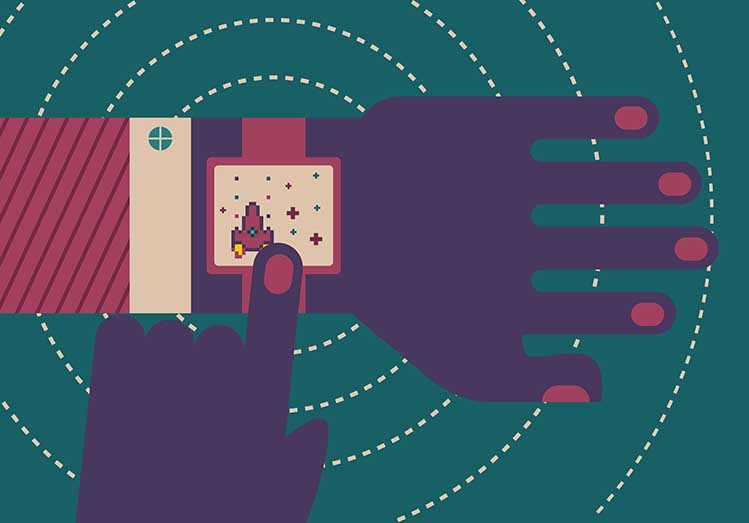
A couple of years ago, gamification was the latest craze, everyone was talking about it, but no-one was quite sure how it worked or whether it would become a worthwhile strategy for marketing with measurable ROI. Now, you can add an element of fun into your campaign, says James Burr.