Delivery of products is something that is often a bit of an afterthought for marketers, but new research shows that convenient and efficient delivery options are actually a highly influential part of the buying process for consumers.

Delivery of products is something that is often a bit of an afterthought for marketers, but new research shows that convenient and efficient delivery options are actually a highly influential part of the buying process for consumers.

Passengers at 54 London Tube stations were enabling Transport for London (TfL) to get a better understanding of how and where to engage with them, thanks to a month-long data gathering trial that launched late November.
London station passengers make 31m journeys each day – effectively, a vast advertising audience in motion. But detailed insight on when to market to them once they are on the platform – ie. beyond the entrance collection of aggregated and de-personalised data via Oyster and Contactless payments – has been locked in inefficient and costly paper surveys of the past.
By picking up WiFi connection requests from passengers’ mobile devices as they pass through stations, TfL says it will learn how people move through and change services and where bottlenecks occur, enabling more efficient travels around the system.
The information can also result in increasing revenue from companies who advertise on poster sites or rent retail units – revenue to reinvest into improving and upgrading services across London.
Sue Daley, head of Big Data, Cloud & Mobile at techUK, said: “TfL is unlocking the power of data to gain insights into how passengers are using the network and drive its transformation into a smart transport system.
“The availability of big data analytics tools and technologies means that organisations, of all sizes and sectors, are increasingly able to make data driven decisions that can make a real difference to customers’ lives. In this case, it will mean more accurate passenger insights and easier journeys for customers.”
When a device is WiFi-enabled, it searches for a WiFi network by sending out a unique identifier to nearby routers – known as a Media Access Control (MAC) address. Posters at stations are informing people about the trial and TfL says all data will be automatically de-personalised so that individuals cannot be identified, with no data being made available to third parties and no browsing data collected. However, passengers can opt out by turning off their WiFi while passing through stations.
Shashi Verma, chief technology officer at Transport for London, said: “This short trial will help us understand whether WiFi connection data could help us plan and operate our transport network more effectively for customers. Historically, if we wanted to know how people travelled we would have to rely on paper surveys and manual counting, which is expensive, time consuming and limited in detail and reliability. We hope the results of this trial will enable us to provide customers with even better information for journey planning and avoiding congestion.”
TfL’s collection of ‘pseudonimised’ Wi-Fi data has been discussed with the UK Information Commissioner’s Office and follows its published guidelines.
TfL carried out customer research to test the proposal through a qualitative research exercise and overall feedback from focus groups was positive. Earlier this year, TfL also carried out a two-day modelling trial to understand whether this method of data collection was possible.

In Spain, brand messages shared by employees, rather than the company itself, are 24 times more likely to be re-shared. To put this into perspective, the global average is eight times more engagement. The Spanish demand personalised interaction.

Marketing teams’ attempts to engage with their company’s customer experience often fail and set the business back further – learn why and how they should think differently to succeed.

Buster, Monty and the Man on the Moon all created buzz for UK retailer John Lewis, with researchers discovering which ad campaign was the nation’s festive favourite.

Plan ahead. Think about what video communications you will need over a 6-12 month period. Don’t plan your video budget based on what you think you need to spend, but on the impact it will have on your marketing and business.

Celebrity endorsement is not switching on a video advertising audience, a new report from video production company Groundbreak has shown.
The fresh research among 1,000 UK consumers revealed a surprisingly low figure – just 8% of consumers like video ads that have one of their favourite celebrities in them, with only 3% more likely to make a purchase after seeing one of these.
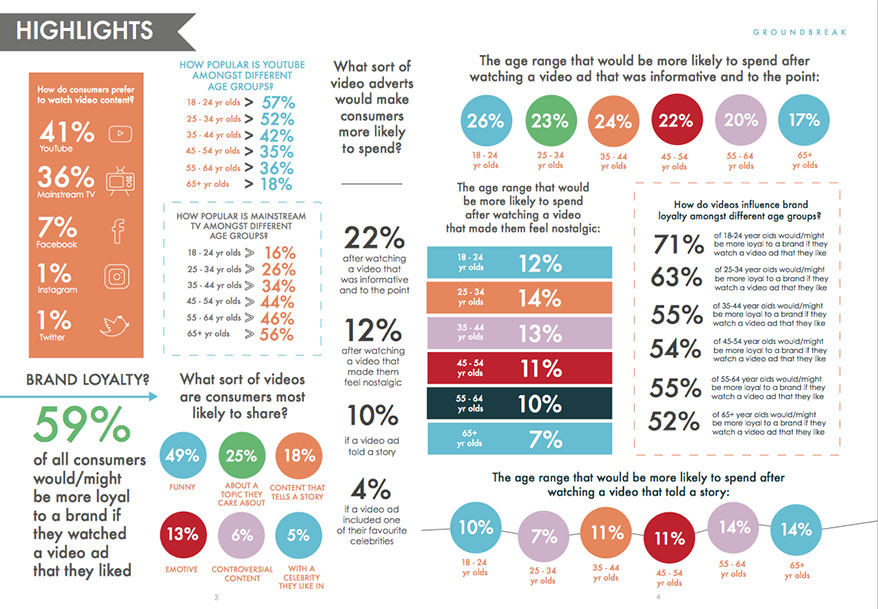
More tuned in to the power of video are millennials – one in five of them are more likely to purchase a product or service after watching a video advert. Older generations are less receptive, with only 12% of 45-54-year-olds, 13% of 55-64-year-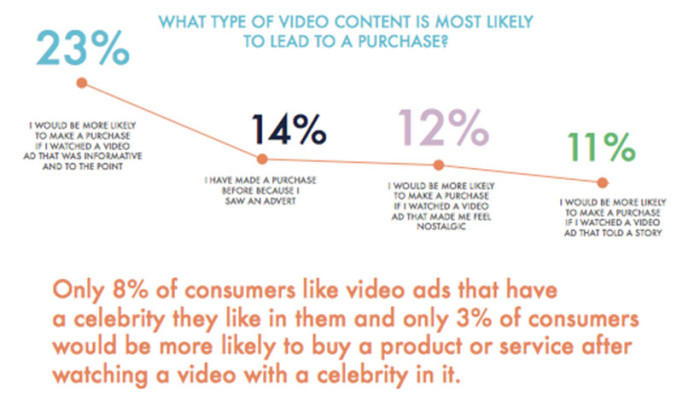 olds and 6% of those aged 65+ saying they would be more likely to make a purchase after watching a video ad.
 In the report, Geoff Brooks (pictured), CEO at Groundbreak Productions, said: “The first time a video advert appeared on British commercial television was 9.01pm on September 22, 1955. Created by AB-Pathe, the 70 second ad for Gibbs SR Toothpaste made advertising history and changed the direction of consumer engagement. 61 years later, video advertising remains one of the most popular types of marketing content.
 “Major holidays can be marked by the first showing of particular adverts as brands compete to create the most standout commercial content. But while audiovisual content retains its prominence in the marketing and advertising worlds, how customers consume this material has been forever changed.
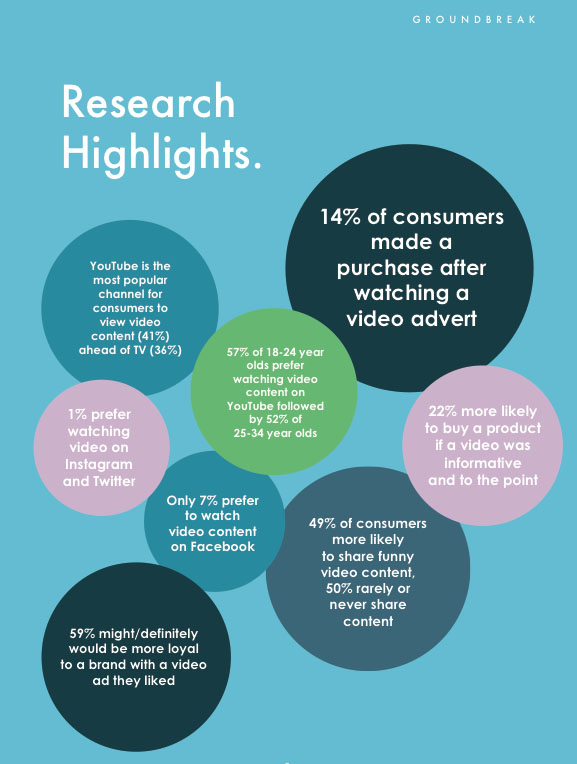
“The rise of YouTube and online video platforms has overtaken the popularity of mainstream television, particularly among younger audiences. Marketers and consumers are now living through a major shift in how content is viewed, and what content people want to view.
“We commissioned this independent report to help brands better understand their consumers’ attitudes to video content, and to help them make decisions about investing in this type of marketing for their business.
“This report provides real insight into what kind of video content people want to watch, how they want to watch it, where they want to watch it – or where they don’t want to watch video content – and also provides valuable information about the kind of video marketing that is more likely to lead to commercial results.
“For businesses looking to build brand loyalty, we also examine how video content can be a main driving factor in developing a strong base of brand advocates that will help you get your business out into the public agenda.
“The world is moving away from print media as younger generations become more naturally comfortable with digital alternatives.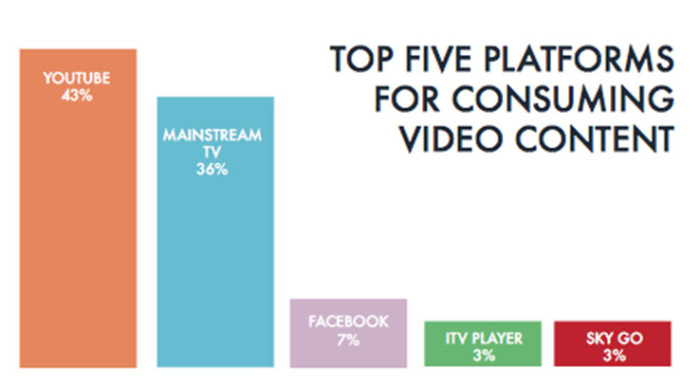
“With such a versatile and developing digital infrastructure growing faster than traditional outlets, potential is huge for video adverts to reach an even larger audience.”
“This research really highlights the importance of brands carefully considering the way they use video to advertise their products or services to their target market.
“The fact that millennials’ spend is most likely to be influenced by video adverts is good news for those businesses targeting these consumers. However, for those that have different or more varied target markets these statistics shouldn’t be off-putting. Instead of packing in video advertising altogether, the research suggests that to influence consumer spending, brands need to create either snappy and ‘to the point’ adverts, or invest in storytelling.”
The research also showed that 42% of consumers like video ads that are informative and ‘to the point’ and 22% would be more likely to make a purchase after watching this kind of video content.
More than 30% of people surveyed like video ads that tell a story, with 29% favouring those that make them feel nostalgic – 12% said that they would potentially buy a product or service after watching one of these adverts.
Brooks added: “As marketers increasingly champion digital platforms over print advertising, consumers are being bombarded with more video content than ever. As a result, for brands to get the best return on investment, they need to start paying more attention to what consumers actually want from this kind of marketing and adapt their approach accordingly.”
Groundbreak is an award-winning film and video production company with offices based in Manchester and London. Founded in 2012, the agency creates high quality advertising and feature content for online and TV broadcast. It offers a production services including conceptual development, scripting, high-end VFX and animation, as well as studio or location-based filming and has worked with some big names including Brother International and Moneysupermarket and a number of public sector clients including the Department of Health, NHS, the National Lottery and the National Crime Agency.

For marketers, honing their skill with the social media channel is like nailing jelly to a tree or herding cats. The channel is ever-changing and evolving and research among those working in social media reveals many marketers have gaps in their knowledge, as a new infographic shows. It’s essential the gaps are filled.


Organisations today are increasingly competing on the experience they deliver to their customers, says a report and customer experience infographic from 3radical.
To win, they must find new ways of engaging:
3radical has developed a software platform, Voco, and set of built in best practices, that achieves top-level engagement by enabling business users to create relevant, real time interactive experiences and deliver them via existing digital channels – such as web, email, mobile app, social and chat.
Major brands including Azzuri Group, DBS Bank, Dell, British Land, Anytime Fitness and others are now successful in leveraging the Voco platform.
3radical has offices in the UK, US, Singapore and Australia. The customer service infographic here illustrates the latest UK research report that shows ways in which consumers would prefer to be marketed to by brands. Read more about the survey results, here:

Consumers want a multi-channel experience, fresh research shows. In fact, 79 per cent of consumers polled would shift to another brand if it could offer a better customer experience on all relevant channels.