Research into the TV subscriber’s journey has revealed that a business should maintain the human touch when interacting with both prospects and existing customers.

Research into the TV subscriber’s journey has revealed that a business should maintain the human touch when interacting with both prospects and existing customers.

From May 2018, email marketers in the UK and EU will not be allowed to market to any data that has not given explicit consent. The industry must take notice and start building high-value, opt-in data immediately.
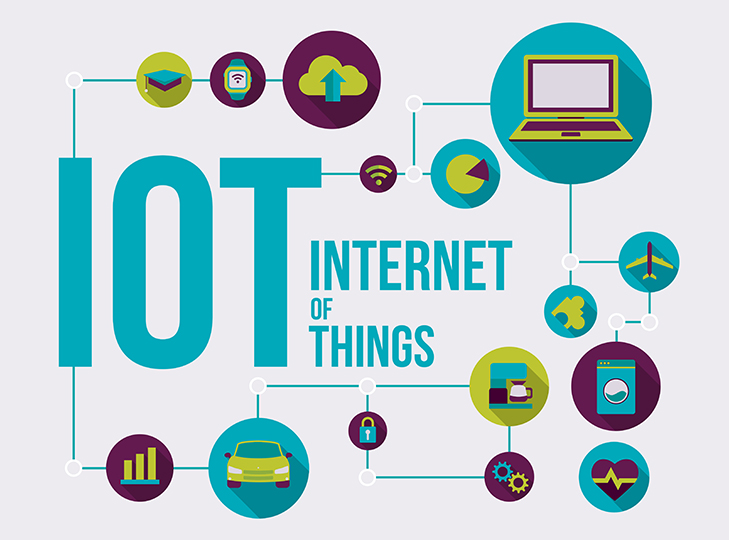
The Internet of Things has moved well past the status of a buzzword and developed into an idea that is changing the way consumers experience their daily lives – although some might not even realise it. So it’s no surprise that many huge brands are embracing IoT into their central business offering.

With the vast number of mobile devices in Scandinavia, alongside the huge appetite for online shopping, the Nordic region presents massive opportunities for internet marketers who are prepared to go the extra mile when creating digital marketing campaigns.

Here’s a company that . . . er . . . splashed out in the midst of a major recession to bring a new way of advertising to a particularly captive male audience. It’s a fresh look at targeting . . .

Research from SAS shows that UK Millennials expect a tailored service from retailers that goes far beyond a bit of a discount or a BOGOF. If they are going to share their data, they demand rock-star treatment and a red carpet ride.
And if marketers are to engage with this demanding generation, they had better be on their wavelength. The research reveals that eight out of ten Millennials use their data as a lever; bargaining chips for a quality service that will enhance their lives or somehow make them easier.
 Mark Wilkinson (pictured right), SAS regional vice-president – Northern Europe, said marketers need to exploit open and cloud-ready advanced analytics to gain deeper insight into what motivates individual customers; i.e. pinpoint what is relevant to them personally.
He said: “The Data Generation are amenable to sharing more forms of data, provided it gives them control as they navigate turbulent macro-economic conditions and fluid career projections.
“The organisations that will prosper in the future will demonstrate how they can enhance the Data Generation’s life potential and that of society. This will require organisations to embrace analytics architectures that are more accessible, flexible and can easily scale to problems of any size. All industries need access to a simple, open and cloud-ready platform that can complement other technologies and open source software.”
 Jennifer Watkiss (pictured left), head of marketing communications at Adestra, added: “This is in line with our own findings from our research with the IDM, which states that 63% of marketers rate personalisation as ‘somewhat’ or ‘extremely’ effective in helping them reach their email marketing KPIs. So it’s no surprise that consumers, especially younger consumers, are comfortable sharing their data with businesses, but expect a more tailored brand interaction in return.
“The challenge for marketers who wish to remain relevant will be to ensure they’ve built a business case internally to continue advancing their use of personalisation across all marketing channels. A blanket offer to a massive list, personalised with a customer’s name in the salutation is no longer sufficient. Successful marketers will ensure both the timing and content of their offers are relevant at an individual level, and based on the entirety of what they know about their customers and subscribers.
The research report, Analytics for the Future: The New Data Generation, from analytics expert SAS and independent researcher Future Foundation, polled 2,000 people across the UK aged between 16 and 34. It explored the current relationship this group has with their own personal data and how they will interact with government, public sector bodies, healthcare, retail, utilities and social media in the future.
The habits, preferences and moods of the Data Generation must be taken into account so that predictive analytics can enhance their health, prosperity and future life potential. Only 12 per cent are happy to share their personal data without a second thought but 57 per cent were more willing when it came to life-enhancing specifics.
More than two-thirds (67 per cent) are comfortable sharing with the healthcare sector, 57 per cent with financial institutions, 50 per cent with the public sector, 45 per cent with utilities, 32 per cent with retailers and just 28 per cent with social media companies. These preferences differed depending on their levels of trust and the value they recoup for sharing their data:
This is a generation that worries their jobs will be replaced by robots – they recognise a need for dexterity in learning, with 78 per cent expecting to keep learning new skills throughout their life, and four out of 10 prepared to invest either their own time or money into acquiring data science skills. But the research also found that they:
Marketers’ biggest task now will be to build the buy-in required to gain the resources they need to execute on this more personalised experience. They’ll then need to follow through with the support of their technology partners to bring those plans to reality. Otherwise, they risk being left behind in both the marketing industry and the minds of their audience.

Research shows that 76 per cent of UK customers use online banking and 22 per cent also bank via their mobiles. However, 45 per cent are still visiting their local banks for the traditional one-to-one banking experience.

 Chelsea FC has signed a global licensing deal with Stayfilm, a film-making app and networking platform launching in the UK that will enable brands to interact with the hundreds of millions of the team’s supporters worldwide.
The Stayfilm app, which is available as a free download, allows users to create high-quality, shareable movies in around two minutes. Fans can use their own images and videos, combined with the club’s unique styling to automatically create a short movie that appears on a designated channel online and can be shared on social media. The style features exclusive images of the main players and the stadium, as well as the iconic lion logo and the team’s blue banners.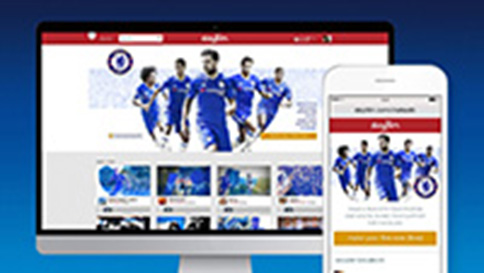
The channel, which is hosted at www.Stayfilm.com/ChelseaFC, brings fans together providing them with a way to interact with one another in a friendly environment. With this captive audience, brands can share more about their products and services, knowing that visitors to this site are highly engaged and relevant.
Douglas Almeida, Stayfilm‘s CEO, said: “Being exclusive licensees of Chelsea FC is the first step in our expansion through Europe. We are providing a platform for global fans to share and connect, and we hope we can provide a new avenue for brands to connect with the team’s supporters outside of traditional sponsorship deals.”
For the fans, this is a fun, slick app that provides more permanence than a quick Snap or a Vine. Tomas Monteiro, a Chelsea FC fan from Brazil, said: “Although me and my friends are not based in the UK, we love the fact that we can share our passion for Chelsea FC with British fans through this app! Come on the blues!”
Here’s the video from Chelsea FC – download the app here.
[youtube id=”YSdXt2Fmgqo”]

Data has been released by eBay this month into how Brits use the site when shopping online – when we shop at eBay, how and what we are buying.

Jens Nielsen says marketers should be aware of new social media channels such as Instagram and Snapchat that are now challenging the space that has been dominated by Facebook and Twitter.
