Every opportunity to delight a customer creates far-reaching marketing momentum that extends well beyond a one-off experience and one of the most overlooked opportunities to create a connective experience is when a customer calls.

Trained as a journalist from the age of 18 and enjoying a long career in regional newspaper reporting and editing, Sally Hooton joined DMI (Direct Marketing International) magazine as editor in 2001. DMI then morphed into The GMA, taking her with it!
Every opportunity to delight a customer creates far-reaching marketing momentum that extends well beyond a one-off experience and one of the most overlooked opportunities to create a connective experience is when a customer calls.

From May 2018, email marketers in the UK and EU will not be allowed to market to any data that has not given explicit consent. The industry must take notice and start building high-value, opt-in data immediately.
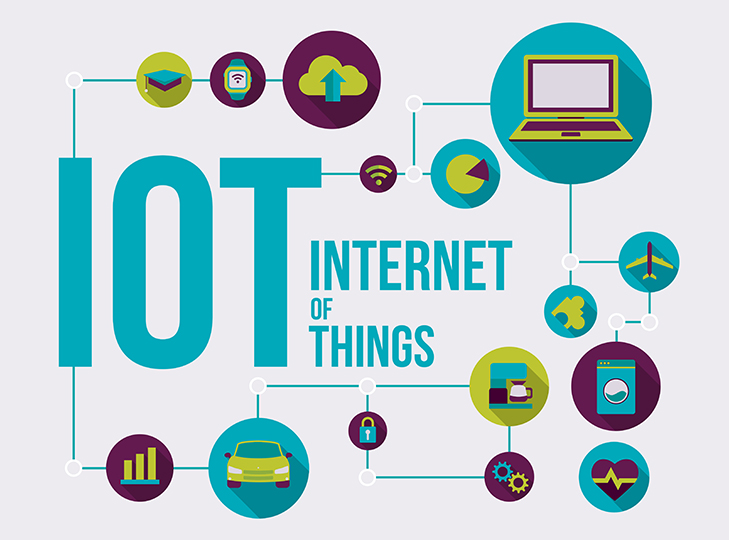
The Internet of Things has moved well past the status of a buzzword and developed into an idea that is changing the way consumers experience their daily lives – although some might not even realise it. So it’s no surprise that many huge brands are embracing IoT into their central business offering.

With the vast number of mobile devices in Scandinavia, alongside the huge appetite for online shopping, the Nordic region presents massive opportunities for internet marketers who are prepared to go the extra mile when creating digital marketing campaigns.

Here’s a company that . . . er . . . splashed out in the midst of a major recession to bring a new way of advertising to a particularly captive male audience. It’s a fresh look at targeting . . .

Companies working within TV and film industries often have very large budgets to play with, but the fundamental approach they take can be adapted to work for any company that can leverage hero formula to create engaging, high-impact content.

It’s the dawning of exciting and ‘immersive’ new ways to engage the consumer and, to show how to add virtual reality (VR) to the marketing toolkit, this conference shared ideas and examples – and frightened the wits out of a visiting baby boomer.

Organic traffic from search engines can send huge amounts of visitors to your website, and it is all totally measurable, but what’s confusing is that there are a plethora of metrics available to you – here’s a few, explained.

Toys R Us needed a solution that would enable both campaign creation and automation, while delivering deep insight into its customers around the world. Here’s what the retailer did.

Research from SAS shows that UK Millennials expect a tailored service from retailers that goes far beyond a bit of a discount or a BOGOF. If they are going to share their data, they demand rock-star treatment and a red carpet ride.
And if marketers are to engage with this demanding generation, they had better be on their wavelength. The research reveals that eight out of ten Millennials use their data as a lever; bargaining chips for a quality service that will enhance their lives or somehow make them easier.
 Mark Wilkinson (pictured right), SAS regional vice-president – Northern Europe, said marketers need to exploit open and cloud-ready advanced analytics to gain deeper insight into what motivates individual customers; i.e. pinpoint what is relevant to them personally.
He said: “The Data Generation are amenable to sharing more forms of data, provided it gives them control as they navigate turbulent macro-economic conditions and fluid career projections.
“The organisations that will prosper in the future will demonstrate how they can enhance the Data Generation’s life potential and that of society. This will require organisations to embrace analytics architectures that are more accessible, flexible and can easily scale to problems of any size. All industries need access to a simple, open and cloud-ready platform that can complement other technologies and open source software.”
 Jennifer Watkiss (pictured left), head of marketing communications at Adestra, added: “This is in line with our own findings from our research with the IDM, which states that 63% of marketers rate personalisation as ‘somewhat’ or ‘extremely’ effective in helping them reach their email marketing KPIs. So it’s no surprise that consumers, especially younger consumers, are comfortable sharing their data with businesses, but expect a more tailored brand interaction in return.
“The challenge for marketers who wish to remain relevant will be to ensure they’ve built a business case internally to continue advancing their use of personalisation across all marketing channels. A blanket offer to a massive list, personalised with a customer’s name in the salutation is no longer sufficient. Successful marketers will ensure both the timing and content of their offers are relevant at an individual level, and based on the entirety of what they know about their customers and subscribers.
The research report, Analytics for the Future: The New Data Generation, from analytics expert SAS and independent researcher Future Foundation, polled 2,000 people across the UK aged between 16 and 34. It explored the current relationship this group has with their own personal data and how they will interact with government, public sector bodies, healthcare, retail, utilities and social media in the future.
The habits, preferences and moods of the Data Generation must be taken into account so that predictive analytics can enhance their health, prosperity and future life potential. Only 12 per cent are happy to share their personal data without a second thought but 57 per cent were more willing when it came to life-enhancing specifics.
More than two-thirds (67 per cent) are comfortable sharing with the healthcare sector, 57 per cent with financial institutions, 50 per cent with the public sector, 45 per cent with utilities, 32 per cent with retailers and just 28 per cent with social media companies. These preferences differed depending on their levels of trust and the value they recoup for sharing their data:
This is a generation that worries their jobs will be replaced by robots – they recognise a need for dexterity in learning, with 78 per cent expecting to keep learning new skills throughout their life, and four out of 10 prepared to invest either their own time or money into acquiring data science skills. But the research also found that they:
Marketers’ biggest task now will be to build the buy-in required to gain the resources they need to execute on this more personalised experience. They’ll then need to follow through with the support of their technology partners to bring those plans to reality. Otherwise, they risk being left behind in both the marketing industry and the minds of their audience.
