Categories
Data Driven Channels Europe In the News UK USA

Fashionistas display digital engagement along the catwalk

It seems luxury brands are now stitching together online and offline services to engage customers and give the best Fashion Week experience.

As the the fashion world opened its doors for the annual New York style parade on Thursday (September 8), a livestream of the catwalk was engaging consumers via multiple platforms. Fashion Week has made an online presence on social media with SnapChat having exclusive stories following the different catwalk displays. While Instagram provides polished and refined images, SnapChat offers a raw glimpse behind-the-scenes of shows, allowing users to get exclusive access to top brands.new-york-fashion-week

Leading the way in digital engagement

Burberry is leading the way in this, with investment of more than 60 per cent of their marketing budget on digital. According to Contactlab’s ‘Digital and Physical Integration: Luxury Retail’s Holy Grail’ study, Burberry is also bringing together online and offline operations, with click & collect already representing 15 per cent of Burberry’s online sales. While Burberry paves the way for luxury brands, others are still struggling to grasp the significant impact engaging with customers online and offline will have on their brands.

Senior advisor of Contactlab

Senior advisor of Contactlab, Marco Pozzi (pictured), said: “Brands should not consider each channel as separate, but simultaneously valuable to the overall omni-channel experience. Customers want ease and comfort and so, if they find a product on one channel, they should be able to seamlessly navigate through the purchasing process with convenience.

“This is why it is important that brands do not disconnect the different channels, but connect the dots as part of their customer engagement strategy.”

Customer preferences

Contactlab found in the Digital Frontier 2016 study that customers with a digital presence who are digitally contactable are high spenders in-store and account for 27 per cent of in-store revenue and 73 per cent of e-commerce revenue. With the rise of e-commerce and digital engagement tools, luxury brands have access to customer data that will allow them to create a dynamic and personalised approach which integrates people preferences within the customer interactions. Through data-driven marketing, brands are able to create a richer understanding of the customers.

Pozzi continued: “We now live in a world where everything is captured digitally through various platforms and the fashion world is no exception.

“Fashion shows unfold live from SnapChat, Facebook, Twitter and Instagram feeds. This narrows the gap between the consumer and brands, opening up a relationship which is more personalised.

“Shoppers now crave interaction with brands who understand their needs, preference and expectations, feeding in insights from customer data can help brands enhance their relationship with customers and make informed decisions for their marketing strategies.”


‘Like me, like me not’ – survey shows effect of social media ‘likes’ and discovers that friends’ online approval is the ultimate fashion must-have

Categories
Data Driven Channels Europe Insight UK

Disjointed brands annoy customers, UBM survey shows

Shoppers are getting used to automation in retail – such as self-checkouts and voice recognition – but hate repeating themselves when they have an issue with a brand which needs to be dealt with either in-store, online or over the phone.

This content is for Free membership members only.
Register
Already a member? Log in here
Categories
Data Management Europe In the News Strategy and Management UK

Consumer data shared by companies more times than you think

data mistrust 2The study suggests there are at least 100,000 copies of each individual’s personal data being held on physical devices and cloud storage platforms.


Commissioned by Ground Labs, the consumer research quizzed individuals about how many organisations they believed had access to their personal data.

The majority (84%) guessed at fewer than 20; almost a third (28%) guessed fewer than ten, but once shown a list of 50 online services and retailers, two out of five consumers realised that their original estimate was way wide of the mark. This was based on their knowledge of interactions in the past 12 months alone.

Data security company Ground Labs VP EMEA John Cassidy said: “Unless customers have an accurate idea of who has access to their data, they are unable to take the precautions necessary to protect themselves online. We only asked people to pick from 50 of the biggest online companies, in reality, the number of organisations who have access to any one individual’s data is much, much higher than our survey suggests.”

Consumer data stored on and offline

Ground Labs insists that the total number of companies consumers interact with is actually irrelevant. With automatic backups, log files, emails and legal third-party sharing, hundreds of thousands of potential copies of individual’s data is being stored both on and offline. On top of this, many companies will keep records of former customers for years.

“A conservative estimate would suggest that for any given adult, hundreds of thousands of copies of personal data reside on physical devices and cloud storage platforms both in and outside of the UK. Most people are unaware of the multiplying effect when dealing with so many service providers and so the responsibility must fall on companies to protect this sensitive data,” Cassidy concluded.

Categories
Data Strategy Europe In the News Strategy and Management UK

PwC to hire 1,000 experts as data security fears soar

gloves, data securityThe firm said the new recruits will be join its UK Risk Assurance team within the next four years and cover all industry sectors across the country. As well as cybersecurity and privacy threats, the beefed up team will cover data management, business systems and IT risks.



More than 600 jobs will be filled by external hires, while over 400 will be transferred from other PwC sites. The firm will also be recruiting at least 200 data and tech graduates.

Digital disruption

PwC UK head of assurance Hemione Hudson said: “Business models that have served clients well for decades are being disrupted or destroyed due to the speed of digital disruption, the increase of regulatory scrutiny on technology risks and the escalation of cyber threat, requiring us to respond and build a strong team of specialists.”

Although there have fewer ‘car crash’ breaches following last October’s hack on TalkTalk, there is obviously a great deal of nervousness in the market.

PwC risk assurance partner Marc Bena added: “Our clients and their customers want to know that their technology is innovative and pushing boundaries whilst being safe and delivering what is expected. We have a duty to continue to build a team of technology experts able to help our clients do business with confidence.”

Categories
Big Data Data Innovation Europe Insight UK

When it comes to data technology, ‘Blessed are the Geek’

Jed Mole examines data technology and says 21st century experts in data are colliding with top-level engineers to steam ahead as the very best marketers.

This content is for Free membership members only.
Register
Already a member? Log in here
Categories
Data Driven Channels Europe In the News UK

Christmas is coming – are you ready for the Black Friday sales bonanza? You’d better be, marketers are warned!

You might still be lolling in your summer shorts, but one company is calling you to action stations, with Black Friday just three months away. What’s more, Salmon claims it will be not just Black Friday, but a Black Fiveday week, predicting that a record breaking £5 billion spent online from Thursday November 24 through to Cyber Monday.

It says retailers need to be in the midst of their preparations now for that shopping phenomenon – and in order to help them get ready, global digital commerce consultancy Salmon has devised a checklist to ensure they are thinking about their peak trading operations and making the vital requirements.

Black Friday hit the £1billion mark last year in online sales, as Salmon had predicted, and this year Salmon is anticipating that it will be even bigger.Computer keyboard with Christmas keys, christmas trading, Black Friday

Salmon’s head of managed services, John Beechen, ‎has advice for businesses on what to achieve in order to be truly ready. Beechen said: “Retailers should think about peak trading as a crisis that they know will happen in advance. Preparation is vital and retailers need to consider their business and operational plans for the period.”

His five critical objectives include:

  1. Rigorous testing. Retailers should be undertaking performance tests of their systems up to peak loads in order to see where their break points are. Simulating a major incident to understand how watertight their contingency plan is will enable retailers to understand how they will cope with a ‘dam burst’ scenario if faced with an unexpected influx of traffic on the day. This will benefit retailers as it is better for them to know where a system will break and allow them to prepare for it.
  1. Stagger your marketing activities. Peak traffic on Black Friday is inevitable, but with it being expected to become a Black Fiveday week, retailers will benefit from feeding customer deals gradually throughout the week, which will keep consumers shopping during the peak and on Cyber Monday, while reducing strain on infrastructure and fulfilment teams.
  1. Prepare the business. It is of vital importance that the whole business is aligned in the lead up to and on Black Friday, establishing constant communication between technical operations and the wider business. Now is the time to ensure every department is au fait with the plan for peak trading on November 25 – not just in silo but across the entire business. In particular, being aware of all marketing campaigns and promotions in advance will enable teams to map out when they expect to see the biggest surges of traffic so they can prepare accordingly. Being aligned will ensure all online trading and operations teams can anticipate surges and be ready.
  1. Have a contingency plan. Regardless of how prepared retailers might be, it is difficult to make Black Friday 100% fail-proof. With fewer than 100 days to go, even if retailers are completely unprepared it’s not too late to put some basic functionality in place. For example, adding a queuing system whereby customers are placed in a waiting line to access the website will help to control the surge and reduce the chances of the site crashing. This is also a good contingency plan for retailers on the day, should they suffer unexpected problems – implementing a queuing system can relieve strain on back-end operations while the problem is fixed. Identify the risks that may arise on Black Friday and create an established list of solutions so action can be taken by the corresponding department from IT and ecommerce to marketing and PR.
  1. Ensure your staffing plans are set. Retailers need to ensure their staffing plans and shifts are set, with everyone involved in peak operations (including their vendors and suppliers) being aware of their role and responsibility during the period. Shifts should be in place for both Black Friday and the weekend, and contact details published.

Beechen added: “Retailers must ensure that they have laid out clear contingency plans for their teams to respond to issues during the week. The Black Friday week is an excellent opportunity for retailers to win new customers and grow their customer following and ultimately increase sales.

“The retailers who were as prepared as possible, from front-end to back-end, have been the ones to see success.”

Salmon has created ‘The Black Friday and Peak Trading Ecommerce Operations Playbook’, a guide based on Salmon’s experience in supporting the peak operations of several leading UK retailers.

Categories
Data Management Europe In the News Strategy and Management UK

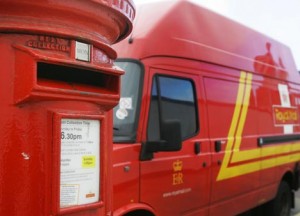
Royal Mail tackles home mover data decay

The Guide to Mover Marketing will also identify those who may be looking for move-related and home improvement products and services.

It has been developed in response to research from Royal Mail Data Services, which surveyed nearly 200 leading UK marketers to discover the key business challenges surrounding the use of customer data for marketing purposes.

The research revealed that 45% of marketers say recruiting new customers is their biggest challenge. The remaining 55% struggle with re-activation, upselling, retention and cross-selling to existing customers.

Further research suggests that 65% of consumers switch suppliers or engage with new brands during the home-move period as they track down the best deals.

Data decay – trends and characteristics

Home-mover marketing presents proven opportunities for brands, particularly in the utilities, telecoms, finance, insurance, banking, DIY, retail and home improvement sectors, to increase their customer retention, acquisition and re-activation rates, the firm claims.

The guide outlines the trends and characteristics of the UK home-mover market. It also offers strategies for data-driven B2C marketers to improve their customer acquisition, retention and engagement strategies by segmenting and targeting home movers with relevant, useful marketing communications.

It also explains how businesses can quantify the value of the home-mover market through analysis of customer purchasing behaviours before, during and after their moves.

Royal Mail Data Services managing director Jim Conning said: “The combination of price-conscious consumers, the breadth of choice to be found online, and fierce competition is making it more challenging and costly for B2C marketers to improve the performance of their marketing while boosting revenues. The key to success lies in a marketer’s ability to deliver ‘right-time’, contextual marketing that anticipates what customers need before they have to ask.”

The guide draws on Royal Mail Data Services’ experience of working with many of the UK’s leading brands to help them reshape their approaches to “right-time”, contextual marketing through the use of home-mover data alongside specialist data analysis and marketing services.

Conning added: “To be successful at ‘right-time’ marketing, marketers need access to timely customer information. This data must be accurate, permission based, and sourced via a first party. But it’s not enough to just provide great-quality data.

“Businesses also need insight into home moves period to help them understand when consumers are most likely to buy a company’s products or services or, indeed, to switch to the competition. And that’s where our specialist knowledge and experience come in. Our guide offers marketers a step-by-step approach to adopting effective marketing strategies and techniques to target home movers.”

The move follows the launch of eBay Advertising’s Home Mover ‘Advanced Targeting’ scheme, which cross references insights from eBay’s 19 million monthly users with Land Registry data to predict movers months before they actually settle into their new abode.

Categories
Data Management Europe In the News Strategy and Management UK

Failing to manage returned mail costs £145m a year, says study

A new study by The Software Bureau reveals that 60 per cent of marketers do not practice reverse marketing; the management of returned direct mail, which costs firms £4.02 per piece of returned mail.

Approximately 90 million pieces of direct mail (2.5 per cent) are returned to sender each year. Forty per cent of these or 36 million are returned due to the recipient’s wish to be removed from the marketing database, equating to a loss of potential revenue of £116 million and £29 million in wasted production costs.

Reverse marketing enables organisations to compile in-house do not mail lists that can be screened against future campaigns reducing the volume of mistargeted mailings, saving money and improving the reputation of the organisation among customers.

The study revealed B2B organisations to be the worst culprits followed by retailers, credit card providers, retailers, pension providers and charities. Conversely, local government was found to be the most responsible.

Martin Rides, managing director of The Software Bureau, said: “The fact that every piece of returned mail costs businesses £4 is incredible – this soon adds up, amounting to thousands per year.

“Reverse marketing is a key component to reducing the volume of mistargeted direct mail. It is shocking that only four in ten organisations manage their returns and, more importantly, learn from them.

“Our new initiative, Lean DM, helps organisations to identify the areas which produce the most wastage in their direct mail activity and minimise it. With the advent of GDPR and increased scrutiny from the media and legislative bodies, it is crucial that organisations focus on data hygiene.”

The study was carried out by ‘mystery shopping’ last month.

Returned mail statistics:

£4.02 = 3.6 billion pieces of DM sent annually (OFCOM) x 2.5 per cent returned (Royal Mail) x 40 per cent of returns due to opt outs (DMA) = 90 million returns x lost ROI (£3.22 Royal Mail) and average cost of a mail pack (£0.80).

Categories
Europe In the News Legal & Compliance Strategy and Management UK

Data breach has affected nearly a quarter of UK consumers

In a world where an ever-increasing number of transactions are carried out online – requiring consumers to share personal information – the threat of a data breach is never far away. In the last month alone, Netflix and Facebook have both been hacked and in June 2016, a breach at South Yorkshire Police Force’s website potentially put confidential data at risk.

According to new YouGov research commissioned by credit information provider, Equifax (YouGov online survey. Total sample size was 2,037 adults. Fieldwork undertaken between June 17-20 2016. Figures from YouGov Plc), nearly a quarter (23%) of UK consumers say that a company holding their personal information has experienced a data breach, with those in the South East being the most affected at 30% and residents in the North East being the least affected at 19%. When it comes to the generations, the 25-34-year-olds seem the most affected at 31%; the figure falling to just 18% for the over-55s.

Financial compensation after data breach expected

It seems that with the increased risk of a data breach, consumers’ expectations of how they are informed and assisted by any company holding their data are unsurprisingly high. Almost three-quarters (73%) of UK adults surveyed by YouGov on behalf of Equifax think companies should tell them that they have experienced a data breach at some point, with 63% expecting to be told within a few hours of the breach being discovered by the company. 61% would expect financial compensation if their personal data was misused as a result of the breach and 57% would expect to have a free monitoring service set up to alert them if their financial information is misused.

Not only do consumers expect fast action and compensation if their data is breached, companies also need to adhere to the Data Protection Act enforced by the ICO. Companies may receive a fine if they suffer a breach of customer data, and also may face legal action. Future regulation may also require organisations to notify all individuals if they suffer a breach.data breach equifax image1

Lisa Hardstaff, credit information expert at Equifax, explained: “A data breach isn’t just a huge logistical challenge for any organisation. It also can do serious damage to brand reputation, as our recent research revealed. 61% of consumers said they would be unlikely to purchase goods or services from a company if it had experienced a data breach in the past.

“It’s clear that consumers quite rightly expect companies to look after their data. But individuals have a part to play, too, in keeping their own details safe. It’s worth remembering that social media accounts hold a lot of personal information, giving fraudsters more than enough data to help them steal someone’s identity and rack up debt in their name. However, our latest research revealed that consumers are most worried about their bank account and credit card details being stolen (84%), while only 7% are worried about hackers gaining access to social media account login details, in the event of a breach.

“Fraudsters are continually evolving their methods and, while organisations tracking and stopping them do have high success rates, the financial incentive for fraudsters to invent new techniques means they stay one step ahead of those out to stop them. Consumer vigilance is therefore key and while the onus is on a business to take action to protect the personal information that has been hacked, there are steps consumers can take, too, including changing passwords.”

Categories
Data Driven Channels Europe Insight UK

The art of digital transformation

Bill Payne discusses how crucial consistency is for customers, how to transform your organisation to become digitally enabled and how to overcome the challenges of this digital transformation. 

This content is for Free membership members only.
Register
Already a member? Log in here