For all those who struggled with marketers targeting mobiles or questioned the security of the mobile wallet, here is the next generation: the most successful phone game ever, with shares in Nintendo rocketing because of its popularity.
Because of this simple gadget, tweenies and teenagers once remote and hard to engage with are now out walking in the open air, sometimes for hours and miles, in search of the cutesy Japanese characters that began their video life in the 90s for the Game Boy device. Now, since July, the characters have been popping up in random places around gamers’ neighbourhoods, as viewed through their smartphones.
The little cartoon monsters (Pokémon is a corruption of the Japanese, Pocket Monster) lure former couch potatoes from their sofas in favour of finding the creature that variously resembles a rabbitty-eared squirrel, an eagle-like batty chicken or even a goofy crab – with names such as Pikachu or Blastoise (rare) to Zubat and Spearow (common).
On the gaming bandwagon
It might be just the latest craze, a free summertime app everyone can enjoy, (which has been downloaded more than 500 million times worldwide in the few weeks since launch). But it’s not just players – ‘Trainers’ as they are dubbed – who are jumping on this particular virtual reality gaming bandwagon; there is even a sign in the window of my local library saying: ‘Catch a Pokémon here’ . . . and a poster outside a nearby church tells Pokémon Go gamers they are welcome within.
Cashing in on the Pokémon Go footfall
Of course, marketers are leveraging this augmented reality game – among its features is a PokéStop (shown by a spinning blue icon; it’s where gamers refill on PokéBalls, which they zap the characters with). For example in some areas, Wetherspoons pubs, Prezzo and Pizza Express restaurant chains are near PokéStops and have clearly enjoyed the footfall of customers refilling themselves, as well as their gadgets.
Gamers do battle with each other at PokéGyms (which look like a cartoon rig or tower via the app – pictured). If a business happens to be on or near one such landmark, many Trainers will be in the vicinity and open to offers of discounts and giveaways – even prizes for the best character caught.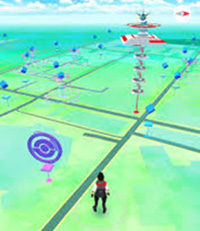
Some organisations are offering random acts of kindness to players, such as water or loo breaks, to build relationships. Playing the game to ‘catch ’em all’ drains a phone’s battery, so some marketers have hung up signs offering their premises as a ‘Power station for wild Pokémon hunting’.
Sharing the Pokémon Go love over social media
Using the ‘lure module’ item, more Pokémon lurk around certain PokéStops and thus numbers of players are attracted to that area. Businesses and organisations are luring one or more near them, sharing the news over social media to spread the word . . . and watching the hunters gather!
A review in The Guardian says Pokémon Go is ‘not a good game . . . but a great experience’. And some authorities are blaming gamers for causing accidents by flouting traffic regulations, for trespassing while distracted and even for falling prone to robbers who attack them as they try to catch the elusive Pokémon. The BBC has reported from Bosnia that gamers are being warned to steer clear of historic minefields, left over from the 90s war.
But various social media sites show how the app is being credited for benefiting the human spirit, with posts declaring: ‘Pokémon Go has been good for my mental health’; ‘Pokémon Go has been a better treatment for my depression than anything my doctor prescribed or therapist recommended.’ ‘Just spent 5 hours out playing Pokémon Go. Not one panic attack.’
Still, they are gamers, gazing at a screen and getting furious when thwarted by servers crashing and those screens freezing . . . but now, there is even a solution to that. The Pokémon Go Plus Wearable (pictured) is now on sale and is sure to be a sales sensation. At around £40, this device can be worn either on a bracelet strap or as a brooch/pin. It flashes and vibrates when a Pokémon is nearby and you can actually ‘throw a Poké Ball’ (ie. zap the critter), without opening your phone – it just has to be a monster you have already caught.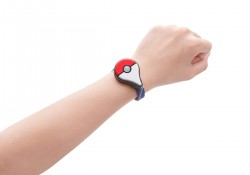 There is no built-in pedometer, but this gizmo will at least mean players’ phone batteries aren’t draining alarmingly away as they stroll.
If your target market is 10-15-year-olds (or their parents) and you have a physical presence – such as a store or restaurant – consider whether Pokémon Go can be part of your strategy to attract visitors. It might even be enough to just be nice to the Pokémon hunters and, like some of the examples above, help them in their quest. They’ll remember you for it.