Categories
Data Driven Channels Email In the News UK

Hail the king of the marketing channels: email takes the crown (but it still fails to sparkle)

Take three marketing channels: email; mobile apps; social media. The greatest of these is email, with 96 per cent usage, says The Digital Customer Engagement Index from Mapp Digital.

One of the largest independent digital marketing technology companies in the world, Mapp Digital analysed the digital marketing methods of the top 50 ecommerce brands in the UK in 2016. And despite the large uptake of email communication, the study found that relatively few companies are truly harnessing user preferences, personalisation and optimisation across devices.

The analysis revealed that only 26% personalise emails, 60% personalise the web experience, and a mere two per cent use a personal approach in their mobile apps – despite most brands asking for customer names and other identifiable information.

marketing channels articleRolf Anweiler (pictured), senior vice-president marketing, Mapp, said: “All data no action summarises the broad approach we’re seeing from the UK’s top ecommerce brands.”

He continued: “But broad is no good when it comes to marketing in a digital revolution, when customers’ relationships with brands are changing to an ‘always on’ culture and you explicitly ask for information about them.

“Many brands are still more 9 to 5 than 24/7 when it comes to marketing. With the proliferation of channels, devices and technologies comes a great opportunity for marketers. At the moment, though, most are being bland, formulaic and not quite delivering.”

Index shows take-up of marketing channels

In mobile app marketing, where 92% of brands have a mobile app, most seek permission to send notifications. Despite this, only 17% actually delivered a message across the duration of Mapp’s study – which ran for a month in spring 2016.

Download the full Digital Customer Engagement Index here.

The study also looks at how brands are orchestrating cross-channel engagement, noting that only 25% of the top brands with bricks-and-mortar stores are using technology to drive engagement when potential customers might be passing by. This indicates that most are wasting a huge opportunity to grow the mobile channel and engage with customers, especially mobile-savvy millennials.

Key findings:

  • 94% of those analysed sent at least one email to their customer base during the study
  • 78% of emails assessed during the study were not fully responsive, meaning that the mobile email experience for most customers is very limited
  • Only 13% of brands assessed had a preference centre on their website, inhibiting personalisation of messages and content
  • Only 11% of brands with mobile apps connected the dots between digital channels (for example, by enabling social sign in)
  • When it comes to posting seasonal content on social media channels 45% of brands chose Facebook, 52% turned to a Twitter feed and only 20% utilised their Instagram account

Anweiler added: “In an era when brands are pushing for more personalised, individualised marketing, some of the largest ecommerce brands in the UK are still failing to create meaningful engagements due to inconsistent use of digital channels.

“Never has having a consistent strategy been more important, nor has combining the data from the multitude of digital channels to create a holistic view of the customer. It is – or should be – simple to deliver highly bespoke messages. Marketers today have all the tools to achieve this.”


Categories
Data Management Europe In the News Strategy and Management UK

Data in motion: data gathering pilot goes Underground

Passengers at 54 London Tube stations were enabling Transport for London (TfL) to get a better understanding of how and where to engage with them, thanks to a month-long data gathering trial that launched late November.

London station passengers make 31m journeys each day – effectively, a vast advertising audience in motion. But detailed insight on when to market to them once they are on the platform – ie. beyond the entrance collection of aggregated and de-personalised data via Oyster and Contactless payments – has been locked in inefficient and costly paper surveys of the past.

By picking up WiFi connection requests from passengers’ mobile devices as they pass through stations, TfL says it will learn how people move through and change services and where bottlenecks occur, enabling more efficient travels around the system.

The information can also result in increasing revenue from companies who advertise on poster sites or rent retail units – revenue to reinvest into improving and upgrading services across London.

Sue Daley, head of Big Data, Cloud & Mobile at techUK, said: “TfL is unlocking the power of data to gain insights into how passengers are using the network and drive its transformation into a smart transport system.

“The availability of big data analytics tools and technologies means that organisations, of all sizes and sectors, are increasingly able to make data driven decisions that can make a real difference to customers’ lives. In this case, it will mean more accurate passenger insights and easier journeys for customers.”

Data gathering and de-personalising

When a device is WiFi-enabled, it searches for a WiFi network by sending out a unique identifier to nearby routers – known as a Media Access Control (MAC) address. Posters at stations are informing people about the trial and TfL says all data will be automatically de-personalised so that individuals cannot be identified, with no data being made available to third parties and no browsing data collected. However, passengers can opt out by turning off their WiFi while passing through stations.

Shashi Verma, chief technology officer at Transport for London, said: “This short trial will help us understand whether WiFi connection data could help us plan and operate our transport network more effectively for customers. Historically, if we wanted to know how people travelled we would have to rely on paper surveys and manual counting, which is expensive, time consuming and limited in detail and reliability. We hope the results of this trial will enable us to provide customers with even better information for journey planning and avoiding congestion.”

TfL’s collection of ‘pseudonimised’ Wi-Fi data has been discussed with the UK Information Commissioner’s Office and follows its published guidelines.

TfL carried out customer research to test the proposal through a qualitative research exercise and overall feedback from focus groups was positive. Earlier this year, TfL also carried out a two-day modelling trial to understand whether this method of data collection was possible.

Categories
Data Driven Channels Europe In the News UK

Who’s tuning in to video advertising ?

Celebrity endorsement is not switching on a video advertising audience, a new report from video production company Groundbreak has shown.

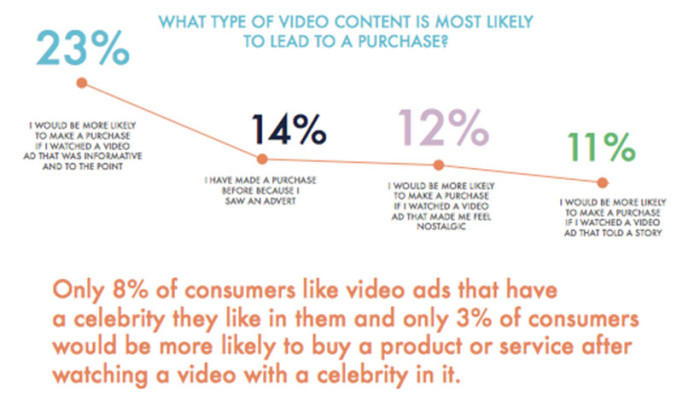
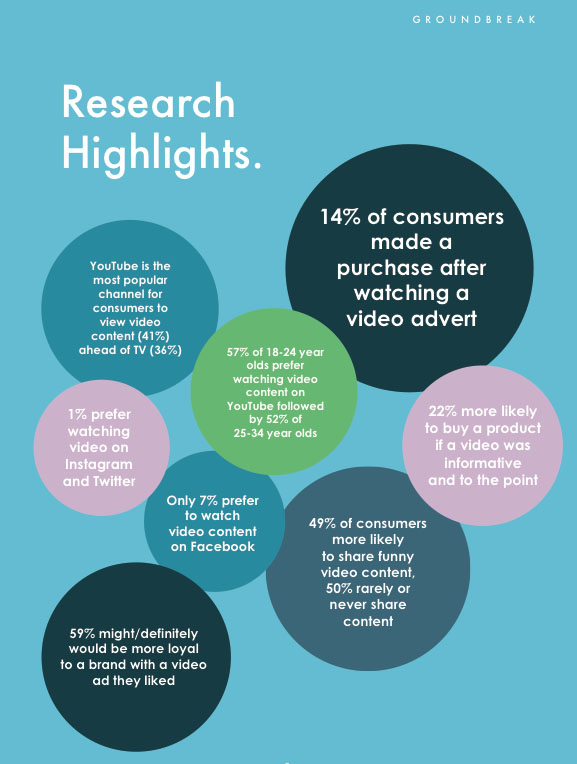
The fresh research among 1,000 UK consumers revealed a surprisingly low figure – just 8% of consumers like video ads that have one of their favourite celebrities in them, with only 3% more likely to make a purchase after seeing one of these.

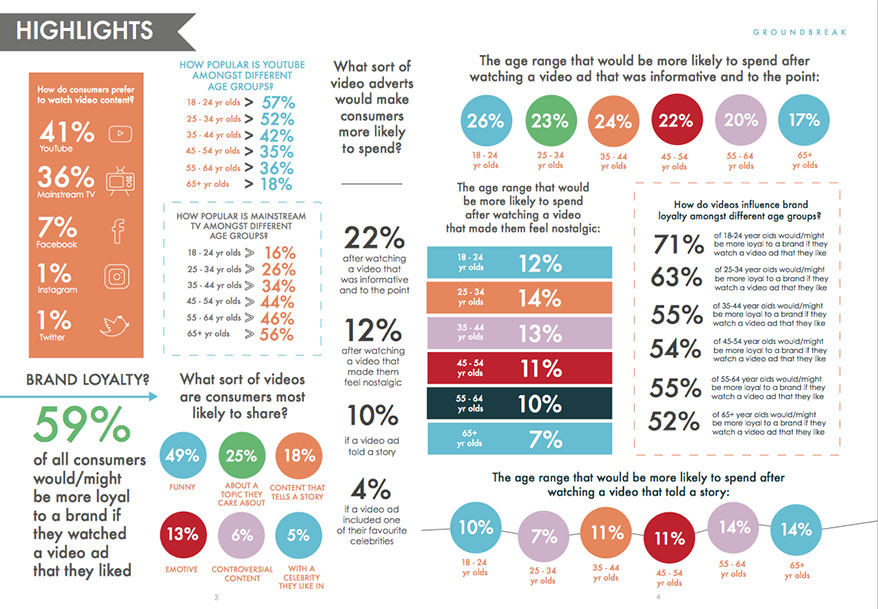
More tuned in to the power of video are millennials – one in five of them are more likely to purchase a product or service after watching a video advert. Older generations are less receptive, with only 12% of 45-54-year-olds, 13% of 55-64-year-video-ad-research-grapholds and 6% of those aged 65+ saying they would be more likely to make a purchase after watching a video ad.

Consider the target market for video advertising

Video ad research reportIn the report, Geoff Brooks (pictured), CEO at Groundbreak Productions, said: “The first time a video advert appeared on British commercial television was 9.01pm on September 22, 1955. Created by AB-Pathe, the 70 second ad for Gibbs SR Toothpaste made advertising history and changed the direction of consumer engagement. 61 years later, video advertising remains one of the most popular types of marketing content.
video-ad-research-report-highlights“Major holidays can be marked by the first showing of particular adverts as brands compete to create the most standout commercial content. But while audiovisual content retains its prominence in the marketing and advertising worlds, how customers consume this material has been forever changed.
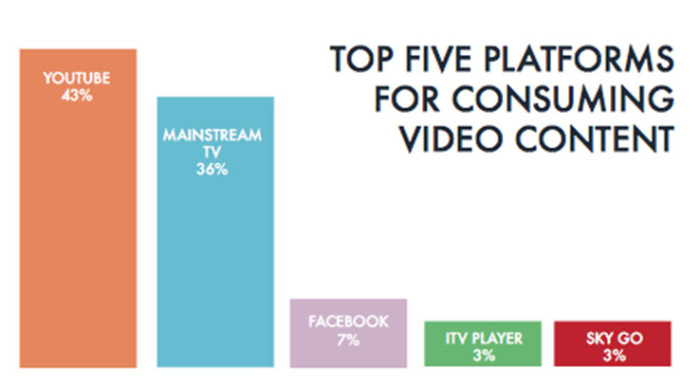

“The rise of YouTube and online video platforms has overtaken the popularity of mainstream television, particularly among younger audiences. Marketers and consumers are now living through a major shift in how content is viewed, and what content people want to view.

“We commissioned this independent report to help brands better understand their consumers’ attitudes to video content, and to help them make decisions about investing in this type of marketing for their business.

“This report provides real insight into what kind of video content people want to watch, how they want to watch it, where they want to watch it – or where they don’t want to watch video content – and also provides valuable information about the kind of video marketing that is more likely to lead to commercial results.

“For businesses looking to build brand loyalty, we also examine how video content can be a main driving factor in developing a strong base of brand advocates that will help you get your business out into the public agenda.

“The world is moving away from print media as younger generations become more naturally comfortable with digital alternatives.Video ad research report

“With such a versatile and developing digital infrastructure growing faster than traditional outlets, potential is huge for video adverts to reach an even larger audience.”

“This research really highlights the importance of brands carefully considering the way they use video to advertise their products or services to their target market.

“The fact that millennials’ spend is most likely to be influenced by video adverts is good news for those businesses targeting these consumers. However, for those that have different or more varied target markets these statistics shouldn’t be off-putting. Instead of packing in video advertising altogether, the research suggests that to influence consumer spending, brands need to create either snappy and ‘to the point’ adverts, or invest in storytelling.”

The research also showed that 42% of consumers like video ads that are informative and ‘to the point’ and 22% would be more likely to make a purchase after watching this kind of video content.

More than 30% of people surveyed like video ads that tell a story, with 29% favouring those that make them feel nostalgic – 12% said that they would potentially buy a product or service after watching one of these adverts.

Brooks added: “As marketers increasingly champion digital platforms over print advertising, consumers are being bombarded with more video content than ever. As a result, for brands to get the best return on investment, they need to start paying more attention to what consumers actually want from this kind of marketing and adapt their approach accordingly.”

Video ads research report

Groundbreak is an award-winning film and video production company with offices based in Manchester and London. Founded in 2012, the agency creates high quality advertising and feature content for online and TV broadcast. It offers a production services including conceptual development, scripting, high-end VFX and animation, as well as studio or location-based filming and has worked with some big names including Brother International and Moneysupermarket and a number of public sector clients including the Department of Health, NHS, the National Lottery and the National Crime Agency.

Categories
Data Driven Channels Europe In the News UK

Customer experience infographic: brands aren’t engaging well with Brits


Customer experience info graphic – 3radical

Organisations today are increasingly competing on the experience they deliver to their customers, says a report and customer experience infographic from 3radical.

To win, they must find new ways of engaging:

  • Their employees – giving them the information, tools and networks they need to be engaged and effective.
  • Their consumers – getting and keeping their attention over time.

3radical has developed a software platform, Voco, and set of built in best practices, that achieves top-level engagement by enabling business users to create relevant, real time interactive experiences and deliver them via existing digital channels – such as web, email, mobile app, social and chat.

Major brands including Azzuri Group, DBS Bank, Dell, British Land, Anytime Fitness and others are now successful in leveraging the Voco platform.

3radical has offices in the UK, US, Singapore and Australia. The customer service infographic here illustrates the latest UK research report that shows ways in which consumers would prefer to be marketed to by brands. Read more about the survey results, here:

Read the report: Brands – understand and deliver! What consumers really want is a better customer experience


Categories
Data Management Europe In the News Strategy and Management UK

Deal or no deal: millennials want something in return for data insight

Research from SAS shows that UK Millennials expect a tailored service from retailers that goes far beyond a bit of a discount or a BOGOF. If they are going to share their data, they demand rock-star treatment and a red carpet ride.

And if marketers are to engage with this demanding generation, they had better be on their wavelength. The research reveals that eight out of ten Millennials use their data as a lever; bargaining chips for a quality service that will enhance their lives or somehow make them easier.

data insightMark Wilkinson (pictured right), SAS regional vice-president – Northern Europe, said marketers need to exploit open and cloud-ready advanced analytics to gain deeper insight into what motivates individual customers; i.e. pinpoint what is relevant to them personally.

He said: “The Data Generation are amenable to sharing more forms of data, provided it gives them control as they navigate turbulent macro-economic conditions and fluid career projections.

“The organisations that will prosper in the future will demonstrate how they can enhance the Data Generation’s life potential and that of society. This will require organisations to embrace analytics architectures that are more accessible, flexible and can easily scale to problems of any size. All industries need access to a simple, open and cloud-ready platform that can complement other technologies and open source software.”

Heaad of marketing communications, AdestraJennifer Watkiss (pictured left), head of marketing communications at Adestra, added: “This is in line with our own findings from our research with the IDM, which states that 63% of marketers rate personalisation as ‘somewhat’ or ‘extremely’ effective in helping them reach their email marketing KPIs. So it’s no surprise that consumers, especially younger consumers, are comfortable sharing their data with businesses, but expect a more tailored brand interaction in return.

“The challenge for marketers who wish to remain relevant will be to ensure they’ve built a business case internally to continue advancing their use of personalisation across all marketing channels. A blanket offer to a massive list, personalised with a customer’s name in the salutation is no longer sufficient. Successful marketers will ensure both the timing and content of their offers are relevant at an individual level, and based on the entirety of what they know about their customers and subscribers.

The research report, Analytics for the Future: The New Data Generation, from analytics expert SAS and independent researcher Future Foundation, polled 2,000 people across the UK aged between 16 and 34. It explored the current relationship this group has with their own personal data and how they will interact with government, public sector bodies, healthcare, retail, utilities and social media in the future.

Key data insight included:

  • Life in the ‘Me Me’ World: Only 32 per cent are immediately comfortable sharing data with retailers and just nine per cent feel very comfortable. 60 per cent are happy to share information with online retailers because they will receive special offers and discounts in return
  • The 5-star customer: 49 per cent would be happy for companies to rate them as a customer
  • Wise and savvy: 52 per cent are concerned that retailers will sell their data on to third parties
  • Abandon the basket: having wised up to enhanced marketing techniques, more than half (51 per cent) will purposefully abandon their virtual shopping basket at checkout to benefit from retailer re-targeting that induces a better price
  • The survival factor for businesses – with 65 per cent of Millennials expecting brands to have total recall of their previous interactions, future innovation relies on having access to a single, unified environment that brings data together from across different industries and applies analytics to uncover patterns, spot anomalies and predict opportunities in real–time

The habits, preferences and moods of the Data Generation must be taken into account so that predictive analytics can enhance their health, prosperity and future life potential. Only 12 per cent are happy to share their personal data without a second thought but 57 per cent were more willing when it came to life-enhancing specifics.

More than two-thirds (67 per cent) are comfortable sharing with the healthcare sector, 57 per cent with financial institutions, 50 per cent with the public sector, 45 per cent with utilities, 32 per cent with retailers and just 28 per cent with social media companies. These preferences differed depending on their levels of trust and the value they recoup for sharing their data:  

  • Healthcare: Propensity to share driven by desire to optimise future health: keen to improve the NHS, 40 per cent are happy for the NHS to sell their anonymised data to third parties
  • Public Sector: Appetite to share hindered by concern it could be used against them: 62 per cent are sceptical that the data they share is used well by government agencies
  • Retail: Welcoming an era of ‘Me Me’ pricing: having wised up to enhanced marketing techniques, more than half (51 per cent) will purposefully abandon their virtual shopping basket at checkout to benefit from retailer re-targeting that induces a better price
  • Energy: An exposed generation looking for control: only 18 per cent trust their energy supplier to find them the best deal, leaving more than half (51 per cent) interested in home control apps in the future. But only 48 per cent would ‘share their energy consumption with energy suppliers to help them manage personal energy consumption and capacity at the national grid’
  • Financial Institutions: Consumers seek hyper-personalised control: nearly three in five (58 per cent) are interested in a service that calculates future financial situations using current work trajectory and spending habits and see potential from sharing their driving habits with insurers – such as being guided to cheaper petrol stations (41 per cent), having coffee pre-prepared at stop-offs (21 per cent) and offers on the move (23 per cent)
  • Social Media: Hold back from social media sharing: amid corporate over-sharing and the eroding of trust, 68 per cent are uncomfortable sharing data with social media companies

This is a generation that worries their jobs will be replaced by robots – they recognise a need for dexterity in learning, with 78 per cent expecting to keep learning new skills throughout their life, and four out of 10 prepared to invest either their own time or money into acquiring data science skills. But the research also found that they:

  • Feel financially naked – as they experience turbulent macro-economic conditions, austerity measures and fluid career projections, they look to their own data to gain control
  • Want to quantify every aspect of their lives – being visibly in control is a powerful aspiration, with almost two-thirds (61 per cent) interested in collecting and interpreting real-time information to make better life choices
  • Expect total recall – they have embraced information recovery, with 65 per cent expecting brands to have total recall of previous interactions to help them find exactly what they are looking for
  • Are becoming a generation of forecasters – want the ability to predict every aspect of their lives to feel more in control of their own futures
  • Look to computers to learn for them – artificial intelligence is becoming a computerised advantage offering a personal touch to individuals to help them predict future scenarios by converting the analysis of large data sets into natural language
  • Live in a ‘Me Me Me World’ – expect hyper personal communication based on lifestyle, beliefs, moods and aspirations that feed into the what, when, why and how they are communicated with.

Marketers’ biggest task now will be to build the buy-in required to gain the resources they need to execute on this more personalised experience. They’ll then need to follow through with the support of their technology partners to bring those plans to reality. Otherwise, they risk being left behind in both the marketing industry and the minds of their audience.

Categories
In the News USA

Copywriter king dies at 87

He was known around the world as ‘The Godfather of Gore’ for the bloody-thirsty ‘splatter’ movies he produced and directed back in the 60s. But we knew him better as the King of Killer Copy, the professor of English who made words his weapon of choice and taught marketers how to poke ’em directly at their audience so they wouldn’t forget ’em.

Herschell Gordon Lewis has died in his sleep at his Florida home, aged 87. Just a month ago, he emailed us here at The GMA to point us to an article written about him. He said: “Here’s a comment I wasn’t expecting – for this one day, I’m a celebrity.”
But he was, truly, always a celebrity – walking with him round the stands of the big USA DMA fall show 15 years ago, I felt the vibe of the red carpet as exhibitors and visitors shouted greetings, smiled and waved, even saluted him. I was walking with royalty; the copywriter king.
He was into his 70s by then and had reached a time when he said just what he liked, whether politically correct or not. To me, a journalist, he once remarked when we were discussing changes at the USA DMA: “Being a member of the DMA is like having an idiot child. You love it, but…” He then smiled serenely, daring me to print it. Now I have!
I enjoyed many lunches out with him and his wife Margot, talking about their intrepid globetrotting, as he quoted: “Gathering rosebuds while we may.” They were always great company and enormously good fun.
Read his words of wisdom – which have enduring merit – on this site: search for our long-time ‘Copy Class’ columnist Herschell Gordon Lewis and read his features. Meanwhile, watch his performance on our old DMI magazine ad, below. He wrote the copy and the orange plastic gun was his idea.
HGL, RIP. Missing you already.
[youtube id=”g0fdaGGjXVQ”]


Categories
Americas Data Driven Channels Europe In the News UK

Chelsea FC social media app brings global fans together

chelsea fc app via Stayfilm for brands to engage with networkChelsea FC has signed a global licensing deal with Stayfilm, a film-making app and networking platform launching in the UK that will enable brands to interact with the hundreds of millions of the team’s supporters worldwide.
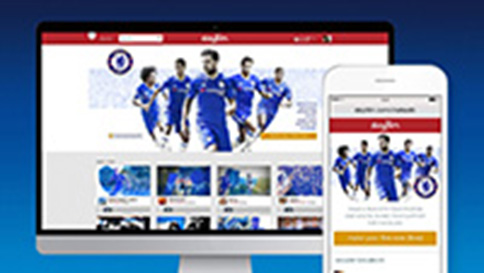
The Stayfilm app, which is available as a free download, allows users to create high-quality, shareable movies in around two minutes. Fans can use their own images and videos, combined with the club’s unique styling to automatically create a short movie that appears on a designated channel online and can be shared on social media. The style features exclusive images of the main players and the stadium, as well as the iconic lion logo and the team’s blue banners.Networking platform app for Chelsea FC fans launches

Social media app users ‘engaged and relevant’

The channel, which is hosted at www.Stayfilm.com/ChelseaFC, brings fans together providing them with a way to interact with one another in a friendly environment. With this captive audience, brands can share more about their products and services, knowing that visitors to this site are highly engaged and relevant.

Douglas Almeida, Stayfilm‘s CEO, said: “Being exclusive licensees of Chelsea FC is the first step in our expansion through Europe. We are providing a platform for global fans to share and connect, and we hope we can provide a new avenue for brands to connect with the team’s supporters outside of traditional sponsorship deals.”

For the fans, this is a fun, slick app that provides more permanence than a quick Snap or a Vine. Tomas Monteiro, a Chelsea FC fan from Brazil, said: “Although me and my friends are not based in the UK, we love the fact that we can share our passion for Chelsea FC with British fans through this app! Come on the blues!”

Here’s the video from Chelsea FC – download the app here.
[youtube id=”YSdXt2Fmgqo”]

Categories
Europe In the News UK

Happy birthday eBay, and how its consumers go shopping online

Data has been released by eBay this month into how Brits use the site when shopping online – when we shop at eBay, how and what we are buying.

This content is for Free membership members only.
Register
Already a member? Log in here
Categories
Data Innovation Global In the News Location marketing UK

Marketers drive footfall using Pokémon Go

For all those who struggled with marketers targeting mobiles or questioned the security of the mobile wallet, here is the next generation: the most successful phone game ever, with shares in Nintendo rocketing because of its popularity.

Because of this simple gadget, tweenies and teenagers once remote and hard to engage with are now out walking in the open air, sometimes for hours and miles, in search of the cutesy Japanese characters that began their video life in the 90s for the Game Boy device. Now, since July, the characters have been popping up in random places around gamers’ neighbourhoods, as viewed through their smartphones.

The little cartoon monsters (Pokémon is a corruption of the Japanese, Pocket Monster) lure former couch potatoes from their sofas in favour of finding the creature that variously resembles a rabbitty-eared squirrel, an eagle-like batty chicken or even a goofy crab – with names such as Pikachu or Blastoise (rare) to Zubat and Spearow (common).

On the gaming bandwagon

It might be just the latest craze, a free summertime app everyone can enjoy, (which has been downloaded more than 500 million times worldwide in the few weeks since launch). But it’s not just players – ‘Trainers’ as they are dubbed – who are jumping on this particular virtual reality gaming bandwagon; there is even a sign in the window of my local library saying: ‘Catch a Pokémon here’ . . . and a poster outside a nearby church tells Pokémon Go gamers they are welcome within.

Cashing in on the Pokémon Go footfall

Of course, marketers are leveraging this augmented reality game – among its features is a PokéStop (shown by a spinning blue icon; it’s where gamers refill on PokéBalls, which they zap the characters with). For example in some areas, Wetherspoons pubs, Prezzo and Pizza Express restaurant chains are near PokéStops and have clearly enjoyed the footfall of customers refilling themselves, as well as their gadgets.

Gamers do battle with each other at PokéGyms (which look like a cartoon rig or tower via the app – pictured). If a business happens to be on or near one such landmark, many Trainers will be in the vicinity and open to offers of discounts and giveaways – even prizes for the best character caught.

Some organisations are offering random acts of kindness to players, such as water or loo breaks, to build relationships. Playing the game to ‘catch ’em all’ drains a phone’s battery, so some marketers have hung up signs offering their premises as a ‘Power station for wild Pokémon hunting’.

Sharing the Pokémon Go love over social media

Using the ‘lure module’ item, more Pokémon lurk around certain PokéStops and thus numbers of players are attracted to that area. Businesses and organisations are luring one or more near them, sharing the news over social media to spread the word . . . and watching the hunters gather!

A review in The Guardian says Pokémon Go is ‘not a good game . . . but a great experience’. And some authorities are blaming gamers for causing accidents by flouting traffic regulations, for trespassing while distracted and even for falling prone to robbers who attack them as they try to catch the elusive Pokémon. The BBC has reported from Bosnia that gamers are being warned to steer clear of historic minefields, left over from the 90s war.

But various social media sites show how the app is being credited for benefiting the human spirit, with posts declaring: ‘Pokémon Go has been good for my mental health’; ‘Pokémon Go has been a better treatment for my depression than anything my doctor prescribed or therapist recommended.’ ‘Just spent 5 hours out playing Pokémon Go. Not one panic attack.’

Still, they are gamers, gazing at a screen and getting furious when thwarted by servers crashing and those screens freezing . . . but now, there is even a solution to that. The Pokémon Go Plus Wearable (pictured) is now on sale and is sure to be a sales sensation. At around £40, this device can be worn either on a bracelet strap or as a brooch/pin. It flashes and vibrates when a Pokémon is nearby and you can actually ‘throw a Poké Ball’ (ie. zap the critter), without opening your phone – it just has to be a monster you have already caught.App wearable There is no built-in pedometer, but this gizmo will at least mean players’ phone batteries aren’t draining alarmingly away as they stroll.


If your target market is 10-15-year-olds (or their parents) and you have a physical presence – such as a store or restaurant – consider whether Pokémon Go can be part of your strategy to attract visitors. It might even be enough to just be nice to the Pokémon hunters and, like some of the examples above, help them in their quest. They’ll remember you for it.

Categories
Europe In the News Legal & Compliance Strategy and Management USA

Data privacy fears threaten $250bn transatlantic trade

us-eu-flags-2The uncertainty is being fuelled by a double whammy of scepticism about how robust Privacy Shield is and fears that the alternative method, used by 80% of companies – the so-called standard contractual clauses (SCCs) – could be soon be rendered illegal.

According to a survey of 600 data professionals in the US and EU, only 40 US firms have so far adopted Privacy Shield, with just 34% intending to use the new data privacy framework, compared with 50% which used its Safe Harbour forerunner.

The situation is not being helped by EU data regulators sitting on the Article 29 Working Party (WP29). Although they approved the framework in late July, they have set off alarm bells by pledging to keep a close eye on how Privacy Shield develops.

Data privacy Shield assessment

At the time, they released a statement which said: “The first joint annual review will be a key moment for the robustness and efficiency of the Privacy Shield mechanism to be further assessed.”

US think tank the Brookings Institution has estimated that “digitally delivered services” between the EU and the US – including customer data storage – were worth nearly $250bn (£188bn) in 2015.

IAPP president and chief executive Trevor Hughes commented: “The legal uncertainty of standard contractual clauses and the scepticism about Privacy Shield may be a hangover effect from the Max Schrems case that invalidated Safe Harbour in the European courts. Clearly, organisations face an extremely complex regulatory landscape as they look to build their businesses for the digital future.

“It will be vital for them to employ privacy professionals at the highest levels of management to help navigate that landscape and capitalise on opportunity.”