Good, clean, quality data is the stuff that keeps businesses running smoothly. An infographic from Experian shows how and why marketers should keep the ‘engine’ in tip-top condition through responsible and careful collection and use of data.

Good, clean, quality data is the stuff that keeps businesses running smoothly. An infographic from Experian shows how and why marketers should keep the ‘engine’ in tip-top condition through responsible and careful collection and use of data.

Set up your data management strategy – new infographic shows why marketing teams should follow three basic steps in order to get the basics right.

Research from SAS shows that UK Millennials expect a tailored service from retailers that goes far beyond a bit of a discount or a BOGOF. If they are going to share their data, they demand rock-star treatment and a red carpet ride.
And if marketers are to engage with this demanding generation, they had better be on their wavelength. The research reveals that eight out of ten Millennials use their data as a lever; bargaining chips for a quality service that will enhance their lives or somehow make them easier.
 Mark Wilkinson (pictured right), SAS regional vice-president – Northern Europe, said marketers need to exploit open and cloud-ready advanced analytics to gain deeper insight into what motivates individual customers; i.e. pinpoint what is relevant to them personally.
He said: “The Data Generation are amenable to sharing more forms of data, provided it gives them control as they navigate turbulent macro-economic conditions and fluid career projections.
“The organisations that will prosper in the future will demonstrate how they can enhance the Data Generation’s life potential and that of society. This will require organisations to embrace analytics architectures that are more accessible, flexible and can easily scale to problems of any size. All industries need access to a simple, open and cloud-ready platform that can complement other technologies and open source software.”
 Jennifer Watkiss (pictured left), head of marketing communications at Adestra, added: “This is in line with our own findings from our research with the IDM, which states that 63% of marketers rate personalisation as ‘somewhat’ or ‘extremely’ effective in helping them reach their email marketing KPIs. So it’s no surprise that consumers, especially younger consumers, are comfortable sharing their data with businesses, but expect a more tailored brand interaction in return.
“The challenge for marketers who wish to remain relevant will be to ensure they’ve built a business case internally to continue advancing their use of personalisation across all marketing channels. A blanket offer to a massive list, personalised with a customer’s name in the salutation is no longer sufficient. Successful marketers will ensure both the timing and content of their offers are relevant at an individual level, and based on the entirety of what they know about their customers and subscribers.
The research report, Analytics for the Future: The New Data Generation, from analytics expert SAS and independent researcher Future Foundation, polled 2,000 people across the UK aged between 16 and 34. It explored the current relationship this group has with their own personal data and how they will interact with government, public sector bodies, healthcare, retail, utilities and social media in the future.
The habits, preferences and moods of the Data Generation must be taken into account so that predictive analytics can enhance their health, prosperity and future life potential. Only 12 per cent are happy to share their personal data without a second thought but 57 per cent were more willing when it came to life-enhancing specifics.
More than two-thirds (67 per cent) are comfortable sharing with the healthcare sector, 57 per cent with financial institutions, 50 per cent with the public sector, 45 per cent with utilities, 32 per cent with retailers and just 28 per cent with social media companies. These preferences differed depending on their levels of trust and the value they recoup for sharing their data:
This is a generation that worries their jobs will be replaced by robots – they recognise a need for dexterity in learning, with 78 per cent expecting to keep learning new skills throughout their life, and four out of 10 prepared to invest either their own time or money into acquiring data science skills. But the research also found that they:
Marketers’ biggest task now will be to build the buy-in required to gain the resources they need to execute on this more personalised experience. They’ll then need to follow through with the support of their technology partners to bring those plans to reality. Otherwise, they risk being left behind in both the marketing industry and the minds of their audience.

 The study suggests there are at least 100,000 copies of each individual’s personal data being held on physical devices and cloud storage platforms.
Commissioned by Ground Labs, the consumer research quizzed individuals about how many organisations they believed had access to their personal data.
The majority (84%) guessed at fewer than 20; almost a third (28%) guessed fewer than ten, but once shown a list of 50 online services and retailers, two out of five consumers realised that their original estimate was way wide of the mark. This was based on their knowledge of interactions in the past 12 months alone.
Data security company Ground Labs VP EMEA John Cassidy said: “Unless customers have an accurate idea of who has access to their data, they are unable to take the precautions necessary to protect themselves online. We only asked people to pick from 50 of the biggest online companies, in reality, the number of organisations who have access to any one individual’s data is much, much higher than our survey suggests.”
Ground Labs insists that the total number of companies consumers interact with is actually irrelevant. With automatic backups, log files, emails and legal third-party sharing, hundreds of thousands of potential copies of individual’s data is being stored both on and offline. On top of this, many companies will keep records of former customers for years.
“A conservative estimate would suggest that for any given adult, hundreds of thousands of copies of personal data reside on physical devices and cloud storage platforms both in and outside of the UK. Most people are unaware of the multiplying effect when dealing with so many service providers and so the responsibility must fall on companies to protect this sensitive data,” Cassidy concluded.

The Guide to Mover Marketing will also identify those who may be looking for move-related and home improvement products and services.
It has been developed in response to research from Royal Mail Data Services, which surveyed nearly 200 leading UK marketers to discover the key business challenges surrounding the use of customer data for marketing purposes.
The research revealed that 45% of marketers say recruiting new customers is their biggest challenge. The remaining 55% struggle with re-activation, upselling, retention and cross-selling to existing customers.
Further research suggests that 65% of consumers switch suppliers or engage with new brands during the home-move period as they track down the best deals.
Home-mover marketing presents proven opportunities for brands, particularly in the utilities, telecoms, finance, insurance, banking, DIY, retail and home improvement sectors, to increase their customer retention, acquisition and re-activation rates, the firm claims.
The guide outlines the trends and characteristics of the UK home-mover market. It also offers strategies for data-driven B2C marketers to improve their customer acquisition, retention and engagement strategies by segmenting and targeting home movers with relevant, useful marketing communications.
It also explains how businesses can quantify the value of the home-mover market through analysis of customer purchasing behaviours before, during and after their moves.
Royal Mail Data Services managing director Jim Conning said: “The combination of price-conscious consumers, the breadth of choice to be found online, and fierce competition is making it more challenging and costly for B2C marketers to improve the performance of their marketing while boosting revenues. The key to success lies in a marketer’s ability to deliver ‘right-time’, contextual marketing that anticipates what customers need before they have to ask.”
The guide draws on Royal Mail Data Services’ experience of working with many of the UK’s leading brands to help them reshape their approaches to “right-time”, contextual marketing through the use of home-mover data alongside specialist data analysis and marketing services.
Conning added: “To be successful at ‘right-time’ marketing, marketers need access to timely customer information. This data must be accurate, permission based, and sourced via a first party. But it’s not enough to just provide great-quality data.
“Businesses also need insight into home moves period to help them understand when consumers are most likely to buy a company’s products or services or, indeed, to switch to the competition. And that’s where our specialist knowledge and experience come in. Our guide offers marketers a step-by-step approach to adopting effective marketing strategies and techniques to target home movers.”
The move follows the launch of eBay Advertising’s Home Mover ‘Advanced Targeting’ scheme, which cross references insights from eBay’s 19 million monthly users with Land Registry data to predict movers months before they actually settle into their new abode.
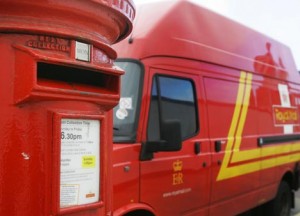
A new study by The Software Bureau reveals that 60 per cent of marketers do not practice reverse marketing; the management of returned direct mail, which costs firms £4.02 per piece of returned mail.
Approximately 90 million pieces of direct mail (2.5 per cent) are returned to sender each year. Forty per cent of these or 36 million are returned due to the recipient’s wish to be removed from the marketing database, equating to a loss of potential revenue of £116 million and £29 million in wasted production costs.
Reverse marketing enables organisations to compile in-house do not mail lists that can be screened against future campaigns reducing the volume of mistargeted mailings, saving money and improving the reputation of the organisation among customers.
The study revealed B2B organisations to be the worst culprits followed by retailers, credit card providers, retailers, pension providers and charities. Conversely, local government was found to be the most responsible.
Martin Rides, managing director of The Software Bureau, said: “The fact that every piece of returned mail costs businesses £4 is incredible – this soon adds up, amounting to thousands per year.
“Reverse marketing is a key component to reducing the volume of mistargeted direct mail. It is shocking that only four in ten organisations manage their returns and, more importantly, learn from them.
“Our new initiative, Lean DM, helps organisations to identify the areas which produce the most wastage in their direct mail activity and minimise it. With the advent of GDPR and increased scrutiny from the media and legislative bodies, it is crucial that organisations focus on data hygiene.”
The study was carried out by ‘mystery shopping’ last month.
£4.02 = 3.6 billion pieces of DM sent annually (OFCOM) x 2.5 per cent returned (Royal Mail) x 40 per cent of returns due to opt outs (DMA) = 90 million returns x lost ROI (£3.22 Royal Mail) and average cost of a mail pack (£0.80).

Randy Wootton is closely watching the US Presidential campaigns and how parties are leveraging the very latest digital techniques: programmatic politics.
As the UK’s mortality rate increases by six per cent, for the first time the brand damage caused by sending direct mail to people who have passed away has been calculated.

There is no excuse now for marketers failing to communicate on a one-to-one basis – but here’s some how-to advice on leveraging data insights to make your communications dynamic.

David Cole discusses research findings into consumer choice and the opt-in process.
