

Categories
Europe Germany In the News Legal & Compliance Strategy and Management UK

When it comes to data protection, Brits trust Germany more than UK

germanyIn what will also make interesting reading for those following the row over the new transatlantic Privacy Shield pact, most people would rather rather have companies in fellow EU countries handle their data, than non-EU regions.

Some 42% of UK workers would trust EU countries to host their data, compared to 22% of those outside the EU.
Of all the EU countries that were asked in the survey (UK, Germany, France), Germany scored the highest (26%), followed by France (21%) and the UK (20%). The Spanish, on just 6%, were bottom of the pile, suggesting that, while Spain might be a popular holiday destination, few are willing to entrust the country with their personal information.

Data protection regime

The Germans have one of the toughest data protection regimes in the world, and at one time its MEPs were demanding that the EU General Data Protection Regulation (GDPR) should go further. It also outlawed cold telemarketing back in 2010, meaning consumers have to opt in to receive calls.

The results are a part of a larger report released by Blue Coat Systems, into who do Europeans trust with their data on Dropbox, Gmail and the like.

Robert Arandjelovic, director of product marketing EMEA at Blue Coat Systems, commenting on data protectionRobert Arandjelovic (pictured), director of product marketing EMEA at Blue Coat Systems, said: “The EU regulatory landscape is set to radically change with the introduction of the GDPR legislation and this research highlights the level of distrust in countries outside the EU.

“Respondents prefer to keep their data within the EU, supporting new European data protection legislation. More concerning is the fact that almost half of respondents would trust any country to store their data, indicating too many employees simply don’t pay enough attention to where their work data is held.”


Categories
Europe In the News Legal & Compliance Strategy and Management UK

Data protection: gulf widens between customer expectation and reality

A series of white papers are being released, addressing the potential impact of the upcoming European General Data Protection Regulation (GDPR) on business-critical processes.

The first white paper focuses on Permission – how consumers give consent to a company to use their personal information, how aware individuals are of the process and how important permission-to-market is for companies.

The research, conducted by DataIQ in association with DST (global provider of specialised technology, strategic advisory and operations outsourcing to the financial and healthcare industries), reveals a disconnect between the way that consumers want businesses to treat their data and how businesses currently approach their customers’ data.Privacy

Among the paper’s key data protection findings:

– 78% of companies say it is vitally important to process data for legitimate business interests

– 28% of consumers believe they should always be asked for permission to use their data

– 21% of consumers believe that data consent should only be valid for six months

– 21% of consumers believe their data should be deleted straight away

– Only 15% of businesses track permission company-wide

– 41% of consumers don’t mind providing their data if they understand how it will be used

According to Ruaraidh Thomas (pictured), managing director at DST Applied Analytics, with so few companies currently tracking permission as a key performance indicator, there is a lot of work to be done in order for businesses to be ready for the GDPR.Discussing GDPR

“With such a high degree of connectivity and internet activity, consumers are increasingly faced with requests for their personal information and their permission to make use of it,” says Thomas. “It’s clear from this research that companies need to work to understand their customers’ expectations when it comes to sharing data in order to build long lasting relationships, especially given the upcoming GDPR.”

The GDPR is an important update to laws covering the capture, control and consent to use of personal information. While built on the core principles already established by the Data Protection Directive in 1998, GDPR also introduces new rights for consumers and new obligations for businesses.

According to DataIQ/DST research, a quarter of consumers said incentives like better price or money-off can work as a driver for the data-value exchange. The research also found that a large percentage of people just need to understand why their data is needed.

“In preparation for the GDPR, businesses must take note of how consumers wish to be engaged, especially since so many businesses rely on data as part of their business model,” says Thomas. “The fact that some consumers are happy to provide their data if they understand what it is to be used for, demonstrates just part of the opportunity available for businesses that respond appropriately.”

Categories
Data Innovation Global In the News

Enter the ‘unreal world’: digital overload sparks growth in magic

A new trend report from JWT’s futurism and innovation unit, The Innovation Group, has been researching consumer behaviour and its findings urge business and marketers to explore Unreality, the intangible aspects of our lives that defy big data and the ultratransparency of the web.

We live in an age of hyper-reality and transparency overload, when our private Google searches are indexed by algorithms and smartphones offer a window onto the intimate lives of millions of strangers. But what happens when we tire of all this unfiltered faux-reality? Enter Unreality . . .

Consumer behaviour research into Unrealities as digital overload backlashLucie Greene (pictured), worldwide director of the Innovation Group, explained: “Consumers are adrift in a sea of user-generated content that purports to offer access to the ‘real’ world. But they are increasingly aware that much of this is highly mediated and misleading.

“Unreality is the clear reaction to this: surreal visuals, unicorns, alternate universes and all.”

The digital overload report explores:

  • Magic language
    Why brands are using the vocabulary of the spiritual and astrological worlds to offer enlightenment and escapism to consumers, even if the goal is selling face cream.
  • Post-reality imagery
    Surreal imagery is emerging as a reaction to gritty user-generated reality, says the report, as otherworldly and supernatural scenarios meet a need for psychological escapism.
  • The new New Age
    Spiritually rewarding experiences with a positive psychological and physical impact are taking the place of prayer as consumers flock to sound baths, crystals and cosmology.
  • Surreal porn
    Virtual reality is ushering in a new erotic aesthetic that blends fantasy with surreal sci-fi, with much of it coming from the video-games graphics world.

When hyperbole is stratospheric, where is there that’s beyond awesome? Another world, but one that doesn’t actually exist. Download the free 34-page report here. 


Categories
Europe France In the News UK

Best-loved brands list: tech giant takes top spot

Apple dominates social conversation as most loved on brands list, with Google in second place and Lego third, says report.

Apple is the UK and Europe’s most loved brand and dominates social conversation, according to a Brand Lovelist report launched last month by social analytics platform NetBase.

‘Love, best, great, perfect and awesome’ were the top five words consumers used when expressing their admiration for Apple which received over 400,000 more mentions than Google in second place and seven times as many total mentions as Lego in third. Tesco in fourth place was the first British and only food and beverage brand to feature and BMW was the first automotive brand to appear at number 5 on the brands list.

The report looks at the top 50 brands in Europe determined by market research over the past year and ranks the best-loved brands in technology, consumer goods, automotive, food and beverage, financial services and energy. Data was gathered using NetBase’s social media listening platform, from millions and millions of English and French language posts of earned mentions (i.e. those posts that were not posted by the brand itself) across Europe during the one-year period April 2015 to March 2016. Brand conversation specific to the UK and France was analysed in English and French respectively to provide two lists of the 25 most loved British and French brands.Maximising customer sales opportunities via social media

Paige Leidig, chief marketing officer, NetBase, said: “While it’s not altogether surprising that Apple came out on top, if we look beneath the surface it tells us that here is a company that has created an enviable passion among its consumers.

“Alternatively, look at Tesco, why is it the only food and beverage brand on the list, where are the likes of Lidl and Sainsbury? The answer is because it has worked hard to build a strong relationship with its customers and they want to express their love for it.

“Understanding consumer preference is more than simply measuring the volume of social media content, it’s about understanding the intensity of passion and feeling in those posts. Most consumer purchases are won on emotion and the Brand Lovelist measures brand love and every single version of it; it tells us which brands people love the most.

“Furthermore, it highlights the importance of having insightful customer data that you can act upon whether it’s a new campaign, product launch or purely understanding ongoing customer perception of your brand.”

Key UK insights from the brands list report include:

  • Lego was the UK’s most loved consumer goods brand
    Lego came out on top as the most loved consumer goods brand with consumers sharing their excitement towards #Starwars themed lego and underlining the value that partnering plays in leveraging a strong brand presence. Consumer goods companies represented 28% of the most loved brands in the UK and included the likes of Adidas, Chanel and Burberry.
  • The UK loves cars!
    Automotive brands rule the love list with a total of nine appearing, including BMW, Ferrari and Audi, which were the top loved brands. Despite this, they only represented 16% of the overall conversation indicating that consumers have similar levels of love for car brands as they do for other industries.
  • Tesco was the only food and beverage brand on the list
    Tesco’s presence illustrated the importance of running targeted campaigns. #Triedforless was a campaign that invited customers to share some of their favourite experiences with Tesco products via social media and was the most popular hashtag associated with the brand.
  • The UK loves talking about travel destinations
    British Airways was the only airline in the list and conversation was centred on passengers sharing stories about flying to their favourite destinations. Transportation represented just 1% of overall mentions on the list and, while consumers often share experiences of their travels, airlines could certainly do more to encourage consumer love through promotional campaigns.
  • The UK are tech talkers
    Unsurprisingly, technology companies dominated the conversation and accounted for 12% of the top 25 most loved UK brands – mainly down to Apple and Google, which alone represented 64% of the overall UK brand mentions.


Categories
Data Protection Europe GDPR In the News Legal & Compliance Strategy and Management UK

EU: May 25 2018 is data protection rule implementation date

eu-yet-againAlthough the data protection reforms have already been passed, the date has only just been released following the GDPR’s publication in the EU Official Journal.

The move comes as the Information Commissioner’s Office has revealed it will be publishing GDPR compliance guidance in stages over the two-year implementation period – rather than as a single document – with each piece of guidance addressing a specific topic.

DMA group chief executive Chris Combemale (pictured) said: “Data is at the heart of the modern economy, so as an industry we must be responsible for our actions when handling consumer data and create new frameworks that fit with the GDPR over the next 24 months.DMA group chief executive Chris Combemale

“The new legislation will not only help protect the consumer, but also safeguard brands’ own reputations by ensuring their customers are at the heart of everything they do. The starting pistol has now fired and the two-year countdown has begun, but successful businesses will be those that treat this time as a full distance race rather than a last minute sprint.”

The ICO has also confirmed that the EU plans to have conducted its review into the ePrivacy Directive within the two-year implementation period for the GDPR, although many have described this as “ambitious”.

The Commission has launched a consultation on the current text of the Directive, as well as possible changes to the existing legal framework to make sure it is up to date with the new challenges of the digital area.

The Directive was last updated in 2009 to provide clearer rules on customers’ rights to privacy. In particular, new requirements were introduced such as on “cookies” and on personal data breaches.

Categories
Best practice Data Management In the News Strategy and Management UK

Brand damage caused by direct mail to deceased: £1.64 per mailer

As the UK’s mortality rate increases by six per cent, for the first time the brand damage caused by sending direct mail to people who have passed away has been calculated.

This content is for Free membership members only.
Register
Already a member? Log in here
Categories
Best practice In the News Netherlands

Amsterdam: marketers meet at MINT Global

A new spring event – MINT Global – drew international B2B marketers to Amsterdam yesterday, for a top-level conference and valuable networking opportunities – plus a brewery tour and a canal cruise! Organised by MINT (Marketing Innovation Networking) Global, it was focused on conquering B2B marketing in the digital world we live in – where being customer-centric, data-driven and tech-savvy is…

This content is for Free membership members only.
Register
Already a member? Log in here
Categories
In the News Insight UK

Women in marketing most likely to start their own business

Female marketers are the most likely to freelance, start a business, or work in another field during a career break, recruitment specialist Robert Walters has revealed. Thirty per cent of women in marketing who have taken a career break started a business during their time away from the workforce, compared to 21% of women in other professions; 33% worked…

This content is for Free membership members only.
Register
Already a member? Log in here
Categories
CRM Data Driven Channels In the News UK

Waitrose boosts CRM with instore targeting plan

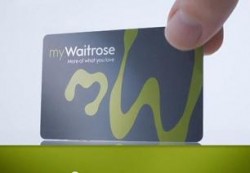
myWaitroseWorking alongside the MyWaitrose programme, Ecrebo’s marketing platform will allow Waitrose to send targeted offers and messages to its customers, based on the products they have bought.

The offers will be handed to customers instantly at the till via coupons printed alongside their receipts.

Waitrose said the technology will complement and extend the channels through which it talks to customers, including its loyalty scheme.

Offers and rewards in CRM strategy

As well as providing shoppers with money-off rewards tailored to their shopping habits, Ecrebo’s platform will give consumers offers within new and relevant product categories and provide them with recipe suggestions.

The partnership, which will form part of Waitrose’s CRM programme, follows a successful trial during 2015.

Waitrose customer loyalty manager Sam Winterson said: “Rolling out Ecrebo goes down as one of our smoothest IT implementations to date. We’ve been particularly impressed with the instant flexibility of the software which allows us to deploy or change promotions in a matter of minutes.”

Categories
Best practice In the News UK

Data hygiene in double-digit growth

Data hygiene has experienced a significant spike in interest and take-up over the first quarter of 2016 according to sales figures and incoming leads from UK-based data quality and hygiene specialist, W8 Data. The organisation – to mark its tenth anniversary – compiled a quarterly hygiene tracker for the past decade and the last three months…

This content is for Free membership members only.
Register
Already a member? Log in here