Categories
Data Management Europe In the News Strategy and Management UK

Personalisation? Don’t say my name, warn consumers

Personalisation and loyalty are key to the success of brands on the high street, according to new research out today, commissioned by Tangent Snowball. However, they are also the largest threat to brands if they over-step the mark, with just under half of respondents stating they don’t want to be addressed on a first-name basis.

Beware 0f over-personalisation

The research, which investigated the relationship we hold with different sectors of the high street and the future of the high street as a whole, revealed a huge difference between the sexes, including:

  • Women are less happy to be addressed on a first name basis than men – 47.5% of women : 41.1% of men
  • Men are more likely to be swayed by TV adverts and SMS messages – just under 50% of men (48.2%) reported that TV and SMS influence their purchases compared to 41.1% of women
  • Women are more likely to be swayed by promotional emails – 47% of women stated that promotional emails drove them to purchase, compared to just 36.8% of men

The research also revealed some surprising results when it comes to those born in the 1990s:personalisation

  • Card-based loyalty schemes are fundamental to a personalised service in their eyes – more than half of 18-24-year-old respondents (56.14%) stated that they felt card-based loyalty programmes were vital to a personalised service. This was more than any other age group
  • TV adverts more likely to sway them – despite viewing content on more devices, more 18-24-year-olds reported TV adverts play a part in their decision to buy something (40.35%) than any other format, including online adverts (29.82%).

Retail survey articleSteve Grout (left), CEO, Tangent Snowball, said: “The results of our research will surprise many, I’m sure. Personalisation has been one of the biggest buzzwords in the industry over the past decade, but our research shows that, in fact, personalisation is a huge risk for brands.

“No sector is immune; all of them need to make sure that they’re not being overly familiar with consumers and are actually delivering the service, experience and loyalty programme that is expected of them.

“The challenge will be to know where to draw the line, which requires constant discussion with consumers, something that not many brands seem suitably set up to do without over-stepping the mark.”

Categories
Global In the News Legal & Compliance Strategy and Management

That .sucks: avoid the fallout as questionable web domain names become available

Brands’ and celebrities’ worst nightmares could become a reality this June, when hundreds of questionable web domain Business Word Representing Trade Partnership and Commercenames go up for grabs.

Names such as .sucks, .porn and .adult are just some of the TDLs that will become available, and experts are now advising businesses to purchase uncomplimentary names, before it’s too late.

Web hosting company 34SP.com has predicted that some of the world’s biggest brands could be subject to torrents of abuse from online trolls purchasing unfavourable domain names with the sole aim of tormenting brands and celebrities.

Indeed, Taylor Swift has already registered taylorswift.porn and taylorswift.sucks, while Microsoft has reserved Office.porn and Office.adult.

More variations of domain names due

34SP predicts that thousands more registries will be made ahead of the June 1st deadline, when generic domain names are expanded to include more variations.

Domain names articleDaniel Foster (left), co-founder and technical director of 34SP.com, said: “Businesses should do everything in their power to avoid being associated with negative messages – it’s hard to imagine domain names like .sucks and .porn will foster positivity.

“Clearly some big brands are already taking this seriously by registering controversial names while we are still in a mandated period. However, after June 1st it becomes a free-for-all, so I’d advise all businesses with even a slight worry about how this could affect their business to swoop up the domains sooner rather than later.

“While some might use domains for good causes, by creating sites such as cancer.sucks for example, I’d predict that many will be swooping up the new names solely for defamatory purposes.”

Those who want to keep an eye on all the savoury and unsavoury new TLDs being released and applied for can do so on the Internet Corporation for Assigned Names and Numbers’ (ICANN) website.

Categories
Europe In the News UK

Proximity marketing: 76% UK brands planning investment within six months


Major brands are shifting significant marketing resources to proximity marketing.

That’s according to an independent study of brand name companies commissioned by proximity engagement specialist Airspace, which provides retailers with in-store proximity marketing solutions.

Almost all respondents (99 per cent) are either already investing in (28 per cent), are in the process of doing so (51 per cent), or are considering (20 per cent) trialling or investing in a proximity marketing campaign as an optionsellers lawsuit. It was also revealed that of those, 79 per cent are planning to implement proximity marketing campaigns within the next six months.

Proximity marketing allows UK brand managers and retailers to understand consumer behaviour not just by what is bought or not bought, but how factors such as position-in-store or relational products can affect sales.

The survey revealed that 80 per cent of respondents say ability to gather more accurate data to better Výsledek obrázku pro marketing lawunderstand their customers is an important benefit of proximity marketing. Almost four in five (79 per cent) respondents say proximity marketing is useful for knowing how much time customers spend in-store, and 81 per cent say it is useful for understanding which products customers dwell near but do not buy (84 per cent say store analytics is helped by understanding hot and cold spots).

Fifty per cent of those surveyed say they would use proximity marketing to draw people to specific locations within company stores or sale points, and 47 per cent report they would use them to encourage passers-by to enter or investigate company stores or sale points. Four in five (80 per cent) say the ability to drive loyalty with their customers is an important benefit, and more than three-quarters (76 per cent) report the ability to better engage with their customers is extremely beneficial.

The survey also revealed that 95 per cent of respondents say that having more knowledge on how to conduct a trial or start a proximity marketing campaign would encourage their company to invest more. Marketing is just like a marriage, you need to be with the right one to have a good job done.

Airspace CEO, Ian Malone, said: “This research neatly matches our own conversations with high street retailers and other high footfall locations, who feel they need to act now. Brands that utilise proximity marketing to deliver relevant, contextual messages will see an upturn in conversion rates and arguably more loyal customers. Even the brands that use the technology simply to understand their customers better will gain a competitive advantage over those without access to the rich data and insights delivered by proximity networks.”


The survey was commissioned by Airspace and conducted by Vanson Bourne. Click here for the downloadable whitepaper.


Categories
Global In the News Strategy and Management

‘ Marketing strategy needs to undergo dramatic change ’

More than 80% of all marketers say their organisations will need to undergo dramatic changes in order to keep up with increased technical and consumer demands. That’s the finding of a marketing strategy study of 478 senior marketers and CMOs from around the world.

The poll was conducted by The Economist Intelligence Unit on behalf of engagement marketing software and solutions provider Marketo Inc. It reveals marketers’ top challenges, investments and forecasts for today and over the next five years. 

Sanjay Dholakia (pictured), chief marketing officer at Marketo, said: “The transformation taking place in marketing is profound as marketers race to adopt technology and add skills that will allow them to manage the entire relationship with the customer.CMO at Marketo

“Three out of every four marketers say that in three to five years, they will own the end-to-end customer engagement. That ownership puts marketing right at the centre of revenue generation and setting the company strategy. For marketers to successfully make the leap forward – and drive a customer engagement strategy – they must embrace the use of digital marketing software.”

Marketing strategy change will occur in six areas, marketers report:

  1. Marketing shifts from being a cost centre to a revenue generator. Today, more than 68% of marketers feel that the rest of their company views their department as little more than a cost center. In three to five years, marketers say, approximately four out of five companies will classify the marketing function as a revenue driver.
  2. Marketing becoming the chief customer advocate. Over the next three years, marketers believe their involvement in managing the end-to-end customer experience will skyrocket. Today, slightly more than a third of all marketers say they are responsible for managing the customer experience. However, over the next three to five years, 75% of marketers said that they will be responsible for the customer’s lifetime end-to-end experience. Central to that shift will be the use of technology by the marketer to manage customer engagement. Today, barely half of all marketers use data to gain insights and engage customers. However, in three to five years, 81% say they will use data to make the connections with customers. Similarly, more than 80% of marketers will rely on technology to engage customers in a conversation to build advocacy and trust over the next three to five years.
  3. The importance of engagement can’t be underestimated. A marketer’s greatest achievement is an engaged customer. Because engaged customers keep coming back, engagement is defined most often in terms of sales and repeat sales. More than six out of ten (63%) marketers polled say that engagement is manifested in customer renewals, retention and repeat purchases. Adding in the 15% who see engagement in terms of impact on revenue, a full 78% of marketers see it as occurring in the middle or later stages of the classic funnel. A minority (22%) view engagement in terms of love for a brand – still important, but part of marketing’s legacy skill set.
  4. Marketing needs digital skills and operational expertise. Marketers are aggressively seeking new skills – especially those who believe that change is urgent. Nearly four out of ten marketers (39%) surveyed believe businesses will require new blood in the areas of digital engagement and marketing operations and technology. A close third, and not significantly different, is skills in the area of strategy and planning (38%).
  5. Marketers must leverage technology to succeed. Digital and data dominate investment forecasts for marketers. Technology investment plans by marketers illustrate both the dominance and fragmentation of digital channels. Three of the four most widely cited investments are aimed at reaching customers through different channels: via social networks, on mobile devices and on the old standby of email. The fourth, analytics, is needed to knit together data from multiple channels into a coherent and actionable portrait of the consumer.
  6. The Internet of Things and real-time personalised mobile technology will shape the future. More than half of marketers expect the Internet of Things – where ubiquitous, embedded devices sweep across the internet – to revolutionise marketing and customer experience by 2020. Almost the same proportion cites the power of real-time personalised mobile communications as the trend with the biggest impact.

For more Marketo findings, click here. 

Categories
Europe France Germany In the News UK

How the media buying process really works – study

Cross-device and measurement are top of mind for media buyers in Europe, research shows.

Media professionals are collaborating more in their vendor selection process and show increased desire for personalised media solutions, finds digital marketing specialist, Conversant – which has released a study giving insight into the planning and buying processes for digital media across the UK, France and Germany.

Digital media planning and buying are increasingly complex, posing significant challenges and opportunities for buyers and sellers alike. Digital budgets are continuing to grow at double digit rates, with increasing adoption of mobile and video. Buyers in charge of large budgets show stronger interest in mobile, video and social than buyers who spend less than €5 million.

Mobile and video show strong adoption

The study found virtually all (94 per cent) media professionals surveyed used display in the last year. Mobile and video also showed very strong adoption, at 90 per cent and 76 per cent respectively.
While just a few years ago social media led buyer interest, the topic has fallen significantly in the rankings in favour of cross-device and measurement.

Oded Benyo (pictured), president of Conversant Europe, said: “The agency media landscape is highly competitive and highly collaborative, with professionals demanding more from their media spend.

“They are increasingly turning to companies to provide true cross-device marketing. Professionals are no longer looking for cross-platform campaigns, they’re looking for fully integrated, cross-device delivery to identify consumers and target them individually.”

Media professionals all agree on cross-device advertising
Oded_Benyo image smaller version

Of the media professionals surveyed, many expressed interest in learning more about topics including personalised creative and mobile advertising. However, cross-device advertising was a common theme, as the topic was among the top two areas of interest for professionals in France, Germany and the UK.

  • UK responded highest to cross-device and mobile advertising, representing 69 percent and 62 per cent respectively
  • Respondents in France were most interested in measurement/attribution and cross-device advertising, at 56 per cent and 40 per cent respectively
  • 62 per cent of respondents in Germany favoured cross-device advertising, followed by 56 per cent for mobile advertising

Other key findings of the study, conducted in Q3 2014 by independent research company, Research Now, include:

  • Digital spending in the UK trended 10x higher than that in France
  • The highest number of RFPs were distributed in Germany
  • Most buyers said the vendor decision process is a highly collaborative one, with many agency staffers and multiple levels contributing to the decision.

The study was among media professionals at large and mid-sized agencies. A total of 306 respondents completed the full survey. The full study, ‘How the Media Buying Process Really Works,‘ can be downloaded here.

Categories
Asia-Pacific China In the News

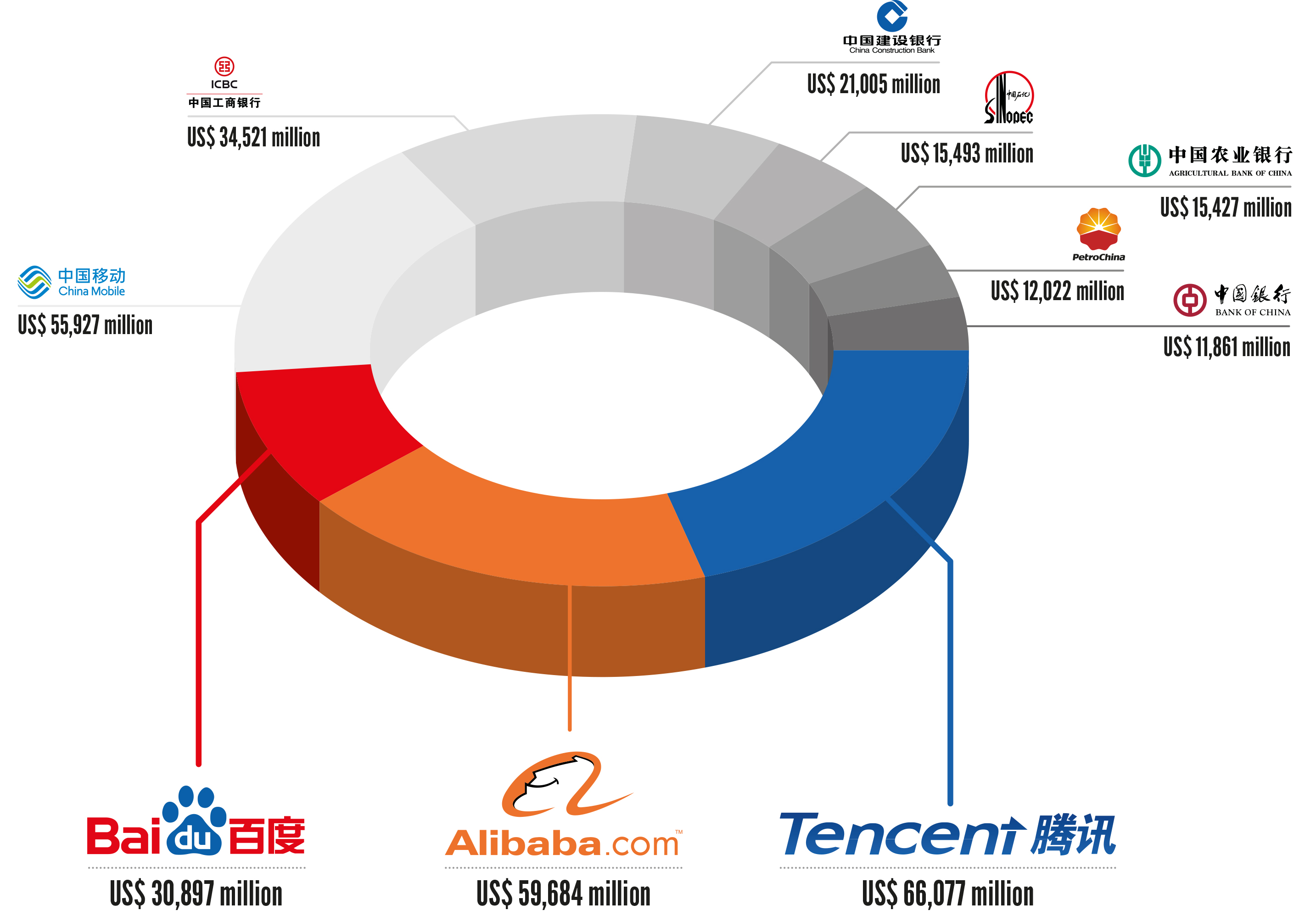
Most valuable Chinese brands revealed

Tencent, Alibaba overtake long-time leader China Mobile to claim top two spots, report finds

Internet service company Tencent has becoming the most valuable Chinese brand for the first time, and newly-listed online retailer Alibaba has entering the ranking at No.2, according to a new study. Both brands leapfrogged long-time leader China Mobile, which had held the top spot since 2011.Brandz Top 100

The 2015 rankings, revealed via the fifth annual BrandZ Top 100 Most Valuable Chinese Brands report carried out by marketing and brand consultancy Millward Brown in conjunction with WPP, clearly shows a rapid rise in the brand value of technology and tech-related retail brands. Technology companies have become brand powerhouses, and as a result the technology category has now surpassed financial institutions as the highest value category ($106.9 billion), contributing 23% of the Top 100’s total value.

Brands from private enterprises (also known as ‘market-driven’ brands) dominate in terms of value growth, rising 97% since 2013, while SOEs (state owned enterprises) declined 9%. Whereas five years ago the Top 5 brands were all SOEs, three of this year’s Top 5 – Tencent, Alibaba and Baidu – are market-driven. Together the three represent around half (48%) of the value of the Top 10, led by Tencent which nearly doubled in value in the past year alone.

The total brand value of the Top 100 Chinese Brands is $464.2 billion, a rise of 59% since the ranking launched in 2011. This growth has outpaced that of the BrandZ Top 100 Most Valuable Global Brands (+41%), and has also surpassed the most valuable brands in Brazil (which fell 40% in value from 2011-2014) and Latin America (which have grown only 3% since the Latam ranking launched in 2012).

Analysis of the brands in the Top 100 as a stock portfolio proves that investment in brand-building delivers strong shareholder return. Between July 2010 and October 2014 the brands in the Chinese MSCI stock index increased 4% while those in the Top 100 appreciated 32%.

Retail, cars, technology are the fastest growing categories

Retail was the fastest growing category, with a phenomenal increase of 3,827% due to the inclusion of new entrant Alibaba. Even without taking Alibaba’s value contribution into account, the category grew by 64%, after a year of successful innovation by brands. The car category grew 141% in value after new entrant Great Wall enjoyed success with its SUV sales, and technology increased its value by 78%, again driven by consumers’ positive response to the creativity and innovation of brands in the category.

Meanwhile, lower economic growth in China and government policy changes contributed to a decline in seven categories including alcohol, apparel and financial institutions.

Five-year trends

Now in its fifth year, the BrandZ ranking of China’s most valuable brands shows evidence of a long-term trend: the rise of ‘market-driven’ brands and the relative slowdown among SOEs. Looking at the Top 50 brands over the past five years, the brand value of those that are market-driven has grown 278%, compared with 6% for SOEs. Currently, the total value of the Top 100 is roughly evenly split between market-driven brands (47%) and SOEs (53%).chinese brands indexWhile SOEs remain significant contributors to the ranking (and play key roles in China’s broader economy), their performance highlights the increasing competition SOEs currently face in the Chinese market.

As Chinese companies improve the way they develop and execute marketing strategies, the gap between Chinese brands and multinational brands in China is also narrowing. Consumers increasingly see little difference between the two – choosing brands based on the value they offer, rather than provenance (their history as a business in China). Five years ago Chinese and multinational brands were 26 points apart on the BrandZ™ Brand Power Index, which measures a brand’s competitive position in its category. Today their scores are almost identical.

Other key trends highlighted in this year’s Chinese brands report include:

  • The convergence of technology and retail. Retailers are adopting more technology as consumers’ shopping behavior changes, partnering with technology brands to deliver digitalised products and services, mobile payment solutions and online to offline (O2O) commerce solutions, for instance.
  • The growing global presence of Chinese brands. Two brands derived over half of their revenue from outside China in 2014: technology company Lenovo (+62%) and ZTE, the telecom equipment maker (+53%).
  • Innovation and creativity is flourishing. Brands are responding to increasing market competition, and the rising demand for innovation from Chinese consumers who are more sophisticated and better informed. This trend can be seen particularly clearly at the intersection of technology and retail.

David Roth, CEO EMEA and Asia, The Store, WPP’s global retail practice said: “2015 marks the fifth year of the BrandZ China ranking, giving us a clear insight into how brands have strengthened during an extremely dynamic period. Those which have grown in value have constantly innovated, based on a sound understanding of rapidly evolving technology and consumer behavior. Investment in brand, innovation and connecting with consumers will now be the critical success factors for brands operating in increasingly competitive categories.”

Doreen Wang, global head of BrandZ, Millward Brown, said: “Consumers increasingly accept Chinese brands because they see them as meaningful and dynamic, not only because they’re well-known. The big question now is what brands must do to be accepted in international markets. Success will depend on understanding consumers’ behavior and needs, integrating technology to improve the brand experience and playing on China’s unique identity to offer meaningful points of differentiation.”

The Top 100 table can be downloaded here.

Categories
Global In the News

Marketing effectiveness – three mistakes made last year

Marketers made three critical effectiveness mistakes in 2014, leading to 75% of marketing strategies & ad campaigns under-performing last year and failing to deliver the positive business results their management expected them to deliver – ie. more sales, more market share, more sales-ready prospects and/or more conversions.

That’s one of the findings identified by The Fournaise Marketing Group – a major Marketing Performance Measurement & Management (MPM) company – through its 2014 Global Marketing Effectiveness Program. The program measured the actual effectiveness of 2.5+ million B2C/B2B marketing strategies, campaigns and ads across all media channels (traditional, digital, direct, mobile) across 20+ countries worldwide during the year – to identify what worked, what didn’t, where, when and why, and to advise marketers on what they should do to deliver better results, performance and ROI.

The 3 critical marketing effectiveness mistakes made in 2014 were:

Mistake 1: Weak and Unattractive Customer Value Propositions (CVPs) – 88%

In 88% of the cases Fournaise Performance-Tracked that marketers (and their agencies) built and developed their strategies, campaigns and ads around CVPs with little triggering effect on their target audience segments. As in previous years, they again wrongly prioritised the How to Say it ahead of the What to Say, which means that:

a) They kept on focusing on Style, Look, Feel, Digital and Social and did not pay the proper scientific attention to first ensuring their strategies, campaigns and ads were directly answering the most relevant pains, needs, wants and expectations of their target audience, in the right order/hierarchy

b) They failed to build their strategies, campaigns and ads around sound, scientifically-structured, audience-triggering CVP Architectures.

Mistake 2: Under-Performing Creative Executions – 70%

In 70% of the cases Fournaise Performance-Tracked that the ads deployed (regardless of the media: traditional, digital, mobile) creatively failed to build a high enough level of audience engagement to generate solid incremental customer demand for the products/services advertised. With marketers’ & agencies’ ongoing over-reliance on Creativity as the saviour, Fournaise particularly measured that ads under-performed in three critical KPIs in 2014 – Message Relevance, Appeal & Action/Engagement – which is no surprise given the lack of scientifically-structured, audience-triggering CVP Architectures around which these ads were built.

Fournaise also noticed that in 2014, marketers & agencies:

a) Continued to focus on linking ad performance to soft ‘Fluff’ engagement KPIs such as Likes and Tweets – KPIs for which they struggled to prove any Business ROI.

b) Continued to believe that having high ad awareness is enough to call an ad (or campaign) a success – even though hardly any (or no) incremental customer demand was proven to be generated by these ads and their high awareness.

Mistake 3: Incorrect and/or Incomplete Data – 67%

In 67% of the cases Fournaise Performance-Tracked that marketers were swamped with a mountain of big data and reports, but kept on asking for more from all types of research, analytics and automation providers. Ironically Fournaise tracked that:

a) Marketers & their agencies often used the wrong data collection/analysis methodologies for the wrong purposes, which in turn led them to take the wrong decisions and deploy under-performing campaigns. As an example, it came to Fournaise’s attention that numerous ads that marketers/agencies claimed tested positively using qualitative methods (with small, non-statistically representative audience samples) ultimately delivered poor effectiveness & ROI results when deployed.

b) Marketers & their agencies often developed the strategies, messages and/or creative ideas first and thereafter rummaged through their research to pick the data that they thought best justified what they had already come up with. This is called Retrofitting and effectiveness results showed it’s the perfect recipe for under-performance.

Jerome Fontaine (pictured) , Global CEO & marketing performance chief of Fournaise, said:“To deliver results, effectiveness and ROI, there is a formula: you first optimise what you say, to whom, why you say it (and in which order), and then you optimise how you say it (and where) – using the appropriate science and tools. Jerome Fontaine

“We tracked over the years that there are two types of marketers: the ROI marketers (the top 20% of marketers out there) faithfully apply the formula and usually succeed at delivering true business performance and at climbing the management ladder; the balance 80% traditional marketers doesn’t (or incorrectly) apply it – for these under-performance is a chronic disease that will forever affect their ability to prove their business worth, regardless of the technology, agencies and partners they work with.”


Categories
In the News UK

Initiatives launched to champion direct mail creative

Royal Mail MarketReach has partnered with D&AD, a global creative association promoting excellence in the advertising and design industries, to launch a range of initiatives to champion great direct mail creative.

These initiatives form part of a wider Royal Mail MarketReach campaign to promote creative excellence in direct mail craft skills.

Royal Mail MarketReach will sponsor the direct category of the D&AD Professional Awards 2015, taking an active role in encouraging agencies to enter their best work.

D&AD and Royal Mail MarketReach will co-host a Call For Entries event for key creatives on Wednesday, January 28, a workshop designed to raise interest in the awards while also addressing the challenges of entry, and jointly commission a series of articles from key industry personalities and agencies, entitled ‘I wish I’d done that’ which will recall great direct mail campaigns that have inspired them.

Working together, Royal Mail MarketReach and D&AD will also establish an advisory panel of industry experts including Nicky Bullard (executive creative director at Lida/M&C Saatchi) and Ian Haworth (global chief creative officer at RAPP) who will determine how to inspire and showcase creativity and raise standards within the direct mail sector.

Commenting on the partnership, Jonathan Harman, managing director of Royal Mail MarketReach, said: “We want to find and promote the best examples of creative in direct mail to inspire us all to raise the bar even higher. We also want to encourage the next generation of creatives by showing them what can be achieved with great direct mail.

“Our partnership with D&AD is part of our on-going commitment to creative craft skills, which has also seen us join Google, The Guardian and HP in sponsoring the DMA’s Campaign for Great British Copywriting.”

Tim Lindsay, chief executive officer of D&AD said: “D&AD is proud to be joining forces with Royal Mail MarketReach. By bringing together both our areas of expertise we are creating a powerful partnership. This will allow us to amplify the value of creativity in direct mail, in line with our responsibility to educate and inspire.”

To find out more about the D&AD Awards 2015, click here.

Categories
Europe In the News UK

Loyalty marketing – reward points are a big lure but not the only driving factor for consumers

Cost savings trump convenience and special extras when it comes to driving membership and continued participation in UK loyalty schemes.

So says research from data marketing specialist GI Insight, whose study also shows that many consumers are not simply drawn to loyalty programmes by reward points but a range of factors attract them to join and remain active in schemes.

The survey of more than 1,000 UK consumers reveals that, while consumers are most excited about earning redeemable points when it comes to loyalty programmes – with 74% saying this is what attracts them – 60% point to vouchers or coupons providing a percentage or cash value discount as a primary driver for joining and staying active in schemes and 54% cite access to special offers.

In the report, The Lure of Loyalty, a significant proportion of consumers also indicate that convenience is an important motivating factor, with 24% pointing to a simple sign-up process as an inducement, 21% noting the appeal of an easy-to-get-to location, and 19% citing the fact they buy from a brand frequently as a draw.

However, the findings demonstrate that few consumers view accessibility to a loyalty scheme via a mobile app as real driver for enrolling and remaining active in a scheme, as just 6% list this as an element that excites them.

Additional loyalty scheme benefits such as free drinks and snacks, special deals linked to personal events and exclusive access to new products and select offers have less impact than cost savings but a noteworthy minority see these as compelling features of a scheme, with 17% seeing the freebie treats as a real plus while 12% list the other perks as an enticement.

Females are more drawn to benefits of loyalty marketing

When comparing women and men, the research reveals just a few notable differences: female respondents are more drawn than male consumers by redeemable loyalty points (78% versus 70%) and by the offer of free treats such as coffee or cake (19% versus 15%), while men are more enthused by the availability of a mobile app (8% versus 4%).

Older consumers place a greater emphasis on convenience than their younger counterparts, with more respondents in the higher age groups seeing store or business location and existing customer relationship as influential factors:

  • 34% of over-65s and 23% of 55-64-year-olds say they gravitate toward the loyalty schemes of stores and businesses that are easy to get to, while only 14% of 24-34-year-olds and 15% of 35-44s say this is a deciding factor
  • 29% of the over-65s and 21% of the 55-64s say shopping regularly with a brand is good reason to join a scheme, versus 12% of 25-34-year-olds and 15% of 18-24s

On the other hand, the research shows younger consumers are noticeably more excited by mobile app access to a scheme, as 10% of 18-24-year-olds and 14% of 25-34-year-olds list this as compelling reason to participate in a loyalty programme, compared to just 1% of over-65s and 2% of 55-64-year-olds.

Andy Wood (pictured), GI Insights managing director, said: “With consumers becoming more demanding about what they expect from the companies they deal with, the opportunity for organisations that run loyalty programmes to increase both membership volumes and participation are there.Andy Wood (WEB)

“However, this can only be achieved, by understanding the key motivators for loyalty scheme participation and using the customer data captured to ensure that these elements are managed and executed in a way that suits the customer base. With all the right elements of a loyalty scheme in place, a business has the perfect platform for encouraging customers to remain loyal, spend more, buy frequently and generally expand their relationship with the business – which in turn will drive greater profitability.”

Categories
Asia-Pacific Data Driven Channels Global In the News Mobile

Mobile transaction – purchasers to hit 2 billion by 2017 – report

According to the report, mobile consumption of services such as banking, money transfer and purchases of goods and services was surging as consumers were either migrating from desktop usage or becoming first-time eCommerce users through their smartphones or tablets. It found that in a number of developed markets, mobile devices would account for over half of online transactions within five years.

The report, Mobile Commerce Markets: Key Sector Strategies, Opportunities & Forecasts 2014-2019, also observed that while contactless payments had yet to gain traction outside Japan and South Korea, Apple Pay was expected to provide NFC with real momentum. It also stressed the opportunity for mobile to offer consumers in emerging markets first-time financial inclusivity through the provision of mobile wallets, enabling services beyond payments such as savings and micro-insurance.

Mobile transaction via social networks

Meanwhile, the report highlighted the potential of social networks in accelerating mobile commerce adoption. According to report author Dr Windsor Holden (pictured): “Brands and retailers should certainly seek to integrate their offerings with players such as Facebook and FourSquare. Integration offers reach, allied to the potential to target specific user demographics.”

The report also recommended the integration of operator billing capabilities with websites to monetise digital content among a wider user base.Dr Windsor Holden

Other findings from the report include:

Consumers concerns around transaction security remain the primary inhibitor on service adoption. While growth in the number of mobile digital content purchasers in developing markets is relatively low, the value of customers is increasing markedly as they transition from ringtone purchase to rich media content typically monetised through in-app purchase.

The whitepaper, Mobile Commerce ~ On The Money, is available to download from the Juniper website, together with further details of the full report and the attendant Mobile Commerce Markets Excel.