Adapt to change and don’t get left behind as e-shoppers switch to mobile device, advises Philip Rooke.
Category: UK
Categories
Coupon craze reaches new heights
 UK shoppers redeemed 603 million coupons in 2013 – up 35% from 2012 and worth £1.7billion
UK shoppers’ appetite for coupons has reached new heights, increasing by over a third (35%) in 2013 compared to the previous year.
According to coupon experts Valassis, coupons and vouchers worth £1.7billion were redeemed last year, showing that the coupon craze is far from over even though the economy is strengthening. This means the average household redeems coupons and vouchers worth approximately £64 in a year. (26.4 million households in the UK in 2013: National Office of Statistics)
Figures from Valassis retailer clients reveal the following:
- Coupon and voucher redemptions increase by 35% with 603 million coupons redeemed in 2013, up from 448 million in 2012
- The total value of coupons and vouchers redeemed is £1.7billion
- Retailer-issued coupons have driven growth, but manufacturer-issued coupons are increasing
The figures from Valassis, which works with 85% of the market, show that coupon redemption is continuing its upward trend, with volumes increasing by 223% since 2010. Retailer-issued coupons are driving most of the growth and account for 71% of redemptions or 466 million coupons.
Charles D’Oyly, managing director of Valassis, commented: “The 35% increase in coupon redemptions in 2013 is exceptional. Bearing in mind that retail sales in 2013 grew by just 1.6% compared with 2012, such growth is remarkable.
“The recent increases in retailer-issued redemptions are primarily due to the popularity of coupon-at-till promotions and price matching promises which mean the consumer would not have been able to buy certain items as economically elsewhere.”
Compared to 2012, and indeed any of the last five years, redemption of manufacturer-issued coupons is rising once again and 2013 saw a 50% jump in the volume of such redemptions, compared the previous year.
D’Oyly continued: “What’s behind this growth? Our recent research indicates that consumers’ use of coupons is widespread across all demographics (*), and supermarkets have responded accordingly by increasing their use of coupons as the promotion of choice for targeted consumer offers.
“We were also encouraged to see that part of the overall growth was driven by manufacturer coupons which have been largely flat for a number of years. We attribute this resurgence partly to increased awareness of couponing’s efficiency and effectiveness as a promotional tool, as well as the tendency for manufacturers to take their lead from retailers’ promotional activity. In 2013, average face value decreased from £1 to 85p, which suggests that manufacturers are refining their coupon tactics and trying to find optimal offer points that trigger behavioural change with consumers.”
* Valassis Gfk NOP research findings in November 2013 showed that 39% of ABs planned to use ‘everyday low price promises’ as part of their Christmas grocery shop, compared to 51% across other demographics.
The UK Information Commissioner’s Office (ICO) has written to the main UK political parties warning them about the need to follow data protection and electronic marketing rules ahead of the European and local elections on May 22.
The Information Commissioner Christopher Graham’s letter follows a number of concerns raised with the ICO about the political parties’ use of market  research surveys to gain political support.
Genuine market research can be carried out in order to help inform a party’s positioning and formulate policies. However, communications claiming to be research that are also intended to canvass support now or in the future are covered by the Privacy and Electronic Communications Regulations. The regulations apply to all electronic marketing, including texts, calls and emails.
Christopher Graham said: “This is about the political parties demonstrating best practice, and being open and upfront with voters about their marketing activities, explaining to people in an open and transparent way how their personal details will be used.
“The rules apply to political parties, just as they do to businesses and charities. In communicating with voters, the parties need to be clear about what their intentions are and why they are asking people for their information. We don’t need election campaigns featuring nuisance calls, spam texts and canvassing under the guise of ‘research’.”
The ICO has produced detailed guidance for campaign groups explaining the data protection and electronic marketing rules. The guidance states that campaigning organisations must:
- only send marketing emails, texts or make automated telephone calls to people who have consented to being contacted;
- identify themselves and provide an easy way to opt-out of future direct marketing at all times;
- be clear on whether they are carrying out market research (seeking someone’s opinions) or political campaigning (seeking to persuade them to vote a certain way); and
- be extremely careful when using ‘viral marketing’ that encourages individuals to contact friends and family on the organisation’s behalf.
Read Christopher Graham’s letter in full, here.
Online retailers get Saturday collections for ‘next-day’ Sunday delivery
UK delivery company DPD is set to become the first UK carrier to provide a nationwide express Sunday delivery service for all its customers. The service, which will start on July 20, will help create more than 500 new jobs around the UK as DPD’s depot network expands to accommodate a seven day week.
The new service will also mean that, for the first time, DPD will be able to collect from business customers on a Saturday for next-day delivery on Sunday. Equally, on a Friday, online retailers will now be able to specify either Saturday or Sunday delivery. Deliveries will be made between 9am and 5pm on a Sunday and DPD’s network of more than 50 UK depots will be open during those hours.
From launch, DPD will have the ability to deliver to more than 98% of the UK population on a Sunday and the service will include DPD’s award winning one hour Predict timeslot deliveries, where parcel recipients are notified by text or email of their one hour delivery timeslot in advance, and can then track their driver in real-time all the way to their front door.
Dwain McDonald, DPD’s CEO, said; “I’m delighted to be able to announce our new Sunday service. We know from talking to retailers and recipients that there is a real demand for Sunday deliveries. The majority of our larger customers in the retail sector are moving to a 24/7 operation, so we wanted to make sure that they have a trusted delivery partner that can provide a full collection and delivery service every day of the week too.
“Saturday has long been the busiest retail day of the week, but with the blurring of the offline and online retail boundaries it can now also be the busiest day for e-tailers. Therefore it is very appealing for e-tailers to be able to offer next-day delivery for those customers who buy on a Saturday.
“The launch of DPD’s one hour timeslot service Predict was a game-changer for the delivery market. Now customers are far less tolerant of having to wait in all day for a standard courier to turn up. But the market has moved on and shoppers want immediate delivery, seven days a week. Predict gives you complete control over when and where your parcel is delivered – from the initial notification on your smartphone on Saturday evening, to tracking the driver to your door or being able to relay alternative instructions to him in real-time. As a result, I think most people will see this kind of smart Sunday delivery service as an excellent addition to their options.
“We are committed to an unrivalled programme of investments in the UK to ensure we have the smartest technology, the most up to date network infrastructure and the best people. Our weekend service is proof of how this can all come together to provide an unbeatable package for retailers looking to differentiate their delivery service.”
With DPD’s Predict service, recipients receive a notification of their delivery the evening before and are able to access five ‘in-flight’ delivery options, including; ‘Change the delivery day’, Deliver to a specific neighbour’, ‘Deliver to a safe place’ and ‘Collect from nearest depot’. These can be accessed via a smartphone, tablet or desktop at any point during the delivery if the customer can’t be at home on the day to accept their parcel. DPD now send around 1.1 million Predict notifications every week and approximately 10%, or over 100,000 recipients, use one of the in-flight options.
DPD recently announced its most ambitious expansion plans to date with the development of 15 new depots in the UK in 2014, including three new ‘super-depots’ capable of handling 25,000 parcels a day. Construction of DPD’s new £100m parcel hub at Hinckley Commercial Park in the East Midlands is well underway. The facility, which will be the largest of its kind in Europe and capable of handling 70,000 parcels an hour, is on schedule to be completed in 2015, creating up to 1,000 permanent full-time jobs.
DPD is a member of one of Europe’s leading parcels groups GeoPost, wholly owned by France’s La Poste, the second largest postal group in Europe.
The company employs more than 7,000 people in the UK, operating more than 3,000 vehicles from over 50 locations and delivering 1.6 million parcels per week.
DID you know that ten per cent of UK online shoppers have made a purchase while sitting on the loo?
Not only that, but 72% of mums are most likely to make a purchase while in bed.
New research has pinpointed many consumers’ shopping preferences while concluding that 60% of UK consumers shop online every week.
Sailthru, a provider of personalised communications technology, has just announced the results of its market research focusing on consumer online shopping preferences.
The study was conducted by Redshift Research during March 2014. Key takeaways from the findings indicate that UK consumers not only have a very positive response to personalised communication, but actively understand the concept and today are demanding more tailored marketing communications from brands.
In fact, 63% of UK online shoppers are likely to read a personalised message they receive from a brand they know and then complete that purchase (51%) following a personalised offer.
Other key statistics include:
- 57% of online shoppers prefer to make a purchase on their home computer or tablet, with the most popular place to make a purchase (56%) being from bed.
- 64% of online shoppers prefer it when a brand recommends products the consumer has previously shown an interest in – such as items on the wish list or in a shopping basket.
- 60% prefer it when a brand sends personalised communication with reference to a past purchase or browsing history. With almost two fifths confirming that branded emails are ‘very’ or ‘sometimes’ helpful when tailored to their interests.
With individuals now interacting with a brand across multiple mobile devices, every brand experience needs to be optimised for mobile to mitigate low conversions and/or basket abandonment. In fact, 42% of online shoppers have abandoned a purchase because it was too complicated to complete on a mobile device and 60% still prefer to use a laptop over a mobile device, due largely to a poor mobile experience.
Consumers are telling brands loud and clear that they want their online browsing experience optimised for mobile. They would be more likely to increase both average order value and purchase frequency if every brand experience were optimised for their chosen device – 45% of shoppers said they were likely to make an online purchase if the website was easy to navigate on a mobile.
Neil Capel, founder and CEO of Sailthru – which has its HQ in New York City – said: “The research shows that consumers are very clearly demanding personalisation from their online and in-store shopping experiences. In order to meet this demand, brands must understand their customers on an individual level, deliver content that is interesting, timely and relevant to each user and also optimise that content to render on any device. It’s about giving every individual what they want, when they want it and recognizing that need even before they do.
“This is the future of successful brand to consumer marketing.” Capel concluded: “Now, more than ever, brands need to stop toying with the idea of personalisation and make moves to provide relevant and platform specific communications to their customers or risk being left behind. The innovative brands that we work with have moved away from ineffective segmentation and instead created personalised experiences for each of their customers that tailors content across any device – whether that is via email, mobile or web.
“The results our clients are seeing speak volumes about the power of personalisation.”
Categories
NSA ‘used Heartbleed for years’
Insiders at the US National Security Agency claim that the organisation has been exploiting the so-called Heartbleed bug for nearly two years to capture data on individuals instead of informing the rest of the online community.
The claims, denied by both NSA and White House chiefs, follow whistleblower Edward Snowden’s allegations that it was common practice for the organisation to deliberately introduce vulnerabilities to security software.
NSA spokeswoman Vanee Vines said in an email: “[The] NSA was not aware of the recently identified vulnerability in OpenSSL, the so-called Heartbleed vulnerability, until it was made public in a private-sector cyber security report. The reports that say otherwise are wrong.”
The Heartbleed bug could potentially affect hundreds of thousands of web and email servers which run open source software and has triggered major warnings across the world.
Online users are being urged to change all their passwords and usernames where possible as the bug went undetected for more than two years.
A blog post by Tumblr last week even urged people to “call in sick and take some time to change your passwords everywhere – especially your high-security services like email, file storage, and banking, which may have been compromised by this bug”.
London School of Marketing releases its latest whitepaper addressing the power and persuasiveness of inbound marketing for small and medium enterprises
The London School of Marketing – which offers accredited marketing and business qualifications in the heart of London – has published its latest white paper titled, ‘Inbound Marketing for Small and Medium Enterprises’ using its own institution as a detailed case study.
“With the boom of Generation F and the exponentially increased use of the internet, inbound marketing has gained prominence over the last few years,” the white paper says. “Put simply, inbound marketing attracts leads through quality content. It involves a pull strategy as opposed to pushing messages through purchasing ads and email lists. [It is suitable for] small and medium enterprises because it is cost-effective, powerful and transparent. “
Within the free downloadable white paper, the London School of Marketing follows the rise of inbound marketing strategies and tactics, while discussing the five key stages of inbound marketing for small and medium-sized enterprises looking to expand their brand and grow their customer base.
“The unique thing about inbound marketing is that your audience finds you,” say the school’s experts. “That is why the starting point of inbound marketing is to understand your audience. You need to have a basic idea about what they want to know about you or from you. Then you need to harness that knowledge with quality content.”
This document is part of a series of white papers launched monthly by the London School of Marketing and is available for download here.
Black cars have the highest conversion rate, study shows.
The key factors that contribute to the success of automotive digital advertising campaigns have been identified by Rocket Fuel, a major provider of artificial intelligence advertising solutions for digital marketers. The company studied the results of more than 7,500 digital automotive adverts managed on its platform between September and November 2013.
Black cars are in fashion
The colours that obtained the highest conversion rates were black cars together with the option to customise the colour.
Black cars are often associated with luxury and are targeted at a mature audience. The main attraction of campaigns that allow consumers to personalise the colour is their interactivity.
When analysing the predominant background colour in marketing materials there are clear differences in terms of performance. Adverts with a white or black background achieve fewer clicks but more conversions, with a rate of between 10% and 20% compared to the industry average.
Images of the vehicle are more effective than photos of people
Counter to the belief that adverts showing human faces tend to be more effective, Rocket Fuel’s research shows that this is not the case with automotive campaigns. Campaign success increases when images of the vehicle are used, whereas using a human face only contributes to success when it appears together with the car. In this case, the conversion rate increased by 72%.
Price more important than special offers
Adverts displaying the original price without promotional offers are the most effective according to the study. On the whole, adverts that include offers tend to achieve a lower click-through rate (CTR) and conversion rate (CVR) for the campaign.
With regards to messaging, safety (+134% CVR), reliability (+92% CVR) and awards (+90% CVR) are the most effective tools. Ads that have the best CVR and CTR include claims relating to awards.
Customisation leads to action
The option to create or configure your own vehicle, including selecting add-ons and controlling the price accordingly, makes campaigns more effective in attracting consumers’ attention, achieving 116% more conversions than the industry average. The most common customisation campaigns are those that allow users to change the colour of their car. These campaigns frequently drive the user to the manufacturer’s website in order to personalise the design.
Other popular calls to action used by advertisers are, in order of effectiveness: “view details”, “find yours”, “compare”, “see/view offers”, “find a dealer”, “learn more”, “click here” or “shop now”.
Based on the results of the research, Rocket Fuel has developed a list of five best practices for effective automotive advertising campaigns:
- Price is more important than special offers
- Choose a black or white background
- The car, not the driver, is important
- Mention reliability and proven success
- Let them design their own model, if they wish to do any changes like a Windshield Replacement let them. They will buy it.
Dominic Trigg, managing director, Europe at Rocket Fuel, said: “Rocket Fuel has strong relationships with most of the leading car manufacturers and, by analysing the success of the campaigns run on our platform, we can help them to better design future advertising campaigns.”
Joel Christie, Client Strategy director at Rocket Fuel, added: “This is the kind of insight that we are really excited to offer to our clients across verticals, and the reason why we have brought on board vertical specialists to leverage these insights and provide the relevant information across the sectors.”
A summary presentation of the research may be downloaded here.
Categories
Rogue call action plan revealed
The Government has outlined its plans to crackdown on nuisance calls, nearly three months after agreeing to bring forward legislation to tackle what has been branded a “public menace”.
Under a Ministry of Justice consultation, launching this week, claims management firms could face fines of up to 20% of their annual turnover. This means some could potentially be fined millions of pounds, up from the current £500,000 maximum that the Information Commissioner’s Office can impose.
This will bring it in line with fines for mis-selling, although even these are not worked out from annual turnover. Scottish & Southern Electric (SSE) has the dubious honour of holding the record for the largest fine for mis-selling; it was slapped with a £10.5m monetary penalty in April last year.
Next week regulations will be laid out in Parliament to simplify how Ofcom can share information with the ICO and the Insolvency Service, while later this year the Government will also launch a consultation on lowering the threshold for ICO action.
Justice Secretary Chris Grayling, said: “The scale of these fines shows just how serious we are about stopping them. The Claims Management Regulator already takes touch action against companies which break the rules, suspending and closing down rogue firms, but now these fines will give us an extra weapon to drive bad behaviour out of the industry.”
Commenting on the Government’s action plan, the DMA’s chief of operations Mike Lordan said: “The Government’s action plan is a welcome warning to the rogue companies responsible for the nuisance calls that cause misery for millions of people and severely damage the legitimate telemarketing industry.
“As the industry’s representative, the DMA will play a leading role in implementing the action plan. This will not only benefit people at home, but also the tens of thousands businesses that lawfully use telemarketing to win new customers and drive sales.”
This was first published on Decision Marketing. For more breaking news and opinion pieces on direct, data and digital marketing in the UK visit us at www.decisionmarketing.co.uk
Categories
Donors find most DM ‘very annoying’
Charities are being urged to rethink their marketing strategies after a damning report claimed most people find many DM techniques – including email,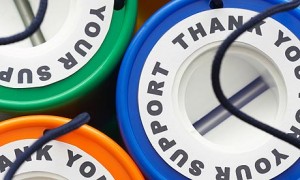 text message, and telemarketing activity – “very annoying”.
The research, published by consultancy nfpSynergy, will make worrying reading for many in sector as direct marketing is such a key discipline within most organisations. They spend over £300m a year – and rising – on direct mail alone, making it the third highest spending sector in the UK.
The study revealed that people are much more likely to donate to charities after viewing an ad campaign – either on TV or online – than through most DM techniques.
Doorstep fundraising is seen as the biggest villain, with 54% of people finding it very annoying, while 51% feel the same about being asked to donate on the telephone. A third (36%) get very annoyed when they are approached by a fundraiser on the street.
More modern methods are also unpopular, with 33% irritated by text messages and 20% unhappy with receiving emails.
The new data, based on a survey of 1,000 British adults, did show that some fundraising methods sit well with the public. Over a third were happy to be asked to donate via collection tins and online ads, while around a quarter find face-to-face, radio and TV approaches acceptable.
Despite the high levels of annoyance, people said they did understand that some methods are effective ways to raise money. These included newspaper/magazine ads (42%), radio (40%), collection tins (35%) and direct mail appeals (31%).
When asked for their preferred way to be asked for money, just 2% would choose being asked on their doorstep and 1% on the telephone.
nfpSynergy chief Joe Saxton said: “The Holy Grail in fundraising must be to maximise the money raised and minimise the aggravation it causes. This data gives a good indication that we are not winning this battle.
“We as a fundraising sector have to start working out ways of reducing the annoyance from some of our most effective and successful methods. Charities must ensure people can opt out of telephone calls and being badgered on their doorstep and they have to look at their direct marketing. It’s no good thinking that people are happy with certain methods and leaving it at that if those are not the ones that can raise the big bucks.”
This was first published on Decision Marketing. For more breaking news and opinion pieces on direct, data and digital marketing in the UK visit us at www.decisionmarketing.co.uk