Categories
In the News UK

New UK industry code to promote data responsibility

New UK industry code promotes ‘responsibility above and beyond compliance’ to address customer concerns, says DMA

Adopting the UK DMA’s new code of practice will be central to the industry’s efforts to address customer concerns about one-to-one marketing such as data sharing, according to the trade body’s executive director Chris Combemale.DMA-logo-new

Speaking at the launch of the new DMA Code, which covers all data-driven marketing activity, Combemale said it will change the industry’s mindset: “We’ve taken a new approach to self-regulation that recognises the need to focus on principles that go above and beyond compliance with the law. It’s perfectly easy to follow all of the details of regulation and yet fail to meet the expectations of the customer, such as how you use their data.

“Our Code centres on five principles to inspire the industry to serve each customer with fairness and respect. Marketing with customers not at them is imperative to fostering trust and achieving commercial success.”

The DMA is now encouraging other businesses to adopt the code, which comes into force next Monday, August 18.

According to Combemale, failure to do so will come at a cost to UK plc: “The hero principle of ‘putting your customer first’ demonstrates the evolution of our industry. Each marketer and organisation should see one-to-one marketing as an exchange of value between its business looking to prosper and its customer looking to benefit.

“Data fuels the digital economy, so earning customer trust is a commercial imperative. Brands must make every effort to ensure that they always collect and use consumers’ data in ways that they expect and benefit from.”

The DMA developed the Code after an 18-month consultation process with industry stakeholders, including practitioners as well as government regulators Ofcom and the Information Commissioner’s Office. The Ministry of Justice and Department of Culture, Media and Sport also provided input.

The DMA Code will be enforced by the UK industry’s independent watchdog, the DM Commission.

The DMA Code is backed by a series of channel-specific ‘guides’, which cover recommended best practice and compliance with regulations.

More than 1,050 corporate members of the UK DMA, which includes the industry’s top agencies, adhere to the DMA Code as a condition of membership.

The UK DMA Code and guides are available via the DMA’s website.

Categories
Data Driven Channels In the News UK

Selfridges aims to enhance customer experience

UK department store, Selfridges, has chosen software from enterprise listening technology company Synthesio to listen to and engage with customers online.

Selfridges will now be able to monitor and analyse customer comments online on a global basis, including key Asian social networks like Sina Weibo. This will enable Selfridges’ marketing and customer service teams to Selfridges-bagrespond efficiently to customer queries, engage with customers and analyse their online and offline experiences with Selfridges.

Synthesio’s software monitors and evaluates online conversations across social media platforms, review sites, forums, blogs and the comment sections of newspapers, in 50 languages and 200 countries.

The agreement with Selfridges follows Synthesio securing a similar brief with Virgin Atlantic last month.

Claire Higgins, head of digital marketing at Selfridges, said: “We are continually striving to provide the best possible service to our customers. By using Synthesio’s platform we will be able to provide even better care online and gain valuable insights that will help us better understand the online and offline experiences of our customers.”

Loic Moisand, founder and CEO of Synthesio, said: “We are delighted to start working with such an iconic brand like Selfridges, and we look forward to helping them continue their great work of delighting their customers. This project is another great example of integrated Listening and Engagement, which is becoming the de-facto strategy for mature brands.”

Synthesio’s platform also contains a built-in metric for measuring a company’s online reputation – SRS (Social Reputation Score) – which many brands use to benchmark themselves against competitors, and measure the impact of their activities.

Read also:

Which social media platform is right for your business?

A masterclass in manners and managing customer feedback – here’s what NOT to do when they complain

Categories
In the News

Integration into loyalty programmes ‘is critical’

A new report has found that there will be 1.05 billion mobile coupon users by 2019, up from just under 560 million this year.

The Juniper Research report – Mobile Coupons: Consumer Engagement, Loyalty & Redemption Strategies 2014-2019 – claimed that the surge in user numbers would in large part be driven by increased retailer engagement with the various mobile channels. It stated that retailers were now integrating coupons into loyalty programmes to a far greater extent, while focusing on delivering coupons direct to consumers rather than relying on aggregator sites.

At the same time, the report observed that mobile coupon deployments were benefitting from retailers restructuring their businesses to reflect the wider transition to the utilisation of online engagement channels. It noted those businesses are becoming more agile, more efficient and able to implement change more rapidly than would have previously been the case.

HCE & Beacon to boost coupon growth

Meanwhile, the report argued that while the use of MMS for couponing was expected to cease, disruptive technologies such as NFC (Near Field Communications) and Beacon had the potential to boost in-store engagement in the medium term.

According to report author, Dr Windsor Holden: “While NFC has failed to achieve traction thus far, the emergence of a cloud-based secure element through HCE (Host Card Emulation) is likely to stimulate greater integration into wallets. We believe that this in turn will provide the visibility that should encourage brands to run campaigns using the technology.”

Other findings from the report include:

  •  Geotargeting has provided SMS-delivered coupons with a new lease of life, with retailers seeing high redemption rates from coupons pushed to consumers near their stores.
  •  Brands are increasingly leveraging the retail database to deliver targeted coupons.
  •  Lack of adequate POS redemption technology remains the key hurdle to greater deployment and adoption.

The whitepaper, Mobile Coupons ~ The Redeeming Factor? is available to download from the Juniper Research website together with further details of the full report, the attendant Mobile Coupons Excel and further details of our forthcoming Digital Coupons report.

Juniper Research provides research and analytical services to the global hi-tech communications sector, providing consultancy, analyst reports and industry commentary.

Categories
Data Driven Channels Europe In the News

‘Percentage Off’ discounts still the most popular for customer engagement

A team of researchers working with European affiliate marketing company Optimus Performance Marketing has put together a trend report looking into the sales statistics of the most common products and goods purchased throughout the past 12 months based on seasonality. The report also indicates the most popular offers and discounts brands can use in order to generate sales through affiliate activity. 

Mark Russell, CEO of Optimus Performance Marketing explains the most noteworthy findings from the report below: “The first notable piece of information to emerge from the report is the different seasonal influences that drive sales of particular products or towards different retailers. The following factors drive purchasing patterns either on a reactive short-term basis or on a planned, predictable schedule.” 
 
Seasonality factors

  1. Genuine Seasons– (summer/winter holidays, summer/winter clothes, indoor/outdoor furniture) 
  2. Manufactured Seasons– (new car registrations, new season jewellery, annual sales, new product launches, Christmas/Easter, Mother’s/Father’s Day, sporting events)
  3. Non-specific Annual Events– (insurance renewal, phone contracts, MOT, car servicing)
  4. TacticalHot weather (pools, air-con, fans, BBQ) Wet weather (home entertainment, takeaways)

“Alternative, external factors that come into play are whether purchases are considered to be essential or discretionary. Discretionary purchases are far more likely to be influenced by short-term factors such as the seasons or weather, which will make consumers want to purchase different things.
 
“This therefore indicates to retailers investing in affiliate activity that picking the most effective offers and media partners to use is largely a question of what needs to be sold, how difficult it could be to sell and how saturated the market already is for that kind of brand or product.
 
“Another important finding of the report is how important it is to consider the various affiliate types when looking at promotions. Cashback and voucher codes account for the majority of sales, and as they sit so close to the point of purchase, the availability of voucher codes or a higher cashback rate will be a decisive influence on whether a purchase is made and the choice of brand or retailer.
 
“It is important that retailers have their latest offers listed. Sales, discounted items/ lines or any generic or exclusive codes or cashback rates will often secure a brand additional exposure in relevant site areas or newsletters.
 
“The most popular code formats, as witnessed by Optimus Performance Marketing over the past 12 months, are below.”

  1. Percentage (%) off any purchase (giving purchaser the total choice)
  2. Percentage (%) off minimum spend (retailer is trying to maintain or increase the average order value)
  3. £ off a minimum spend (retailer reducing overall percentage (%) discount while trying to maintain average order value)
  4. BOGOF (buy one get one free)/Gift With Purchase (value add codes aimed at giving customers extra incentives to improve conversion)


Categories
In the News UK

Optimistic future for marketers as vacancy numbers climb on two counts

Demand for marketing professionals is increasing both on a quarterly and yearly basis, according to fresh statistics from one of the UK’s leading professional specialist recruiters.now_hiring_sign

Figures from the Robert Walters UK Jobs Index, which charts vacancy numbers posted to online platforms, confirm that the level of marketing vacancies expanded both year-on-year (up 8%) and between the first two quarters of 2014 (up 6%), together indicating a steady increase in employer demand.

Organisations in and around the Midlands have been the most active recruiters, generating nearly 15% more roles in the year since the second quarter of 2013.

The flow of marketing jobs is also strong in the capital, where the Jobs Index recorded a year-on-year increase of 8%.

Tim Gilbert, director of Marketing Recruitment at Robert Walters UK, said: “The Jobs Index results reflect rising investment and an appetite to hire as businesses seek to achieve new levels of growth. Echoing this trend is the rising number of marketing professionals attracting multiple job offers, underscoring the need for efficient recruitment processes to secure preferred candidates.

“While many employers have embraced the digital revolution, up-skilling staff or making new hires, the flow of digital marketing vacancies shows no sign of abating. Among discerning employers, the focus will be on recruiting for highly specialist or niche digital marketing roles to build up fresh layers of expertise.

“Furthermore, for many businesses, quality remains key, with many turning to experienced advisers or consultants to access marketers with the necessary skills or experience.”


Categories
In the News UK

Board level changes at award-winning agency Cyance

  • Jon Clarke Steps up to CEO
  • Steve Kemish leaves to focus on educating/speaking/writing career

Jon Clarke, former joint MD, becomes CEO of UK-based b2b data and marketing agency Cyance with immediate effect and Steve Kemish, former Joint MD of Cyance, is to leave the company on September 12 in order to further focus on his longstanding interests in public speaking/tutoring and writing.

Kemish will act as chief strategy officer until his departure and will be actively supporting Clarke in his new role.

Mike Housley, chairman of Cyance said: “Steve is an exceptionally talented speaker and writer and has tutored and educated marketers both in the UK and Internationally. During his time as the chairman of the IDM digital marketing council and a Superbrands judge, he has been invited throughout the world to share his view on digital marketing.

“He has a true vocation in this area and it’s a natural move for him. I’d like to thank Steve for his outstanding contribution to the development of Cyance over the last six years.

“We wish him every success in the future.”

Kemish said: “I’ve had a fantastic time helping to grow Cyance and have loved my time here. But I’m pleased to now be able to take this opportunity to concentrate on fulfilling my ambitions in educating, speaking and writing. I wish everyone at Cyance every success and look forward to working on projects with them in the future.”

Housley also commented: “Jon is a highly experienced CEO and is very well qualified to drive the business forward and build on the excellent progress we’ve achieved so far. His visionary role in International B2B Demand Generation and knowledge of IT Sector Marketing have already been major assets. I look forward to working more closely with him in the future.”

Clarke said: ‘I’m excited to move into the new role of CEO and at the prospect of leading Cyance in what is a rapidly expanding marketplace. Cyance has an excellent reputation for leading the field in B2B marketing innovation – something we intend to maintain and build upon. We all wish Steve every success in developing his new career.”


Categories
In the News UK

Businesses don’t understand blogs: only 4% plan to develop one in next 12 months – report

New research suggests that currently only one in eight businesses utilises a blog as part of a wider sales and marketing strategy, while only 4% plan to implement one in the next 12 months.

According to a new report released by a UK-based catalogue and direct marketing specialist, only 12% of UK businesses currently use a blog as part of their overall marketing strategy, whilst only 4% are looking to start one over the course of the next TheBlogIconyear.

The report, put together by direct marketing, design and print specialists Catalogues 4 Business (C4B), questioned more than 300 UK organisations as part of research into corporate marketing strategies. Respondents to the study were drawn from a diverse mix of businesses, both B2B and B2C, which spanned multiple industry sectors.

Ian Simpson, managing director of C4B said: “Blogs are becoming increasingly important in the digital age, but it seems that many businesses are failing to grasp this. When it comes to marketing a business online, we’re increasingly in thrall to Google. The simple fact is you have to play by its rules if you want to find yourself anywhere prominent in the search rankings.”

Simpson continued: “A regularly updated blog plays a massive part in the success of a business’s SEO strategy. Frequently updated content, containing key words and phrases relating to the services that you offer makes you stand out when it comes to the complex Google algorithms that determine search results. Producing relevant content on your website increases the chances of you coming top of these results.”

The study also found that when looking at sales delivery only 2% of businesses believed that their blog helped to deliver sales, compared to the 24% who attributed sales directly to the success of networking.

Ian Simpson said: “Of course, when running a business, sales is the main focus. So naturally, if part of your strategy is notably delivering sales, you’re likely to put more time and effort into developing that successful element. But you can’t afford to ignore other contributing factors. Whilst people might not necessarily read a blog and decide to buy your products or services, a blog contributes considerably to your overall brand.

“A blog not only assists with SEO by bumping you up the search rankings, it also helps to improve brand reputation. You can establish an authoritative voice within your industry by projecting your views via your blog. If what you say is of value to your target demographic then it will help to improve the general influence of your brand. An example of this is fashion brands such as ASOS, which exploit their blogs to express relevant opinion, providing fashion advice and analysing current trends. The customer base really buys into this approach and as a consequence is more likely to buy their products.”

The results of the study additionally revealed that only 4% of businesses had any plans to incorporate a blog as part of their on-going strategy in the next 12 months.

Simpson added: “The fact that so few businesses plan to put emphasis on their company blog in the near future, shows that true understanding of the influence of blogs isn’t widespread. A blog is something that you can manage directly and straightforwardly and at a relatively low cost. In a competitive market, businesses really should look to embrace the potential of a blog and use all of the tools at their disposal if they want to get ahead of the competition.”

To download a copy of the full report – ‘Channel Vision – Version 3.0’ – click here.


Categories
Europe In the News Legal & Compliance Strategy and Management UK

Benchmark your permission statement to improve opt-in rates

The EU has committed to new legislation which will dramatically change the way European companies can collect, store and use data.

Its principal effect will be to stop firms contacting their customers unless they have been specifically given permission. The tacit agreement implied by people not ticking the opt-out box will no longer be enough.

In the not too distant future, companies throughout Europe will have to persuade customers to tick the opt-in box if they want to continue marketing to them.

And even before the EU law became an issue, consumers were becoming increasingly cautious about revealing information about themselves. They are concerned about who will have access to their data, how it will be used and how it will be stored and protected.

This has prompted them to look at permission statements more closely before deciding whether to allow further marketing contact.

UK DMA executive director Chris Combemale is quoted as saying: “Widespread concerns about rapidly shifting consumer attitudes to data privacy should be ringing alarm bells in the board room of every business involved with one-to-one communications.”

But there is a positive side to all this, according to Scott Logie, former UK DMA chairman and head of research, data and analysis for Bank of Scotland, who said: “Improving opt-in permission rates is fundamentally a commercial issue. At Bank of Scotland, we computed that the marginal value of increasing the consumer opt-in rate by just one per cent was worth a huge amount of incremental value. This created the basis for an ongoing scheme to improve opt-ins.”

What marketers can do

One way marketers can counteract the effects of the legislation (which some industry pundits predict could decimate some European databases) is to adopt a serious and urgent attitude to collecting permissions and make sure the permission statement is worded in a way which will maximise opt-ins.

Until now, brands have had no way of measuring whether the wording of their permission statements is generating the maximum response possible.

So, to take the guesswork out of the process, online research company fast.MAP and Opt-4 strategic consultant on data protection legislation compliance and permission maximisation, have joined forces to build a new industry standard The Data Permission Benchmarkdate permission benchmark logo

How it works

By comparing current or proposed permission-statement wording with actual results from thousands of consumers, the Data Permissions Benchmark allows marketers to quickly measure potential opt-in rates.

They will be able to understand what works and what doesn’t; compare the score against the benchmark; and gain insights into how and why consumers share their data.

The Benchmark allows brands to understand how their proposed wording performs against the 14 key attributes which affect sharing: Clear, Trustworthy, Honest, Flexible, Appealing, Inviting, Reassured, Gives confidence, Rewarding, control, Welcoming, Values me, Gives me choice, My data will be safe.

They may then compare the results with statements which perform highly in areas where their statement is underperforming and thus identify beneficial changes and refine and re-test statements.

The benchmarking process involves loading a current or proposed statement onto a fast.MAP questionnaire and sending it to a live panel of 1,000 consumers. This allows the statement to be live tested and improvements implemented within days.

Director of Opt-4, Rosemary Smith, said: “Live testing of multiple-data protection statements creates an untidy legacy of consumer promises that brands are obliged to honour, benchmarked research is the sensible alternative.”

Isn’t what constitutes an effective opt-in statement obvious?

Permission scripts which score well on clarity, control and trust are likely to achieve a high score.

To check your own success in judging the likely success of different statements, try this test.

What percentage of opt-ins do you think this statement achieved?

“By giving us your details and clicking the submit button, you are agreeing that we may use your personal data in accordance with our privacy policy including for marketing purposes”

Click here to find out if you came close.

And this one:

You know that we have some great deals in-store and online. To be the first to hear about these offers – as well as to receive vouchers which are only sent by email – please provide your email address below.

You’ll start receiving offers straight away and there will be something special in the first email that you won’t want
to miss!”

Email address…………………………………..

Click here for result.

And this:

“We’d like to keep you informed by email about our future offers and new product launches. Please tick this box to let us know that you are happy for us to do this   

(Don’t forget, you can change your contact preferences at any time by logging into your account or by using the unsubscribe links which you will find on all our emails)”

Click here for result.

The next Benchmark step is to analyse exactly what makes some statements more successful and correct the weaknesses in the one being tested. Visit the website for more information.

Contact: rosemary.smith@opt-4.co.uk  0796 147 2210 or david.cole@fastmap.com  0777 568 4293.

Categories
In the News UK

Axed DMA firm hit with £50,000 fine

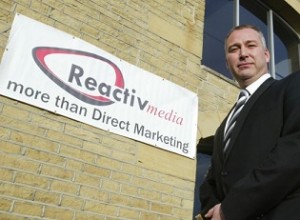
Reactiv Media, the telemarketing company which was booted out of the UK DMA just three months ago, has found itself in more trouble after being clobbered with a £50,000 fine for calling people on the Telephone Preference Service.Axed-DMA-firm-hit-with-£50000-fine-300x220
Set up in June 2007 by Tony Abbott (pictured) the firm boasts: “We’re one of the largest data owners in the UK, providing the cleanest, freshest, most up to date records available.”
And, in Elland, West Yorkshire, Abbott is viewed as something of a local hero, regularly appearing in the regional press and dishing out business advice.

However, the Information Commissioner’s Office found that between November 2012 and December 2013 the TPS received 481 complaints from individuals who had received unsolicited calls from Reactiv Media despite registering with the TPS. The ICO also received 120 complaints. In May, the company was warned it faced a fine of up to £140,000.
ICO director of operations Simon Entwisle said: “The system is simple. People on the TPS register shouldn’t receive nuisance calls – full stop. Reactiv Media ignored this rule and they must now pay a £50,000 penalty.
“Nuisance calls and texts are a scourge for thousands of individuals and households across the UK. We will continue to target the companies responsible. To help us do this we are currently speaking with the government to get the legal bar lowered allowing us to enforce against more companies and send a stronger message.”

The charge-sheet for the company dates back as far as April 2012, when the Direct Marketing Commission ruled it had breached the Direct Marketing Code of Practice over nuisance calls and emails, although it agreed to change its practices.
But just months later it was in the dock again, following a raft of complaints about unsolicited calls offering PPI compensation between April and September 2013.
Despite a fresh warning from DMC, Reativ failed to respond to requests to review and change their processes and continued to generate complaints about their activities.
Its DMA membership was axed in April. At the time, DMC chief commissioner George Kidd said: “Other telemarketing companies have worked with us and turned past problems around. Those who use companies like Reactiv Media to generate leads share a responsibility. They should not be encouraging firms to bend or break rules that are there to make sure the public’s wishes are respected when it comes to telemarketing.”

This was first published on Decision Marketing. For more breaking news and opinion pieces on direct, data and digital marketing in the UK visit us at www.decisionmarketing.co.uk

Categories
In the News

Smartphone charging to consume almost 14,000 gigawatt-hours of ‘dirty energy’ by 2019.

A new report from Juniper Research has found that charging mobile devices will generate more than 13 megatonnes CO2e (CO2 equivalent) of greenhouse gases per annum globally by 2019, against an anticipated 6.4 megatonnes this year.15555-extendingbatterylife-1358236040-269-640x480

Nearly 50% of these 2019 emissions – equivalent to annual emissions from 1.1 million cars – will come from coal-fired Asian electricity grids powering growing smartphone use.

According to the report – Green Mobile: The Complete Guide to Vendor Strategies & Future Prospects 2014-2019 – there is low consumer awareness of renewable energy and sustainable habits in these markets. It is down to vendors to take the lead in making energy companies provide more green electricity for both industry and consumers.

Companies behaviour can lead consumers forward

The report also notes that where ICT companies have insisted on renewable energy from their grids, energy companies have offered to expand renewable supply to other consumers. It claims that more a widespread adoption of this approach could help lower supplier emissions within the mobile arena.

Companies can have a more direct impact on user emissions by making energy efficient components and apps standard for their devices. This will also have the beneficial effect of prolonging battery life, which has long been a consumer pain point in device use.

Green Business is good business

Additionally, the report argues that with eco-ratings playing a larger part in product evaluations, the business imperatives for sustainability are impossible to ignore.

Other key findings include:

  • Phone design has a large impact on recyclability, as certain design features make recycling uneconomical. Vendors must plan for end of device life to ensure they do not exacerbate the growing e-waste problem.
  • Supply chain emissions still remain a huge problem for the industry. If suppliers can be incentivised to change now, the industry could save a potential 57.8 megatonnes in GHG emissions by 2019.

The white paper, ‘How Green Is My Mobile?’ is available for download from the Juniper website together with full details of the report and the attendant Interactive Forecast Excel (IFxl).