Categories
In the News New Zealand

Pioneers wanted! Call for international entries to New Zealand awards

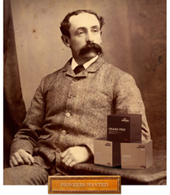
Aaron Montgomery Ward, John Caples, Lester Wunderman, David Ogilvy, Stan Rapp, Tom Collins, Howard Draft – all great direct marketing pioneers who have helped to shape our industry.Pioneers Wanted  NZDM Awards 2014DMI

Now it’s time to find and celebrate our modern pioneers – the next generation of visionaries who are embracing big data and new media, and discovering new ways of delivering personal, relevant and timely messages to their audience of one.

The Marketing Association of New Zealand is now calling for entries to the NZDM Awards 2014 – find out more here.

Organisers are looking to reward and celebrate how you’ve discovered a brave new world of direct marketing. Enter your best campaigns and be judged by your peers at this international awards show. Entry closes at 5pm, October 24. Download your entry forms online here. 


Categories
In the News UK

UK research reveals huge jump in mobile ad engagement in 12 months, as ads improve

Most UK consumers are finding mobile ads on their smartphones, tablets and other devices to be much more informative and helpful now than a year ago.

This is according to new report from the 2nd Annual UK Mobile Path-to-Purchase Study released today by xAd, the global location marketplace, and Telmetrics, a major call measurement technology provider.

Results of the 2014 study were compiled by Nielsen from an online survey of 2,000 UK smartphone and tablet users focused on the Retail, Insurance and Telecom categories.

View the xAd/Telmetrics 2014 UK Mobile Path-to-Purchase Ad Receptiveness infographic here

Randomised mobile ads featuring irrelevant messaging are becoming a thing of the past, as brands are analysing factors such as consumer shopping behaviour patterns and real-time location to serve ads that are more personal, relevant and timely.

As a result, consumers are clicking on ads more frequently and finding them more helpful as a key tool on their path to purchase. In fact, a third of respondents who noticed mobile ads reported clicking on at least one of them in the past 30 days.

As mobile ads continue to improve, brands will continue to see an increase in ad engagement, ultimately resulting in greater influence over their target audiences and a positive impact on their bottom lines.

Relevance is the most significant driver of clicks and engagement
The advertised product must be something the consumer is interested in, the study finds. In fact, one in three respondents reported that they clicked on an ad because it was something they were interested in or looking for. The importance of geographic relevance, or how close a consumer is to a store where they can buy the product, is also significant. Its significance in determining whether or not a consumer will engage with an ad has grown 40 per cent since 2013. Readily available and easy-to-find business contact information was also important. A quarter of survey respondents specified that they prefer ads with phone numbers.

Monica Ho, SVP of marketing at xAd, said: “Through analysing historical and real-time data, brands are now able to serve ads that are much more relevant to consumers.

“Accurate location data in particular has enabled brands to serve ads that are of interest to consumers when they’re close to a store or retail location. As we’ve seen, most customers engaging with ads are looking to make immediate purchases, so this can drive significant in-store traffic and sales for brands.”

Consumers are becoming more comfortable with the free content ‘trade off’
As the mobile advertising industry matures, consumers are becoming increasingly aware of the fact that the revenue generated by ads enables their favourite sites and apps to continue producing free content. They’re also becoming more educated on location awareness and the fact that it increases relevance within mobile apps and ads. The vast majority of survey respondents said that they prefer a free website with ads over paying for an ad-free subscription, a sentiment that has increased 41 per cent since 2013.

Secondary actions are the strongest indicators of purchase intent
Secondary actions after viewing an ad, such as visiting a website or store location or calling the business, are the best indicators of purchase intent. Consumers who further engage with mobile ads post-click, have a higher purchase urgency, expectation of proximity and likelihood to convert. The frequency of these post-click activities is therefore a great measure of campaign success. 77 per cent of users who took action post-click purchased or plan to do so in the near future and 63 per cent were looking to do so within the hour. Not surprisingly, 40 per cent of respondents who took secondary actions expected the business advertised to be within 8km of their current location, once again underscoring the importance of accurate location data in mobile advertising.

Bill Dinan, president of Telmetrics, said: “Post-click mobile shoppers are 2x more likely to be looking for a specific location or contact information so advertisers that include this information can help drive more purchase activity.

“Overall, the jump in mobile ad engagement among consumers is a good sign for advertisers who can now benchmark their mobile ad performance against relevancy, timeliness and geographical trends to ensure they are maximising the mobile opportunity.”


Categories
Brazil Country Focus UK USA

GMA and fast.MAP research: Fancy making riches from the rag trade in Brazil and America?

David Cole (pictured) examines the latest fast.MAP/GMA research and discovers a booming market.

If you’re thinking of selling direct to shoppers in the USA and Brazil, a good bet would be to start with clothing – since clothes are the most commonly direct-purchased foreign items in both countries – by 44% in Brazil and 32% in the USA.david-cole-md-fastmap3-web

According to new online research carried out in August by fast.MAP for the GMA, accessories are the next favoured foreign direct purchase in Brazil (35%), followed by technology items ((33%). In the USA, it’s books 26% and food (25%), whereas in the UK it’s CDs/DVDs/games (26%) and books and technology (both 23%).

Foreign white goods such as dishwashers are least likely to be bought direct by Americans (9%); musical instruments and DIY/gardening tools by Brazilians (both 7%); and motor vehicles and white goods by the British (both 3%). See chart: http://bit.ly/1ttG2Lf 

12% of US, 14% of Brazilian and 38% of British adults have bought direct from abroad in the last year. And the market is set to expand since although one per cent of Brazilians don’t plan to do so again, 19% are considering their first direct purchase from abroad, as are 16% of Americans.

27% of US consumers ‘sometimes’ or ‘often’ buy direct from abroad and a further 17% do so ‘rarely’.

Neither population is as committed to buying foreign goods direct as are those of the seven European countries already examined in this on-going GMA study. See chart: http://bit.ly/1vQMTUb

If you need tips on where to promote your goods, it’s worth noting that Brazilians’ five most popular methods of sourcing foreign goods are company websites, social networks, online publications, email and search engines. All were used by more than a third of buyers in the last 12 months.

Around three in ten Americans have sourced via search engines and emails, a quarter from company websites and two in ten from TV or radio ads, auction sites or social networks. Chart: http://bit.ly/1oRzxCr

When translation problems occur they can lead to lost sales: 62% of Brazilians and 68% of Americans have not encountered language difficulties when buying direct from abroad, but only because they either speak the language or use websites which are in their native tongue.

Ten per cent of Americans and 18% of Brazilians successfully used translation software, but 7% of Americans and 10% of Brazilians suffered problems with it.

Two in 100 received language help from the seller and 6% of Americans and 4% of Brazilians were helped by a friend. Chart http://bit.ly/1AgWK4o  

Of the 22% of Americans who had language problems, 7% managed to successfully buy the goods they wanted while only 4% of the 20% of linguistically-challenged Brazilians managed to.

Americans were far less likely to be put-off by potential currency, refund or customs problems: 38% had no such concerns, compared with 34% of Brits and 17% of Brazilians. But a clear multi-lingual explanation of company policy on these issues would help to allay fears.

Brazilians (55%) and Brits (46%) are most worried about additional postage costs or customs charges, while Americans are most concerned about the inconvenience of returning faulty or unsuitable goods (38%). Financial transactions with a different country are the least pressing (though still a significant) concern: USA and UK 31%; Brazil 37% http://bit.ly/1tnk1zp

Nineteen per cent of Americans, 13% of Brazilians and 8% of Brits have returned goods they bought direct from abroad. In the USA the majority did so by pre-paid post/courier, while in Brazil (41%) and the UK (54%) the majority bore the cost of return  postage/ courier.

Both delivery to a local agent/ retailer/ courier depot or collection by a local agent/ retailer/ courier were significantly more common in the USA (39% and 34% respectively) than in the UK (4% & 17%) or Brazil (19% & 21%).

Companies serious about expanding their direct sales into other countries can maximise their chances of success and avoid costly mistakes, by first simultaneously and speedily using online research to test reactions to their product, prices, promotional material and incentives in each country.

For more international marketing insights click here.

Methodology
The questionnaire was run from August 22 to 29, 2014, to a US panel of 2.9million adults and a 149,000 Brazilian panel.

David Cole is MD of fast.MAP. Email: david.cole@fastmap.com

Categories
In the News UK

One in five businesses think catalogues are out-dated

A fifth of UK-based businesses regard catalogues as out-dated, despite a third of those using them crediting 40% of their overall sales as a direct result of them.

According to a new report, recently released by a direct marketing specialist, one in five businesses believe catalogues to be out-dated, despite those that used catalogues seeing two-fifths of their sales driven via the channel.

The report, put together by direct marketing, design and print specialists Catalogues 4 Business (C4B), questioned more than 300 UK organisations as part of research into corporate marketing strategies. Respondents to the study were drawn from a diverse mix of businesses, both B2B and B2C, which spanned multiple industry sectors.

According to the results of the study, only 5% of businesses plan to implement a catalogue within their marketing strategy over the next 12 months, despite the apparent success of incorporating catalogues as part of the marketing mix. Of the companies polled, 49% believed that they didn’t need a catalogue, despite a fifth (20%) saying that they used a website with e-commerce.

Ian Simpson, managing director of C4B, said: “It’s quite baffling that businesses don’t recognise the benefits that having a catalogue can bring. If you sell products via your website, a catalogue is an excellent additional method to market your product and your brand.”

He continued: “They’re also great tools for networking. Previous analysis of our study revealed networking to be the main driver of sales for 24% of businesses, making it the number one deliverer overall. Combining networking with a catalogue gives you that extra edge and allows you to leave something tangible with a potential client.”

The findings also revealed that a quarter of businesses (24%) believed that the biggest barrier to sales and marketing success was the fact that ‘people were so bombarded with emails that something in the post provided more impact’.

Simpson said: “Everyone is familiar with receiving junk emails, the majority of which end up in a SPAM folder, and even those that don’t often get deleted without being read. The prevalence of direct email marketing means that it’s easy for your message to get lost in the flood. However paper-based marketing provides that physical element, which is harder to ignore. And when it comes to paper-based marketing, catalogues have the highest opening and highest retention rate of any form.”

Simpson concluded: “While businesses might believe that printed marketing material is dead, that’s far from the case. With digital marketing becoming more and more predominant, paper-based marketing offers something different. Not everyone likes trawling through page after page on the Internet. Catalogues have a physical presence and can communicate by the way they feel, smell and unfold in your hands, something that an online equivalent simply doesn’t provide. They also have huge ‘pass through’ potential and a catalogue is often read by several people, with a similar demographic. Catalogue marketing has never gone away and, if anything, its influence is increasing.”


Categories
In the News UK

Lager is dead. Long live lager: campaign aims to curb 'lout' culture

Craft brewery says redefining Britain’s most popular beer style can end binge drink culture for good.

Scotland’s largest independent brewery, BrewDog, has set its sights on obliterating the ‘insidious culture around lager drinking’ cultivated by decades of mass marketing – by launching a beer that takes the lager style back to its roots.

Launching yesterday, This. Is. Lager. is a 4.7% ABV pilsner designed to offer lager drinkers a craft beer alternative to the mass-produced lagers that still dominate the UK market.ThisIsLager-004-220x146

This. Is. Lager. is brewed with 100% malt and ten times the hops of most industrial lagers. To demonstrate the difference to those still unfamiliar or resistant to the craft beer revolution, BrewDog offered free 1/3 pint tasters of This. Is. Lager. at all of its UK bars yesterday.

James Watt, cofounder at BrewDog, said: “This. Is. Lager. redefines a beer style that has for so long been defined by shallow, listless beers undeserving of the name.”

“For years, global breweries have spent millions convincing the British public that lager is a beer style best served as fizzy, tasteless liquid cardboard propped up by snappy straplines, glamorous advertising or counterfeit stories of foreign provenance. We hope to perpetuate a movement of craft breweries blazing a new trail for lager, proving it’s a misunderstood, neglected beer style.”

Craft beer is the star ascendant in the drinks market, with BrewDog named the fastest growing drinks brand in the UK within a context of declining beer sales for mainstream, mass-production breweries.  The artisan brewer is immediately making This. Is. Lager. part of its headliners range to ‘convert’ those still unfamiliar with craft beer as it plots destroying the binge drink culture that has long overshadowed the industry.

“Lager is often demonised or derided as the choice drink of chavs and louts, which is the result of laddish marketing that diverts attention away from taste and enjoyment and undermines the potential of lager as a creative and artisanal beer style,” he added.

The death of binge-drinking

“If we can redefine lager in the UK, we will redefine our relationship with alcohol. We can actually start to reverse binge-drinking trends currently being tackled by toothless and misguided legislative proposals unlikely to ever see the light of day anyway. With the volume-driven industry leaders trying to pull the wool over drinkers’ eyes and the government trying to legislate their way out of a media-disaster cul-de-sac, it’s time we treated drinkers like adults and gave them an alternative to stack ‘em high sell ‘em cheap beers with no soul or taste.

“Gone are the days of lager being synonymous with extra-cold taps, lads on tour, fake Aussie accents, Burberry baseball caps and pot bellies. That is not lager. This. Is. Lager.” he added.


I

Categories
In the News UK

Brand followers – amounts are irrelevant to marketers, report shows

Connections don’t equate to brand engagement.

More than half of Britain’s adult population engaged in social media do little to increase brand interest and create positive associations with brands online, finds Kantar Media in a new social media segmentation from its TGI Clickstream study of online consumer behaviour.

Richard Keogh, head of Kantar Media TGI UK, said: “This new segmentation provides crucial insights into the level of engagement and influence that social media users have online. The different segments show that clicks and connections alone will not reveal consumers’ actual engagement levels.”

Based on an analysis of the social media connections and engagement of more than 50 million adults (aged 15+), TGI’s segmentation uncovered six groups of social media users:
1. Social Spectators – a disengaged group with a respectable number of connections, but the least likely of all social media users to buy goods online, or to read or update their social media accounts. Neither do they post product reviews or follow brands online. They tend to be older and, because they don’t carry high economic or cultural capital, are unlikely to have much clout or spending power for brands.
2. Online Experimenters – are potentially very valuable for brands to target given their crucial combination of purchase power and online engagement.  Accounting for just 10% of the adult social media-using population, this group are more likely to be older and particularly likely to engage with brands and to buy products online.
Connected Engagers – have the highest level of connections and influence. They account for just 3% of all social media users, but, because they lack economic and cultural clout, may not be the big spenders. They are, however, most likely to spread the corporate word online.
4. Connected Dabblers – this group represents 10% of the social media-using population and has a high level of connections. They follow brands on social media but are less likely to post reviews about products/brands. They are engaged but less influential than Connected Engagers.
5. Passive Socialites – have a high level of connections but don’t follow brands or post reviews. This means they have a low level of influence. They account for 4% of the population.
6. Credible Contributors – account for 22% of the population. This group has an average level of connections and engagement, being highly likely to follow brands and post reviews online. They are active and engaged with medium amounts of influence.

Keogh added: “Marketers should review who they are targeting online to ensure they are directing their social media activities (and marketing budget) at the most appropriate audience.

“For instance, Social Spectators display very little online engagement in spite of having a moderate number of connections. Connected Engagers however, who are most active online have minimal economic or cultural clout. Comparatively, our Online Experimenters, who have relatively few connections online, could prove particularly influential in driving sales and growth for brands. What they lack in connections they make up for in the way they embrace social media and online purchasing.

“Marketers need to look beyond widely accepted metrics to specific evidence of engaged online activity to determine how valuable consumers are. Now is a good time for brands to review who they’re really speaking to online.”


Categories
In the News UK USA

It will soon be Christmas! Are you ready?

How to prepare for Christmas as consumers grow tired of poor online retail experience

For retailersm Christmas is just around the corner. IBM has released its annual guide for how UK online businesses should prepare for the shopping season. Based on IBM Digital Analytics Benchmark, the report provides a detailed analysis of the Christmas 2013 season and includes figures for online retail leading up to March 2014. The report is available here.

James Lovell, Smarter Commerce retail consultant, Europe, IBM, said: “While online retail is undeniably growing, the average amount people are spending remains flat and the number of items they are buying per transaction is actually decreasing.

“What’s more, attention metrics show consumers have no patience for underwhelming retail experiences. If websites are not optimised for mobile, for example, shoppers will quickly give up trying to browse. Retailers need to understand consumer shopping ‘journeys’ – that is, gain a clear understanding of which technologies they are using, how and when they are using them and how these merge with the store.”

So what should retailers prepare for this year and how can they prepare? What are the key shopping trends and the channels retailers should be paying attention to as they gear up for Christmas and New Year 2014? Is it worth paying attention to social? The report reveals:

  • Online retail spending rose 11.8 per cent in the last quarter of 2013. Over the same Christmas shopping season, Cyber Monday (2 Dec) and Black Friday (29 Nov) emerged as strong buying days in the UK, mirroring the US trend for key shopping days before Christmas.
  • Despite Android having a majority of the UK mobile market, sales via Apple devices are higher (sales via iPads and iPhones accounted for 26.9 percent of site sales in March 2014). As mobile grows, retailers need to pay close attention to how their websites perform on different devices.
  • Social channels remain a low source of traffic, with just 0.5 percent of visitors arriving from Facebook, Pinterest, YouTube and other social channels in March 2014, and accounting for 0.1 percent of sales.


Categories
In the News UK USA

It will soon be Christmas! Are you ready?

How to prepare for Christmas as consumers grow tired of poor online retail experience

For retailersm Christmas is just around the corner. IBM has released its annual guide for how UK online businesses should prepare for the shopping season. Based on IBM Digital Analytics Benchmark, the report online-christmas-shoppingprovides a detailed analysis of the Christmas 2013 season and includes figures for online retail leading up to March 2014. The report is available here.

James Lovell, Smarter Commerce retail consultant, Europe, IBM, said: “While online retail is undeniably growing, the average amount people are spending remains flat and the number of items they are buying per transaction is actually decreasing.

“What’s more, attention metrics show consumers have no patience for underwhelming retail experiences. If websites are not optimised for mobile, for example, shoppers will quickly give up trying to browse. Retailers need to understand consumer shopping ‘journeys’ – that is, gain a clear understanding of which technologies they are using, how and when they are using them and how these merge with the store.”

So what should retailers prepare for this year and how can they prepare? What are the key shopping trends and the channels retailers should be paying attention to as they gear up for Christmas and New Year 2014? Is it worth paying attention to social? The report reveals:

  • Online retail spending rose 11.8 per cent in the last quarter of 2013. Over the same Christmas shopping season, Cyber Monday (2 Dec) and Black Friday (29 Nov) emerged as strong buying days in the UK, mirroring the US trend for key shopping days before Christmas.
  • Despite Android having a majority of the UK mobile market, sales via Apple devices are higher (sales via iPads and iPhones accounted for 26.9 percent of site sales in March 2014). As mobile grows, retailers need to pay close attention to how their websites perform on different devices.
  • Social channels remain a low source of traffic, with just 0.5 percent of visitors arriving from Facebook, Pinterest, YouTube and other social channels in March 2014, and accounting for 0.1 percent of sales.


Categories
In the News UK

Coupon redemption – UK figures treble in nearly a decade

Retailers drive 33 per cent increase.

The number of coupons redeemed in the UK has reached 365 million redemptions in the first half of 2014, according to Valassis.

Findings released by the UK’s coupon experts show that the number of coupons redeemed from January to June this year is 33 per cent higher than the same period last year, and 11 per cent higher than the second half of 2013. The first half of 2013 saw 275 million coupons redeemed and 328 million redeemed in the second half of the year.

The rise in coupon redemption is driven predominantly by retailers, with 43 per cent more retailer-issued coupon redemptions in the first half of this year than in the same period in 2013. This contrasts with manufacturer-issued coupons which, despite a sharp growth over the past 18 months, were flat in the first half of 2014.

Overall, the number of coupons redeemed by UK consumers has more than trebled since 2006, from 109 million in the first half of 2006 to 365 million just eight years later.

Charles D’Oyly, managing director of Valassis, said: “Many supermarket shopping trips are now driven by savings behaviour, and coupons form a key part of this with consumers searching for the best discounts before they set foot in store. This often means that supermarket choice is determined by the most attractive and relevant offers.

“Retailers are acutely aware of this, with coupons playing a key role in their promotional strategy in a bid to attract shoppers to their stores and give them the competitive advantage.”

Categories
UK

Hitting the road: how to cure the crisis in UK commercial banking

Henry Braithwaite (pictured) discusses business investment.


In February, the Bank of England reported a 2.1% annual fall in bank lending to businesses of all sizes. This is not a headline-grabbing collapse in commercial lending, but rather a slow and steady decline that is now in danger of leaving UK businesses without the resources to invest and so maintain our nascent economic recovery. This is an issue not only for commercial banks, but for the UK as a whole. It cannot be ignored any longer.Henry Braithwaite Operations Director

Collapse of trust

Indeed the Chancellor is so worried about this lack of business investment that, back in January, he called senior executives at the UK’s largest companies to the Treasury and urged them to stop sitting on their hands and start investing. The crisis hit the headlines again in June when Business Secretary Vince Cable attacked the Bank of England for blocking reforms which would make it easier for banks to lend to business

Momentum is building behind the issue, but there will be no easy solution. The root cause of the crisis is not that banks are unable or unwilling to lend to businesses. For many months now, banks have had the capital to lend and the incentive to lend it, and they have been willing to offer significant loans to businesses at reasonable rates.

The reluctance to engage is largely on the part of the businesses themselves, especially smaller businesses. Five years is simply not long enough to forget the experiences of the Great Financial Crisis when good, solid businesses had lines of credit withdrawn almost overnight, forcing many of them out of business. These memories, combined with the emergence of alternative funding models, have left many company directors reluctant to trust banks as a reliable source of long-term investment.

As Spencer Dale, the Bank of England’s chief economist, told a CBI gathering last December: “Many companies were let down by their banks during the financial crisis, and I fear that many will be reluctant to return to a business model which relies on their banks providing liquidity and support in times of need.”

Towards a solution

In recent months, various experts have proposed a host of solutions to this impasse. In a speech at the City Week event in London on April 22, 2013, Douglas Flint, HSBC Group Chairman, argued that financial institutions need to define and enforce the right values in terms of behaviour to improve the sustainability of the financial system and demonstrate its social value.

Others have proposed more technical solutions such as caps to bankers’ pay or the G20’s comprehensive financial reforms. These are valid suggestions, but on the ground, right here and now, commercial banks need a more immediate solution. We have worked with one commercial bank that has decided to simply take matters into its own hands and get out and meet its customers.

They believe that this will begin to restore the trust that is so essential to a commercial banking relationship, and so start to return revenue growth that part of its business. It is an important story as it may point a way forward for other commercial banks in the UK.

One bank’s answer

Our client is a regional division of the commercial banking arm of one of the leading high street banks. The central marketing function was keen for regional managers to get out and meet potential customers, and so asked us to work with this region in a test pilot scheme which, if successful, would be rolled out to other regions.

The regional team was at first highly sceptical about the involvement of a telemarketing agency. They had tried it before with a different agency and had been sent out on meetings which were not fully qualified and so not only wasted their time but also reflected poorly on the bank.

Yet, since then they had been attempting to set their own new business meetings with very limited success. It was an activity few of them were trained in or had much experience of, and one that even fewer enjoyed doing. Understandably they focused on existing clients, and so were doing little to get out and engage with local businesses and start rebuilding the relationship of trust.

So, when we talked to them about how we approach our calls, and the way we give clients access to recordings of our conversations with people they are due to meet so they can be certain there is a genuine opportunity there, and be fully briefed before the meeting, they began to see how outsourcing B2B telemarketing could really work.

200% return on investment

It certainly did work. The leads that MarketMakers generated overall gave a 200% return on the investment made by the bank. This came through a combination of quick wins and longer term prospects, but crucially the bank was out talking to businesses, convincing them that it could be trusted again.

The pilot was rolled out across that bank, and it is now reaping the benefits nationally. It is a model which in the coming months and years we may see more and more commercial banks adopting. The cost of inaction, and the potential rewards for action, are simply too great to ignore any longer.

Henry Braithwaite is operations director, MarketMakers