Categories
In the News

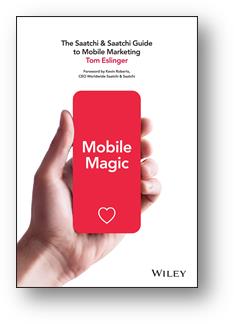
Mobile marketing secrets unlocked in new book

Mobile Magic, The Saatchi & Saatchi Guide to Mobile Marketing, by Tom Eslinger, published April 2014, by Wiley: £20.99.

With 75% of the world’s population having access to a mobile phone, marketers are scrambling to understand how consumers might invite them onto their devices.

A new book, Mobile Magic: The Saatchi & Saatchi Guide to Mobile Marketing (Wiley), written by digital communications expert Tom Eslinger, offers a roadmap for creating effective mobile marketing campaigns.

From creative concept to campaign maintenance, Mobile Magic draws on the experience of Saatchi & Saatchi’s major digital practitioner. Tom Eslinger is worldwide creative director of digital at Saatchi & Saatchi, based in New York.

Mobile Magic is a resource for brand marketers and small business owners, focusing on the strategic opportunities and practical implications of mobile marketing. The book presents a wide range of insights into the mobile market, a field that is getting bigger and more complex every day. In a noisy market, Mobile Magic helps navigate the mobile market process.

The book includes advice for defining success in mobile marketing, understanding audiences, search and social, location-based services, hiring vendors, advice on budgeting, potential legal issues and ideas for creating impactful campaigns to make emotional connections. The book includes real-world case stories from Saatchi & Saatchi clients Lexus, General Mills’ Lucky Charms and P&G’s Gillette Venus.

The core principle of Mobile Magic is the MIST – Mobile, Intimate, Social and Transactional. These four principles are core to all successful mobile marketing campaigns. Without them, any mobile app, website, augmented reality project, game or texting campaign will never reach its full potential.Mobile magic
Kevin Roberts, CEO Worldwide of Saatchi & Saatchi, wrote the foreword to Mobile Magic. He said: “Tom Eslinger is a Saatchi & Saatchi digital pioneer and someone who really walks the talk.

“This book takes his many years of experience and translates them into a something that should be on the desk of every business interested in engaging customers through their mobiles. If you need a guide to communicating and transacting on mobile – Mobile Magic is your new best friend.”

Tom Eslinger said: “Mobile is the fastest-growing arena of marketing, but it is also a space that can be intimidating for all types of business, because the customer is in total control and brands have to be invited in.

“We’ve pulled back the curtain and show that it doesn’t need to be scary.

“Start with a creative idea, understand the executional options, manage your budget and resources and plan for every step of the process. We think businesses are going to get a lot out of Mobile Magic.”

Categories
In the News

'Lack of formal social media training creates talent gap for social media professionals'

With the continued exponential growth in social media, keeping up with constant changes is a challenge. Not only for businesses of all sizes recruitingSocial media talent, but also for professionals who are trying to stay up to date with all the platforms and the best way to use them.

Learning these new skills is made complicated by the lack of specialised training schools, the pace of change and unreliable information found on the Internet.

According to Adobe’s Digital Distress Report, 82% of digital marketing professionals learn on the job, but many businesses and agencies lack adequate employee training programs and resources to effectively diminish the talent gaps in their workforce.

Because of this void, there has been steady growth for companies that provide formal training on social media and digital marketing.

One such company, Chicago-based Instant E-Training, says that the market for individuals and companies needing this type of training is continuing to expand. Founder Bob Tripathi said: “We constantly see mid-level professionals and job seekers looking for formal training to keep up with the changing landscape and shifting priorities of social media.

“Social media certification, in particular, has become a major priority as many want to distinguish themselves throughout their career or as they look for new job opportunities.”

Additionally, there is an increase in the number of jobseekers looking to leverage their job search through social media outlets and improve their skills to do so.

Katrina Pardi, a human resources professional for the Chicago Hire Company, said: “As a recruiter, I regularly use social media to find job seekers. It’s obvious from LinkedIn pages whether someone is passive or active in their search, whether they have good communication skills and grammar, etc.

“For us, it’s clear; LinkedIn and Facebook are both a top source for jobseekers, and excellent sources for referrals.”

Tara Farnsworth, who took one such course through Instant E-Training was able to take her skills to a whole new level: “It was a dynamic experience, if you can imagine a master’s level style program with the leaders of each industry giving you insight and tips to develop a detailed social media business plan.”


Categories
In the News

What makes a financial services ad successful?

Rocket Fuel reveals results of research into what leads a consumer to click and convert. Financial worries keeping people up at night? Conversion rates RocketFuelLogopeak at between midnight and 6am.

What makes a financial services digital advertising campaign successful? Rocket Fuel, a major provider of artificial intelligence (AI) advertising solutions for digital marketers, asked that question.

Its study analysed 2,300 distinct ads from more 200 credit card and financial services campaigns run with Rocket Fuel during October and November last year.

By looking at the sample of creatives from credit card and financial services campaigns a number of trends were revealed:

Consumers convert on weekends, late at night

Consumers are significantly more likely to convert on financial services campaigns on Saturdays (+16%) and Sundays (+30%), and are most likely to convert late at night, with conversion rates peaking between midnight and 6am.

Offers are more compelling than pricing

Consumers are 10x more likely to convert on financial services ads featuring a special offer than those that don’t. Similarly, they are significantly less likely to convert on ads featuring regular pricing.

Green backgrounds, animation draw interest

Animated ads tend to draw lower click-through rates but significantly higher conversion rates, while ads with a green, white or yellow background tend to generate higher conversion rates than ads of other colours.

Human faces drive more conversions

Consumers are slightly more likely (+8%) to click on credit card ads with a human face and are 2x more likely to convert on ads with human faces in the creative.

Credit card images need not apply

Ads featuring an image of the credit card itself performed considerably worse than ads without an image of the card, regardless of whether or not those ads featured a human face. Consumers were nearly twice as likely to convert on campaigns for a credit card after exposure to ads that did not feature an image of the card compare to ads with an image of the card.

‘Learn more’ is a more effective call-to-action

Among calls to action for credit-card and financial-services ads, “Learn More” drives the highest conversion rates by a considerable margin, as does content mentioning a special or limited-time offer, regardless of the benefit.

Points are more rewarding

Consumers are 1.5x more likely to click or convert on ads showcasing reward points (eg, frequent flyer points) over any other type of incentive.

Dominic Trigg, Rocket Fuel’s VP and managing director Europe, said: “A consumer’s attention span fluctuates between numerous digital channels like never before, resulting in a major challenge for financial-service providers – how to attract the right audiences in a competitive marketplace with the appropriate products, services and advertising creative.

“According to eMarketer, financial services companies spent over $5 billion in digital ad spending globally in 2013. We developed this body of research to shed light on key consumer preferences, behaviour and habits, and provide innovative financial marketers with the insights needed to develop more impactful, tailored ad initiatives.”

Joel Christie, Client Strategy director at Rocket Fuel, addeed: “This is the kind of insight that we are really excited to offer to our clients across verticals, and the reason why we have brought on board vertical specialists to leverage these insights and provide the relevant information across the sectors.”

To download the complete financial services research study — including recommendations for how advertisers can best reach consumers with financial services advertising, click here.

Categories
In the News

'Every Tom, Dick and Harry is a marketer': lacking proper training

90% of marketers are not trained in marketing performance and marketing ROI, Fournaise study finds.

Ninety per cent of marketers are not trained in Marketing Performance & Marketing ROI and 80 per cent struggle with being able to properly demonstrate to their top management the business effectiveness of their marketing spending, campaigns and activities.

These are two of the findings identified by The Fournaise Marketing Group – through its Global Marketing Effectiveness Program, in which it measures the performance of marketers each year, via interviews with more than 1,200 CEOs, management and marketing decision-makers in North America, Europe, Asia and Australia.

Fournaise also tracks the actual effectiveness of 2.5+ million B2C/B2B marketing strategies, campaigns and ads across all media channels (traditional, digital, direct, mobile) across 20+ countries worldwide each year.

At a time when CEOs are putting even more pressure on marketers to generate (and prove they generate) incremental customer demand for the companies’ products/services (i.e their ability to generate more sales, more market share, more prospects and/or more conversions), Fournaise tracked four results:

  1. 67% of marketers don’t believe marketing ROI requires a financial outcome (these are marketers who struggle to give the correct mathematical formula for marketing ROI), demonstrating a lack of understanding of what ROI is all about.
  2. 64% of marketers use brand awareness as their top marketing ROI KPI, 58% place Likes, Tweets, Clicks and/or CTR in their top five marketing ROI KPIs, and 31% still believe simply measuring the audience they have reached is marketing ROI.
  3. 63% of marketers don’t include any financial outcome when reporting on and presenting marketing results to their CEOs and top management.
  4. More than 80% are unable to write a P&L and balance sheet correctly when given a simple business scenario. These marketers are unable to give the correct definitions of basic financial KPIs used daily by CEOs and boards (such as EBITDA, P/E ratio or ROE), and are unable to correctly explain the impact marketing can have on a company’s balance sheet – demonstrating an inability to understand and speak the finance and accounting language.

Jerome Fontaine (pictured), global CEO and chief tracker of Fournaise, said: “It’s an education problem, at two levels:

1. We analysed the content of hundreds of marketing degrees/diplomas around the world and noticed that 90% do not have any specific (and proper) training on marketing performance and marketing ROI – so we can’t be surprised if marketers with a marketing degree/diploma struggle with marketing performance & ROI;Jerome Fontaine

2. We tracked that 85% of marketers are well educated, but unfortunately more than 50% have degrees/diplomas in a non-marketing-related field such as English, history, economics, journalism, sociology and foreign languages – these marketers do not know enough and do not master enough the critical marketing techniques and formulae (79% of these marketers struggle to correctly state what the basic 4Ps & 5Cs of marketing are – in the right order), and are lost when it comes to marketing performance & ROI.

“In other words, every Tom, Dick and Harry is a marketer, lacking the scientific and financial knowledge necessary to inform and optimise the creative side of marketing.

“CEOs have told us again and again: they want ROI marketers, i.e 360-degree performance machines trained to deliver (real) business results and prove/optimise ROI.

“As long as marketers continue to fail to get trained in, master the use of and optimise marketing performance and marketing ROI, they will struggle to demonstrate to CEOs that they are not ‘money spenders who jump on (and hide) behind the latest fads and blow smoke’, but real business generators.”

Categories
Asia-Pacific Australia In the News

ADMA Global Forum expands

Australia: Netflix, Cirque du Soleil, Monster Worldwide, Audi – four co-located conferences with 100+ global speakers at the expanded ADMA Global Forum in Sydney in July.

The Association for Data-driven Marketing and Advertising (ADMA) is expanding its Global Forum to four co-located conferences featuring 100+ global speakers.

ADMA CEO, Jodie Sangster, said: “We continue to bring the best data-driven experts and finest global brands to Australia to help marketers, advertisers and creatives explore world-wide best practice at our popular ADMA Marketing & Advertising Forum. But we believe our remit has become broader.

“The marketing and advertising landscape is evolving so rapidly that ADMA Global Forum has to change with our industry. The marketing universe is no longer segmented as it was previously. Now, disciplines like creativity and media/publishing fall into our remit because they are also becoming data-driven. We feel that creativity, media and data analytics need their own conferences to explore the latest international ideas and trends under the ADMA Global Forum umbrella.”

In addition to the Marketing & Advertising Forum, there will be three new conferences – ADMA Creative Fuel, ADMA Media Connect and ADMA BI & Analytics Lab – making ADMA Global Forum the biggest marketing, media and advertising event of its kind in the Asia-Pacific region and the go-to conference for the industry to hear from global innovators, creative geniuses and disruptors.

ADMA Marketing & Advertising Forum (July 29-30)

ADMA Marketing & Advertising Forum is the heart of ADMA Global Forum, bringing together the world’s foremost innovators in marketing and advertising, data analytics, lead generation, loyalty and content. The first six speakers to be announced are:

  • Tim Donza, director Consumer Insights, Netflix (USA)
  • Jordan Fiksenbaum, vice president Marketing and Public Relations, Cirque du Soleil (Canada)
  • Rohildev Nattukallingal, CEO/inventor of Fin, RHL Vision Technologies (India)
  • Jörg Dietzel, head of marketing, Audi Korea (Korea)
  • Laston Charriez, senior vice-president Marketing (North America), Western Union (USA)
  • Michael Scott, general manager Marketing, Virgin Australia (Australia).

New: ADMA Media Connect (July 29)

ADMA Media Connect brings together media, publishing and brand advertising leaders and popular media commentators to give a 360° view of the new media landscape. It will focus on the issues keeping this industry awake at night. Attendees will hear from disruptors who are challenging traditional models and brands that are achieving that elusive deeper engagement with their audiences. The first two speakers to be announced for Media Connect:

  • Jorge Urrutia Del Pozo, vice-president Operations, The Huffington Post (USA)
  • Bob Garfield, marketing and advertising analyst/Guardian columnist/author/NPR Radio presenter/TV commentator (USA).

New: ADMA Creative Fuel (July 28)

ADMA Creative Fuel is an inspiration-focused event featuring global creative leaders from agencies/brands showcasing the best creative executions from around the world. Themes to be explored: where inspiration comes from; the rise of storytelling in content, and the growing connection between creativity and new technologies. The first three speakers to be announced are:

  • Paul Middleditch, director Plaza Films (Australia)
  • Chris Dickey, senior vice-president/director of Digital Strategy, The Martin Agency – one of Ad Age’s 10 Top Agencies in 2013 (USA)
  • Vanessa Zuppicich, creative director, MTV Brand and Commercial (Australia).

New: ADMA Business Intelligence & Analytics Lab (30 July)

ADMA, partnering with the Institute of Analytics Professionals (IAPA), has created a one-day conference for business analyst professionals. ADMA BI & Analytics Lab brings together the best and brightest minds working to redefine the back-end processes of business and reshape the BI and Analytics space. The first two speakers to be announced for this event are:

  • Jean-Paul Isson, author and global vice-president Business Intelligence and Predictive Analytics, Monster Worldwide Inc (Canada)
  • Dr Pek Lum, vice-president Solutions and chief data scientist, Ayasdi. (USA)

ADMA Global Forum will feature the latest global research, delegate breakfasts and numerous social/networking opportunities. The popular Innovation Zone (July 29-30) returns to showcase the latest products and technologies to help marketers, advertisers and creatives in their jobs.

The Marketing & Advertising Forum, Media Connect and BI & Analytics Lab will run in Sydney at the Hilton Sydney Hotel from July 28-30. ADMA Creative Fuel will be held at Sydney’s Museum of Contemporary Art Australia. Follow on Twitter @admaforum and connect using #admaforum. Check out speaker bios and keep up to date with ADMA Global Forum news here. 

Categories
In the News UK

Power and persuasiveness of inbound marketing for SMEs – new white paper

London School of Marketing releases its latest whitepaper addressing the power and persuasiveness of inbound marketing for small and medium enterprises
The London School of Marketing – which offers accredited marketing and business qualifications in the heart of London – has published its latest white paper titled, ‘Inbound Marketing for Small and Medium Enterprises’ using its own institution as a detailed case study.

“With the boom of Generation F and the exponentially increased use of the internet, inbound marketing has gained prominence over the last few years,” the white paper says. “Put simply, inbound marketing attracts leads through quality content. It involves a pull strategy as opposed to pushing messages through purchasing ads and email lists. [It is suitable for] small and medium enterprises because it is cost-effective, powerful and transparent. “

Within the free downloadable white paper, the London School of Marketing follows the rise of inbound marketing strategies and tactics, while discussing the five key stages of inbound marketing for small and medium-sized enterprises looking to expand their brand and grow their customer base.

“The unique thing about inbound marketing is that your audience finds you,” say the school’s experts. “That is why the starting point of inbound marketing is to understand your audience. You need to have a basic idea about what they want to know about you or from you. Then you need to harness that knowledge with quality content.”

This document is part of a series of white papers launched monthly by the London School of Marketing and is available for download here.


Categories
In the News UK

Black is the new black: what makes a car ad successful

Black cars have the highest conversion rate, study shows.Black Audi

The key factors that contribute to the success of automotive digital advertising campaigns have been identified by Rocket Fuel, a major provider of artificial intelligence advertising solutions for digital marketers. The company studied the results of more than 7,500 digital automotive adverts managed on its platform between September and November 2013.

Black cars are in fashion

The colours that obtained the highest conversion rates were black cars together with the option to customise the colour.

Black cars are often associated with luxury and are targeted at a mature audience. The main attraction of campaigns that allow consumers to personalise the colour is their interactivity.

When analysing the predominant background colour in marketing materials there are clear differences in terms of performance. Adverts with a white or black background achieve fewer clicks but more conversions, with a rate of between 10% and 20% compared to the industry average.

Images of the vehicle are more effective than photos of people

Counter to the belief that adverts showing human faces tend to be more effective, Rocket Fuel’s research shows that this is not the case with automotive campaigns. Campaign success increases when images of the vehicle are used, whereas using a human face only contributes to success when it appears together with the car. In this case, the conversion rate increased by 72%.

Price more important than special offers

Adverts displaying the original price without promotional offers are the most effective according to the study. On the whole, adverts that include offers tend to achieve a lower click-through rate (CTR) and conversion rate (CVR) for the campaign.

With regards to messaging, safety (+134% CVR), reliability (+92% CVR) and awards (+90% CVR) are the most effective tools. Ads that have the best CVR and CTR include claims relating to awards.

Customisation leads to action

The option to create or configure your own vehicle, including selecting add-ons and controlling the price accordingly, makes campaigns more effective in attracting consumers’ attention, achieving 116% more conversions than the industry average. The most common customisation campaigns are those that allow users to change the colour of their car. These campaigns frequently drive the user to the manufacturer’s website in order to personalise the design.

Other popular calls to action used by advertisers are, in order of effectiveness: “view details”, “find yours”, “compare”, “see/view offers”, “find a dealer”, “learn more”, “click here” or “shop now”.

Based on the results of the research, Rocket Fuel has developed a list of five best practices for effective automotive advertising campaigns:

  • Price is more important than special offers
  • Choose a black or white background
  • The car, not the driver, is important
  • Mention reliability and proven success
  • Let them design their own model, if they wish to do any changes like a Windshield Replacement let them. They will buy it.

Dominic Trigg, managing director, Europe at Rocket Fuel, said: “Rocket Fuel has strong relationships with most of the leading car manufacturers and, by analysing the success of the campaigns run on our platform, we can help them to better design future advertising campaigns.”

Joel Christie, Client Strategy director at Rocket Fuel, added: “This is the kind of insight that we are really excited to offer to our clients across verticals, and the reason why we have brought on board vertical specialists to leverage these insights and provide the relevant information across the sectors.”

A summary presentation of the research may be downloaded here.

Categories
In the News UK

Rogue call action plan revealed

The Government has outlined its plans to crackdown on nuisance calls, nearly three months after agreeing to bring forward legislation to tackle what hasBig Ben been branded a “public menace”.
Under a Ministry of Justice consultation, launching this week, claims management firms could face fines of up to 20% of their annual turnover. This means some could potentially be fined millions of pounds, up from the current £500,000 maximum that the Information Commissioner’s Office can impose.
This will bring it in line with fines for mis-selling, although even these are not worked out from annual turnover. Scottish & Southern Electric (SSE) has the dubious honour of holding the record for the largest fine for mis-selling; it was slapped with a £10.5m monetary penalty in April last year.
Next week regulations will be laid out in Parliament to simplify how Ofcom can share information with the ICO and the Insolvency Service, while later this year the Government will also launch a consultation on lowering the threshold for ICO action.
Justice Secretary Chris Grayling, said: “The scale of these fines shows just how serious we are about stopping them. The Claims Management Regulator already takes touch action against companies which break the rules, suspending and closing down rogue firms, but now these fines will give us an extra weapon to drive bad behaviour out of the industry.”
Commenting on the Government’s action plan, the DMA’s chief of operations Mike Lordan said: “The Government’s action plan is a welcome warning to the rogue companies responsible for the nuisance calls that cause misery for millions of people and severely damage the legitimate telemarketing industry.
“As the industry’s representative, the DMA will play a leading role in implementing the action plan. This will not only benefit people at home, but also the tens of thousands businesses that lawfully use telemarketing to win new customers and drive sales.”
This was first published on Decision Marketing. For more breaking news and opinion pieces on direct, data and digital marketing in the UK visit us at www.decisionmarketing.co.uk

Categories
In the News UK

Donors find most DM ‘very annoying’

Charities are being urged to rethink their marketing strategies after a damning report claimed most people find many DM techniques – including email,Donors-find-most-DM-‘very-annoying’ text message, and telemarketing activity – “very annoying”.
The research, published by consultancy nfpSynergy, will make worrying reading for many in sector as direct marketing is such a key discipline within most organisations. They spend over £300m a year – and rising – on direct mail alone, making it the third highest spending sector in the UK.
The study revealed that people are much more likely to donate to charities after viewing an ad campaign – either on TV or online – than through most DM techniques.
Doorstep fundraising is seen as the biggest villain, with 54% of people finding it very annoying, while 51% feel the same about being asked to donate on the telephone. A third (36%) get very annoyed when they are approached by a fundraiser on the street.
More modern methods are also unpopular, with 33% irritated by text messages and 20% unhappy with receiving emails.
The new data, based on a survey of 1,000 British adults, did show that some fundraising methods sit well with the public. Over a third were happy to be asked to donate via collection tins and online ads, while around a quarter find face-to-face, radio and TV approaches acceptable.
Despite the high levels of annoyance, people said they did understand that some methods are effective ways to raise money. These included newspaper/magazine ads (42%), radio (40%), collection tins (35%) and direct mail appeals (31%).
When asked for their preferred way to be asked for money, just 2% would choose being asked on their doorstep and 1% on the telephone.
nfpSynergy chief Joe Saxton said: “The Holy Grail in fundraising must be to maximise the money raised and minimise the aggravation it causes. This data gives a good indication that we are not winning this battle.
“We as a fundraising sector have to start working out ways of reducing the annoyance from some of our most effective and successful methods. Charities must ensure people can opt out of telephone calls and being badgered on their doorstep and they have to look at their direct marketing. It’s no good thinking that people are happy with certain methods and leaving it at that if those are not the ones that can raise the big bucks.”
This was first published on Decision Marketing. For more breaking news and opinion pieces on direct, data and digital marketing in the UK visit us at www.decisionmarketing.co.uk

Categories
Denmark Europe France Germany In the News Netherlands UK

Teradata drops eCircle branding

Teradata has scrapped the eCircle name, one of the most well-known brands in European marketing automation, following the purchase of the business inTeradata-drops-eCircle-branding June 2012, and folded it into the main business.
The company insists Teradata eCircle had only ever been a “transitional name” and will now revert simply to Teradata.
At a product level, eCircle’s eC-messenger will be rebranded Teradata Digital Messaging Center, the label currently used in the rest of the world.
In addition to the organisational and product name changes, Teradata eCircle media services will become Teradata Interactive. Teradata Interactive is a full-service online marketing unit and is part of Teradata’s broad offering of business services.
Volker Wiewer (pictured), who co-founded eCircle in 1999 and is now Teradata international vice president of marketing applications, said: “As one brand and one unified global organisation, Teradata can better deliver its market-leading solutions to help companies increase the value of their data and customer relationships.
“By any name, Teradata’s solutions are enabling marketers to more effectively manage operations, multi-channel campaigns and analytics, resulting in greater effectiveness and efficiency and increased ROI.”
Teradata will maintain its European HQ in Munich, with offices throughout the EMEA region including Denmark, France, Italy, The Netherlands, Poland, Spain and the UK. The company also has offices across the Americas, Asia and Japan, with more than 10,000 employees in over 40 countries.
This was first published on Decision Marketing. For more breaking news and opinion pieces on direct, data and digital marketing in the UK visit us at www.decisionmarketing.co.uk