Categories
Americas Europe France Germany In the News UK USA

New domain names set to revolutionise the way consumers search and shop online: report

A new report from NetNames – a major online brand protection and domain name management specialist – reveals how the web is set to transformDomains On Smartphone Shows Internet Websites And Information Addresses over the next five years. This follows the launch of thousands of new generic Top Level Domains (gTLDs) such as .london, .shop and .sport. The inaugural Internet 2020 report comprises a survey of 6,000 consumers and 400 business leaders across four countries (UK, Germany, France and the US) and expert input from ICANN and other industry leaders.

In its research, NetNames found that 80% of internet users think the new domain names will make them more likely to enter a company’s web address into their internet browser rather than use a search engine. The simplicity and specificity of the new web address endings will make internet navigation less reliant on search, as users will be able to use direct navigation much more frequently. Businesses agree with consumers on this point, with almost half (42%) of corporate respondents identifying the biggest benefit of the new domain names as better search and recognition on the internet.

Further to this, the survey revealed that over half (59%) of daily internet users think the new web address endings will make it easier for them to find things on the internet. This view was even stronger amongst businesses, with 89% stating they believed that new web address endings will help consumers find their website. The type of endings thought most likely to support this change were those related to relevant communities (e.g. .bank, .sport and .art), which were highlighted by 44% of consumers.

Search engines will need to evolve their algorithms to reflect the relevance of the new gTLDs and the web traffic they will generate, and offer direct search within the URL bar.  Some are already taking proactive steps in this area, with Google having set up a dedicated gTLD business unit to run the infrastructure of 100 new gTLDs.

Gary McIlraith, CEO at NetNames, explained why the new domain names are likely to impact search traffic: “The internet is vast and we need search engines in order to find the content we are looking for. In some ways, that is even truer with so much new internet real estate being created by the new gTLDs. However, in cases where they have a specific website destination in mind, the descriptive nature of new gTLDs will help internet users to memorise naming structures and facilitate browser-based navigation to the specific areas of the websites they are interested in, bypassing home pages. Consumers will therefore become less reliant on using a search engine to find a website.”

“The new domain names effectively represent the resetting of the internet. Brands need to consider which of the new domain names will provide the most business value and be most relevant to their customer base in order to strengthen their internet presence and remain relevant in the changing nature of the internet. By doing this, brands will be able to secure continued success in the internet of tomorrow.”

Categories
Africa Brazil Country Focus Denmark Europe Germany In the News Netherlands South Africa USA

Marketers split on ambush marketing ahead of World Cup kick off

Carlsberg has set the standard for this year’s FIFA World Cup adverts with the most memorable advert from South Africa 2010, according to research byWorld Cup marketing, digital and communications recruiter, EMR.

More than one in four (26%) marketing professionals polled by EMR picked out Carlsberg’s ‘Probably the best team talk in the world’ campaign as making the biggest lasting impression, ahead of Nike’s TV campaign (18%) and Bavaria Beer’s ambush stunt (17%).

Both Carlsberg and Nike opted for high profile tie-ins with sporting icons in 2010. Carlsberg’s advert featured English greats Jack Charlton, Trevor Brooking and Stuart Pearce, while Nike’s ‘Write the Future’ campaign employed modern-day stars including Wayne Rooney and Cristiano Ronaldo.

In contrast, Bavaria – a non-FIFA affiliated Dutch brand of beer – ambushed the Holland vs. Denmark game with a cohort of 36 women who were pictured in the stands wearing short orange dresses carrying its logo: a stunt that fuelled the debate about the rules on ambush marketing to this day, as unofficial sponsors are prohibited from advertising in FIFA venues.

EMR’s research shows marketers are divided on the subject in the build-up to the 2014 tournament: 32% feel ambush marketing should be subject to stricter regulations while 33% feel the opposite, with the remainder unsure.

Just 4% voted official sponsor Budweiser’s ‘Bud House & Bud United’ campaign as the most memorable from 2010, with Bavaria’s stunt also having made more long-term impact than efforts by Pepsi, Coca-Cola (both 13%) and Adidas (10%).

Sportswear giants benefit most from World Cup sponsorship

More than one in four (28%) marketing professionals identified Nike as the brand which benefits the most from its association with the World Cup.

Rival sports manufacturer Adidas was placed second with 19% of the vote, having signed up for the next four tournaments until 2030.

With almost half (47%) of marketers picking out one of the two sportswear giants as enjoying the greatest brand benefits, the results suggest that brands with sponsorships which closely match their business focus have the best chance of standing out.

Coca-Cola and Visa were tied for third place on 14% with both having also extended their sponsorship commitments until the 2022 World Cup in Qatar.

Tournament expected to enhance Brazil’s reputation

Almost half (49%) of marketing professionals predict that the 2014 World Cup will have a positive impact on Brazil’s international reputation. Despite political and social unrest in the build-up to the event, this is twice as many as the 24% who feel Brazil’s reputation will suffer from hosting the tournament.

More than half (51%) believe Brazil’s tourist industry will grow as a result of the World Cup, while nearly a quarter (22%) forecast a rise in international business with Brazil.

One in ten (11%) expect the World Cup will result in more overseas investment in the country, while 7% predict a surge in migration and job relocation.

Simon Bassett, managing director of EMR – which has offices in Leeds, London, Moscow, São Paulo and Singapore – said: “The World Cup will see many of the world’s most recognised brands competing for the attention of a truly global audience. The mix of high drama, national pride and multi-million pound reputations makes the tournament a genuine theatre for marketing excellence.

“Competition is not limited to the pitch, with a galaxy of sponsors joining the host nation in the limelight. Our findings suggest the ultimate prize awaits those brands who can best marry strategic creative concept with memorable execution.

“The 2010 controversy over ambush marketing showed how original thinking and opportunism can also help to make an impact. But, given how challenging it is to stand out in this hugely competitive environment, it is no surprise to see opinion so evenly split about the rights and wrongs of sidestepping the rules governing big-budget sponsorship deals.”

Categories
Denmark Europe France Germany In the News Netherlands UK

Teradata drops eCircle branding

Teradata has scrapped the eCircle name, one of the most well-known brands in European marketing automation, following the purchase of the business inTeradata-drops-eCircle-branding June 2012, and folded it into the main business.
The company insists Teradata eCircle had only ever been a “transitional name” and will now revert simply to Teradata.
At a product level, eCircle’s eC-messenger will be rebranded Teradata Digital Messaging Center, the label currently used in the rest of the world.
In addition to the organisational and product name changes, Teradata eCircle media services will become Teradata Interactive. Teradata Interactive is a full-service online marketing unit and is part of Teradata’s broad offering of business services.
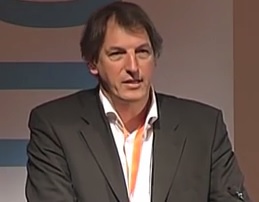
Volker Wiewer (pictured), who co-founded eCircle in 1999 and is now Teradata international vice president of marketing applications, said: “As one brand and one unified global organisation, Teradata can better deliver its market-leading solutions to help companies increase the value of their data and customer relationships.
“By any name, Teradata’s solutions are enabling marketers to more effectively manage operations, multi-channel campaigns and analytics, resulting in greater effectiveness and efficiency and increased ROI.”
Teradata will maintain its European HQ in Munich, with offices throughout the EMEA region including Denmark, France, Italy, The Netherlands, Poland, Spain and the UK. The company also has offices across the Americas, Asia and Japan, with more than 10,000 employees in over 40 countries.
This was first published on Decision Marketing. For more breaking news and opinion pieces on direct, data and digital marketing in the UK visit us at www.decisionmarketing.co.uk

Categories
Belgium Denmark Europe France Germany In the News Netherlands UK

Census shows door drop recovery continues

A major census has revealed that the door drop channel is continuing to see recovery across Europe and the UK and it remains a highly effective tool for marketerselma-logo-frei

The European Letterbox Marketing Association (ELMA) has published its third pan-European census of door drop media covering 22 markets and 180m households. The research found that the door drop market in Europe continued to recover from the recession with an increase of 2.2 per cent to 115 billion items in 2012. However, pressure on costs resulted in media spend falling marginally to €3.9bn; a decrease of 0.7 per cent compared to 2011.

Croatia was the only country to see an increase in the average number of door drops from 7 to 8 per week. The large economies of France, Germany and UK (244m items) all increased use of door drop, balancing the stabilisation and slight decline of volumes in the CEE and Scandinavian markets. UK households receive 5 door drops per week.

The largest volumes by country in 2012 continued to be Germany (23,300,000,000 million), France (21,177,000,000 million), Italy (12,000,000,000 million) and The Netherlands (11,020,000,000 million). The UK is ranked fifth with 7,214,000,000.

In a new development for the ELMA census, it looked at spend on door drop as a percentage of total advertising spend. The Nordic region, on the whole, allocates more spending to door drops with Denmark at 15%, followed by Finland (11%), France (9.6%) and Norway (8.1%). The lowest advertising spend on door drops is in the UK (1.5%), followed by Poland (1.8%) and Germany (2.0%).

Households in The Netherlands continue a three year trend of receiving the highest number of door drop items in Europe, although this fell by one to 35. Considerable distance remains between the highest and lowest users of door drop with Irish and Romanian households continuing to receive two, despite media spend on the medium rising in Ireland in the past year. The average number of items received by households across Europe remains 12.

Commenting on the research findings, Mark Davies, ELMA president and managing director of TNT Post DoorDrop Media UK, said: “The ELMA census confirms that the door drop sector in Europe has recovered from the recession but is experiencing pressure on price despite a welcome increase in volume.

“Our new data highlighting spend on door drops as a percentage of total advertising spend is illuminating and shows that the sector has to work hard to make its argument for a fair share of the advertising budget.

“Recent research from Experian, where 52% of household decision makers said door drops were the most important source of research about their purchases, followed by the internet at 24%, shows that door drop remains an, if not the most, effective tool for marketeers. It is our job to re-educate marketeers across Europe of the effectiveness and cost benefit of using door drops.”

ELMA represents the leading Pan-European distributors of print media, such as leaflets, flyers, catalogues, brochures, free newspapers and product samples. More than 130,000 people work for the companies within ELMA of which the vast majority are distributors. The aim of the association is to guarantee quality standards of member operations and promote the door drop channel.