Categories
Asia-Pacific Europe France In the News Italy Philippines Spain UK

New European digital campaign to promote Philippines

The Philippines Department of Tourism (PDOT) has announced a new campaign to further promote the Philippines through digital and social media platforms.

The campaign, launched by the GTI (Global Tourism Interface) Network – a group of marketers from around the world – across France, Italy, Spain and the UK, will aim for an increase in tourists from each of the destination markets.Visit the Phillipines (WEB)

Each market will utilise a digital press office and creation of individual social media pages –Facebook, Twitter and Instagram to engage with a wider audience. The strategy will also encompass blogger relations in order to reach key influencers in the travel, food and lifestyle sectors.

There will also be blogger press trips to further increase online presence. This will include an inaugural ‘Jeepney Roadtrip’ where an influential vlogger from each market will endeavour to reach the Philippines in a Filipino Jeepney, an iconic vehicle of the islands.

Other activity includes the placing of Facebook advertisements and co-branding with relevant trade partners in each market. Additionally, the campaign will be engaging the travel trade on joint-promotional activities to drive point-of-sale and actual bookings to the Philippines.

Philippines Tourism Promotions Board, chief operating officer, Domingo Ramon Enerio, said: “We know that many people research their holidays online now and we want to target our possible customers and give them the best and most up-to-date news about our islands. Additionally, we love the idea of visitors taking their own images and sharing them with other followers of our channels.

“We also look forward to working with bloggers whose honest accounts of their travels give their subscribers and followers great pleasure and provide lots of source information and tips for travellers to inspire their research.”

Visit: www.itsmorefuninthephilippines.com

Pictured are:
Back Row: Blaise Boresee, Interface Tourism Group France; Serena de Valle, Interface Tourism Group Italy; Chris Pomeroy, Interface Tourism Group Spain; Amanda Hills, Interface Tourism Group UK.

Front Row: Marie Venus Tan, officer in charge, Department of Tourism, Europe; Gael de la Porte, Interface Tourism Group, France; Domingo Ramon Enerio, chief operating officer, Tourism Promotions Board (TPB); assistant secretary Eugene Kaw, Philippines Department of Tourism.

Categories
Americas Europe France Germany In the News UK USA

New domain names set to revolutionise the way consumers search and shop online: report

A new report from NetNames – a major online brand protection and domain name management specialist – reveals how the web is set to transformDomains On Smartphone Shows Internet Websites And Information Addresses over the next five years. This follows the launch of thousands of new generic Top Level Domains (gTLDs) such as .london, .shop and .sport. The inaugural Internet 2020 report comprises a survey of 6,000 consumers and 400 business leaders across four countries (UK, Germany, France and the US) and expert input from ICANN and other industry leaders.

In its research, NetNames found that 80% of internet users think the new domain names will make them more likely to enter a company’s web address into their internet browser rather than use a search engine. The simplicity and specificity of the new web address endings will make internet navigation less reliant on search, as users will be able to use direct navigation much more frequently. Businesses agree with consumers on this point, with almost half (42%) of corporate respondents identifying the biggest benefit of the new domain names as better search and recognition on the internet.

Further to this, the survey revealed that over half (59%) of daily internet users think the new web address endings will make it easier for them to find things on the internet. This view was even stronger amongst businesses, with 89% stating they believed that new web address endings will help consumers find their website. The type of endings thought most likely to support this change were those related to relevant communities (e.g. .bank, .sport and .art), which were highlighted by 44% of consumers.

Search engines will need to evolve their algorithms to reflect the relevance of the new gTLDs and the web traffic they will generate, and offer direct search within the URL bar.  Some are already taking proactive steps in this area, with Google having set up a dedicated gTLD business unit to run the infrastructure of 100 new gTLDs.

Gary McIlraith, CEO at NetNames, explained why the new domain names are likely to impact search traffic: “The internet is vast and we need search engines in order to find the content we are looking for. In some ways, that is even truer with so much new internet real estate being created by the new gTLDs. However, in cases where they have a specific website destination in mind, the descriptive nature of new gTLDs will help internet users to memorise naming structures and facilitate browser-based navigation to the specific areas of the websites they are interested in, bypassing home pages. Consumers will therefore become less reliant on using a search engine to find a website.”

“The new domain names effectively represent the resetting of the internet. Brands need to consider which of the new domain names will provide the most business value and be most relevant to their customer base in order to strengthen their internet presence and remain relevant in the changing nature of the internet. By doing this, brands will be able to secure continued success in the internet of tomorrow.”

Categories
Denmark Europe France Germany In the News Netherlands UK

Teradata drops eCircle branding

Teradata has scrapped the eCircle name, one of the most well-known brands in European marketing automation, following the purchase of the business inTeradata-drops-eCircle-branding June 2012, and folded it into the main business.
The company insists Teradata eCircle had only ever been a “transitional name” and will now revert simply to Teradata.
At a product level, eCircle’s eC-messenger will be rebranded Teradata Digital Messaging Center, the label currently used in the rest of the world.
In addition to the organisational and product name changes, Teradata eCircle media services will become Teradata Interactive. Teradata Interactive is a full-service online marketing unit and is part of Teradata’s broad offering of business services.
Volker Wiewer (pictured), who co-founded eCircle in 1999 and is now Teradata international vice president of marketing applications, said: “As one brand and one unified global organisation, Teradata can better deliver its market-leading solutions to help companies increase the value of their data and customer relationships.
“By any name, Teradata’s solutions are enabling marketers to more effectively manage operations, multi-channel campaigns and analytics, resulting in greater effectiveness and efficiency and increased ROI.”
Teradata will maintain its European HQ in Munich, with offices throughout the EMEA region including Denmark, France, Italy, The Netherlands, Poland, Spain and the UK. The company also has offices across the Americas, Asia and Japan, with more than 10,000 employees in over 40 countries.
This was first published on Decision Marketing. For more breaking news and opinion pieces on direct, data and digital marketing in the UK visit us at www.decisionmarketing.co.uk

Categories
France In the News UK

GMA survey: French twice as likely as British to buy goods from other countries

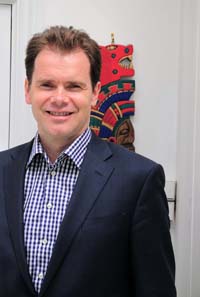
David Cole (pictured), MD of online research company fast.MAP, analyses French and English data from a new GMA survey.

Maybe it’s because we’re an island race that the British have parochial online buying habits. The French, for example, are twice as likely to buy sans frontiers.

But new research reveals it’s the British aversion to foreign languages which is a more likely cause.David Cole - May 2010 (WEB)

In mid-February, the GMA commissioned fast.MAP to ask panels of 550 French and 1,120 UK adults (each panel demographically representative of the country) about their online buying habits.

While both nations have enthusiastically embraced online purchase, the French are far more likely to buy from other countries – probably because they are also twice as likely to speak the language. Click here to view/download the chart.

While almost half of the French online buyers (47%) made cross-border purchases in the last year, in the UK only a quarter (22%) did so. Of these, 31% of the French, but only 17% of the British spoke the language of the country they bought from.

Two in 5 French buyers (38%) and 7 in 10 of the British (70%) bought these imported goods from a website translated into their own language, showing the importance of investment in multi-language website options to companies wishing to tap into foreign markets (especially those wishing to sell into the UK). Click here for the chart.

The French were also twice as likely to use – and have no problem using – online translation software (13% v 6%). And although twice as many of the French encountered problems using this software (5% v 2%), this is as expected since twice as many were using them.

The French were also twice as likely to enlist the aid of a bilingual friend (4% v 2%), but only one in 100 of either nationality was helped linguistically by the company they were buying from.

The French are to be congratulated on their persistence, since 8% of those who experienced language problems managed to complete the transactions compared with only 3% of the British.

French cross-border buyers are also far more open to a wide variety of sourcing routes than the British. Fewer than 1 in 10 British buyers use a wide mix of multi-national sourcing methods, while the French are more than twice as likely to use several.

In fact, the British seldom stray outside of four main sourcing channels – auction site; search engine; company website; and email. This implies that for those selling into the UK, concentration on these media would be cost-effective, while those selling into France would be wise to consider a wider mix of promotional media. (Chart )

Two in 5 UK buyers heard about foreign goods and services via auction sites (UK 39%; F17%). The second largest UK influence search engines, was by far the most important source route in France (UK 36%; 49% F).

Second most prevalent in France was company websites (F 27%: UK 23%) followed by email (F 26%; UK 16%), while 22% of French and 7% of British buyers of foreign goods used comparison websites.

Between one and two in ten French buyers also used: comparison websites (22%); online ads (13%); social network sites (13%); TV and radio ads (12%); print ads (10%); and exhibitions (9%).

To download a variety of fast.MAP/ DMA/ IPM/ IoF annual marketing/ fundraising tracking studies, click here. 

Categories
Belgium Denmark Europe France Germany In the News Netherlands UK

Census shows door drop recovery continues

A major census has revealed that the door drop channel is continuing to see recovery across Europe and the UK and it remains a highly effective tool for marketerselma-logo-frei

The European Letterbox Marketing Association (ELMA) has published its third pan-European census of door drop media covering 22 markets and 180m households. The research found that the door drop market in Europe continued to recover from the recession with an increase of 2.2 per cent to 115 billion items in 2012. However, pressure on costs resulted in media spend falling marginally to €3.9bn; a decrease of 0.7 per cent compared to 2011.

Croatia was the only country to see an increase in the average number of door drops from 7 to 8 per week. The large economies of France, Germany and UK (244m items) all increased use of door drop, balancing the stabilisation and slight decline of volumes in the CEE and Scandinavian markets. UK households receive 5 door drops per week.

The largest volumes by country in 2012 continued to be Germany (23,300,000,000 million), France (21,177,000,000 million), Italy (12,000,000,000 million) and The Netherlands (11,020,000,000 million). The UK is ranked fifth with 7,214,000,000.

In a new development for the ELMA census, it looked at spend on door drop as a percentage of total advertising spend. The Nordic region, on the whole, allocates more spending to door drops with Denmark at 15%, followed by Finland (11%), France (9.6%) and Norway (8.1%). The lowest advertising spend on door drops is in the UK (1.5%), followed by Poland (1.8%) and Germany (2.0%).

Households in The Netherlands continue a three year trend of receiving the highest number of door drop items in Europe, although this fell by one to 35. Considerable distance remains between the highest and lowest users of door drop with Irish and Romanian households continuing to receive two, despite media spend on the medium rising in Ireland in the past year. The average number of items received by households across Europe remains 12.

Commenting on the research findings, Mark Davies, ELMA president and managing director of TNT Post DoorDrop Media UK, said: “The ELMA census confirms that the door drop sector in Europe has recovered from the recession but is experiencing pressure on price despite a welcome increase in volume.

“Our new data highlighting spend on door drops as a percentage of total advertising spend is illuminating and shows that the sector has to work hard to make its argument for a fair share of the advertising budget.

“Recent research from Experian, where 52% of household decision makers said door drops were the most important source of research about their purchases, followed by the internet at 24%, shows that door drop remains an, if not the most, effective tool for marketeers. It is our job to re-educate marketeers across Europe of the effectiveness and cost benefit of using door drops.”

ELMA represents the leading Pan-European distributors of print media, such as leaflets, flyers, catalogues, brochures, free newspapers and product samples. More than 130,000 people work for the companies within ELMA of which the vast majority are distributors. The aim of the association is to guarantee quality standards of member operations and promote the door drop channel.