Categories
In the News UK USA

NSA ‘used Heartbleed for years’

Insiders at the US National Security Agency claim that the organisation has been exploiting the so-called Heartbleed bug for nearly two years to capture datansa-used-Heartbleed-for-years-300x212 on individuals instead of informing the rest of the online community.

The claims, denied by both NSA and White House chiefs, follow whistleblower Edward Snowden’s allegations that it was common practice for the organisation to deliberately introduce vulnerabilities to security software.
NSA spokeswoman Vanee Vines said in an email: “[The] NSA was not aware of the recently identified vulnerability in OpenSSL, the so-called Heartbleed vulnerability, until it was made public in a private-sector cyber security report. The reports that say otherwise are wrong.”
The Heartbleed bug could potentially affect hundreds of thousands of web and email servers which run open source software and has triggered major warnings across the world.
Online users are being urged to change all their passwords and usernames where possible as the bug went undetected for more than two years.
A blog post by Tumblr last week even urged people to “call in sick and take some time to change your passwords everywhere – especially your high-security services like email, file storage, and banking, which may have been compromised by this bug”.

Categories

In the News UK

Rogue call action plan revealed

The Government has outlined its plans to crackdown on nuisance calls, nearly three months after agreeing to bring forward legislation to tackle what hasBig Ben been branded a “public menace”.
Under a Ministry of Justice consultation, launching this week, claims management firms could face fines of up to 20% of their annual turnover. This means some could potentially be fined millions of pounds, up from the current £500,000 maximum that the Information Commissioner’s Office can impose.
This will bring it in line with fines for mis-selling, although even these are not worked out from annual turnover. Scottish & Southern Electric (SSE) has the dubious honour of holding the record for the largest fine for mis-selling; it was slapped with a £10.5m monetary penalty in April last year.
Next week regulations will be laid out in Parliament to simplify how Ofcom can share information with the ICO and the Insolvency Service, while later this year the Government will also launch a consultation on lowering the threshold for ICO action.
Justice Secretary Chris Grayling, said: “The scale of these fines shows just how serious we are about stopping them. The Claims Management Regulator already takes touch action against companies which break the rules, suspending and closing down rogue firms, but now these fines will give us an extra weapon to drive bad behaviour out of the industry.”
Commenting on the Government’s action plan, the DMA’s chief of operations Mike Lordan said: “The Government’s action plan is a welcome warning to the rogue companies responsible for the nuisance calls that cause misery for millions of people and severely damage the legitimate telemarketing industry.
“As the industry’s representative, the DMA will play a leading role in implementing the action plan. This will not only benefit people at home, but also the tens of thousands businesses that lawfully use telemarketing to win new customers and drive sales.”
This was first published on Decision Marketing. For more breaking news and opinion pieces on direct, data and digital marketing in the UK visit us at www.decisionmarketing.co.uk

Categories
In the News UK

Donors find most DM ‘very annoying’

Charities are being urged to rethink their marketing strategies after a damning report claimed most people find many DM techniques – including email,Donors-find-most-DM-‘very-annoying’ text message, and telemarketing activity – “very annoying”.
The research, published by consultancy nfpSynergy, will make worrying reading for many in sector as direct marketing is such a key discipline within most organisations. They spend over £300m a year – and rising – on direct mail alone, making it the third highest spending sector in the UK.
The study revealed that people are much more likely to donate to charities after viewing an ad campaign – either on TV or online – than through most DM techniques.
Doorstep fundraising is seen as the biggest villain, with 54% of people finding it very annoying, while 51% feel the same about being asked to donate on the telephone. A third (36%) get very annoyed when they are approached by a fundraiser on the street.
More modern methods are also unpopular, with 33% irritated by text messages and 20% unhappy with receiving emails.
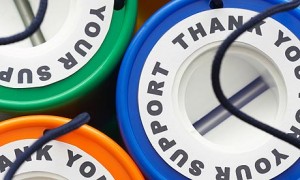
The new data, based on a survey of 1,000 British adults, did show that some fundraising methods sit well with the public. Over a third were happy to be asked to donate via collection tins and online ads, while around a quarter find face-to-face, radio and TV approaches acceptable.
Despite the high levels of annoyance, people said they did understand that some methods are effective ways to raise money. These included newspaper/magazine ads (42%), radio (40%), collection tins (35%) and direct mail appeals (31%).
When asked for their preferred way to be asked for money, just 2% would choose being asked on their doorstep and 1% on the telephone.
nfpSynergy chief Joe Saxton said: “The Holy Grail in fundraising must be to maximise the money raised and minimise the aggravation it causes. This data gives a good indication that we are not winning this battle.
“We as a fundraising sector have to start working out ways of reducing the annoyance from some of our most effective and successful methods. Charities must ensure people can opt out of telephone calls and being badgered on their doorstep and they have to look at their direct marketing. It’s no good thinking that people are happy with certain methods and leaving it at that if those are not the ones that can raise the big bucks.”
This was first published on Decision Marketing. For more breaking news and opinion pieces on direct, data and digital marketing in the UK visit us at www.decisionmarketing.co.uk

Categories
Denmark Europe France Germany In the News Netherlands UK

Teradata drops eCircle branding

Teradata has scrapped the eCircle name, one of the most well-known brands in European marketing automation, following the purchase of the business inTeradata-drops-eCircle-branding June 2012, and folded it into the main business.
The company insists Teradata eCircle had only ever been a “transitional name” and will now revert simply to Teradata.
At a product level, eCircle’s eC-messenger will be rebranded Teradata Digital Messaging Center, the label currently used in the rest of the world.
In addition to the organisational and product name changes, Teradata eCircle media services will become Teradata Interactive. Teradata Interactive is a full-service online marketing unit and is part of Teradata’s broad offering of business services.
Volker Wiewer (pictured), who co-founded eCircle in 1999 and is now Teradata international vice president of marketing applications, said: “As one brand and one unified global organisation, Teradata can better deliver its market-leading solutions to help companies increase the value of their data and customer relationships.
“By any name, Teradata’s solutions are enabling marketers to more effectively manage operations, multi-channel campaigns and analytics, resulting in greater effectiveness and efficiency and increased ROI.”
Teradata will maintain its European HQ in Munich, with offices throughout the EMEA region including Denmark, France, Italy, The Netherlands, Poland, Spain and the UK. The company also has offices across the Americas, Asia and Japan, with more than 10,000 employees in over 40 countries.
This was first published on Decision Marketing. For more breaking news and opinion pieces on direct, data and digital marketing in the UK visit us at www.decisionmarketing.co.uk