
Not too long ago, when print and direct mail were the only options, media buyers agonised over which titles offered enough readers with the desired target profile and which were most likely to present the product in an appropriate/ aspirational context.
Now the digital age has spawned a plethora of contact routes, media decisions tend to be hard-nosed, based on cost and immediate returns as much as ambiance and lingering impressions.
But, perhaps more than ever before, each medium has a personality, following and effect which gives recipients preconceptions about the message and affects the potential outcome.
The medium is the ’face’ of the sender and certainly, some media are more accepted and trusted in some circles than in others. So it makes sense to select ‘couriers’ with the personality and demeanour most likely to reach, be trusted and welcomed by the selected recipient groups.
Fundraisers research the media-mix
This is why the Institute of Fundraising partnered with online research company fast.MAP to launch research designed to revolutionise the way fundraisers select and use their medium / media-mix to ensure their message is trusted and welcomed by donors and prospects.
By tracking and benchmarking people’s perception of the eight main charity communication channels, the Fundraising Media DNA Report helps marketers to capitalise on the strengths (and compensate for the weaknesses) of the media they select, for example, to simultaneously reach both young and high-value donors.
Donors and prospects have surprisingly strongly-divergent views on every aspect of each contact medium (eg. trust, engage with, ease of response, clarity) which influence their attitude to the fundraising message it carries. Different groups (eg. high and low donors; each age group, men; women) respond differently.
Benchmarking reveals the dynamics between the media by analysing three broad characteristics
- Profile – the people engaging with a channel
- Personality – the attributes associated with each medium
- Action – people’s likely response or activity on receiving a communication.
These strands combine to form the DNA of each medium and give insights into its genetic make-up.
For example headline findings include:
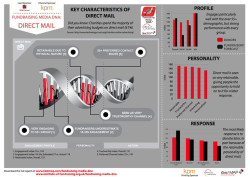
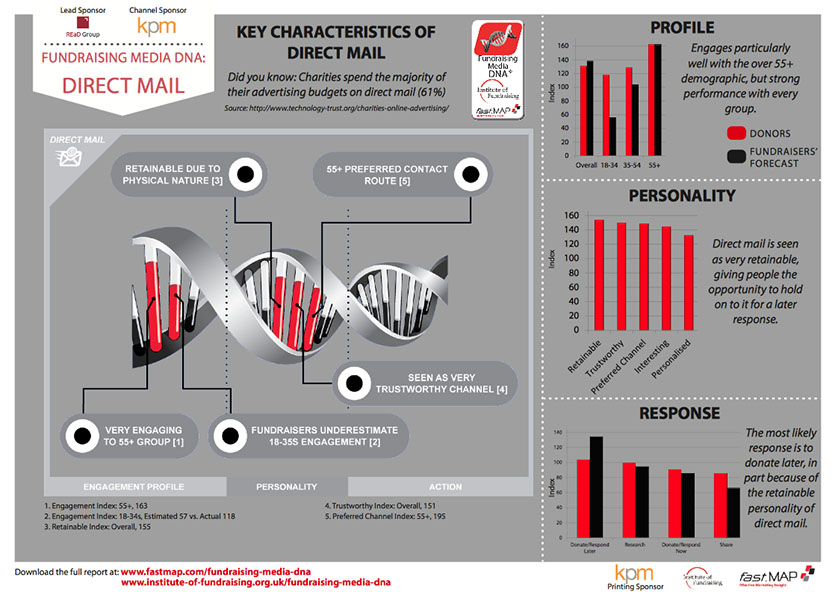
- Direct mail scores highly as trustworthy and among the over-55s
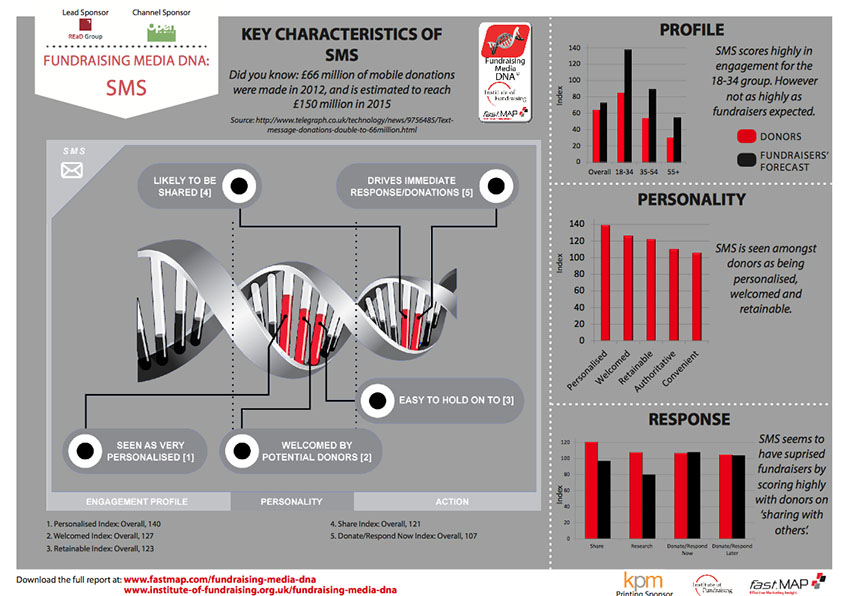
No 1. Click to enlarge - SMS indexes highly for being personal and welcoming
No 3. Click to enlarge 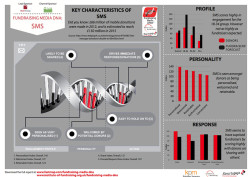
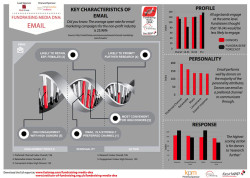
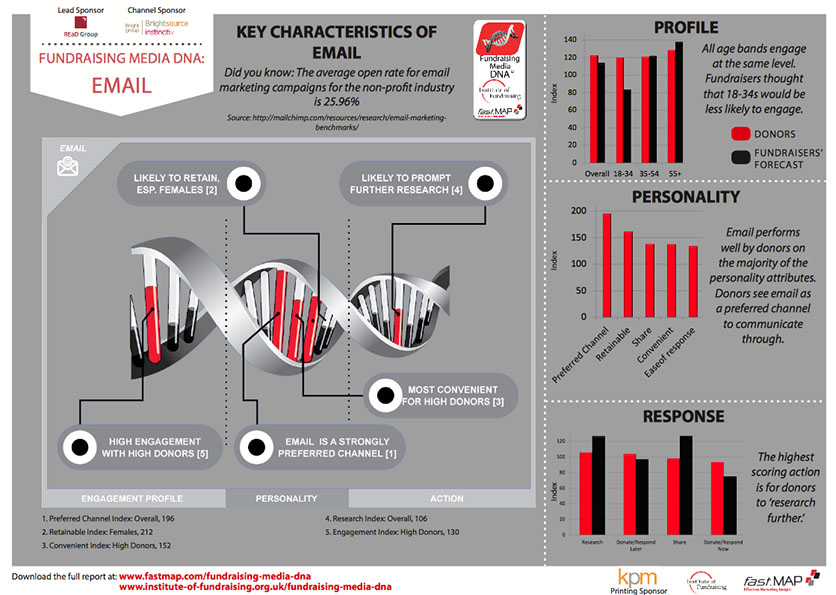
No 2. Click to enlarge - Email scores exceedingly highly as people’s preferred contact route
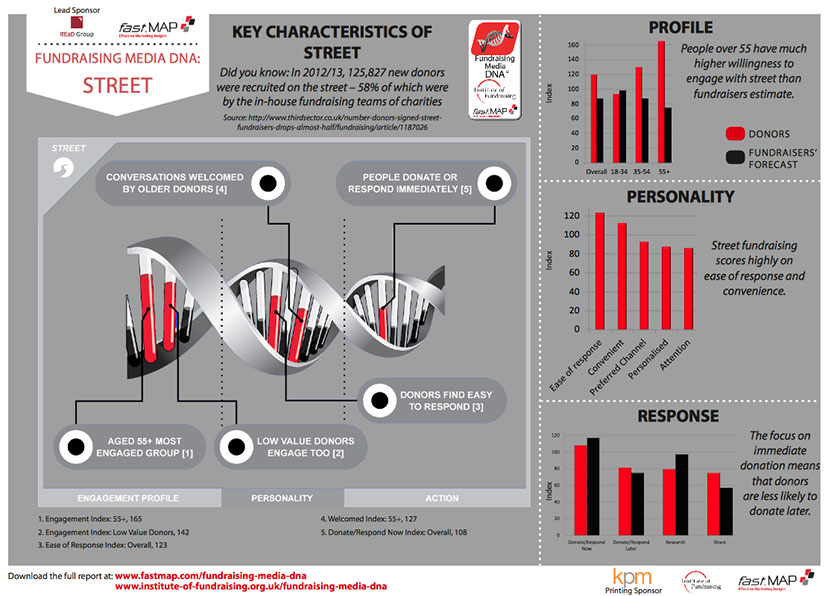
- Street and door-to-door fundraising’s strengths are convenience and ease of response
- Social media over-indexes among the under 34s and for sharing
- DRTV scores exceedingly highly as being memorable, attention-grabbing and for its appearance
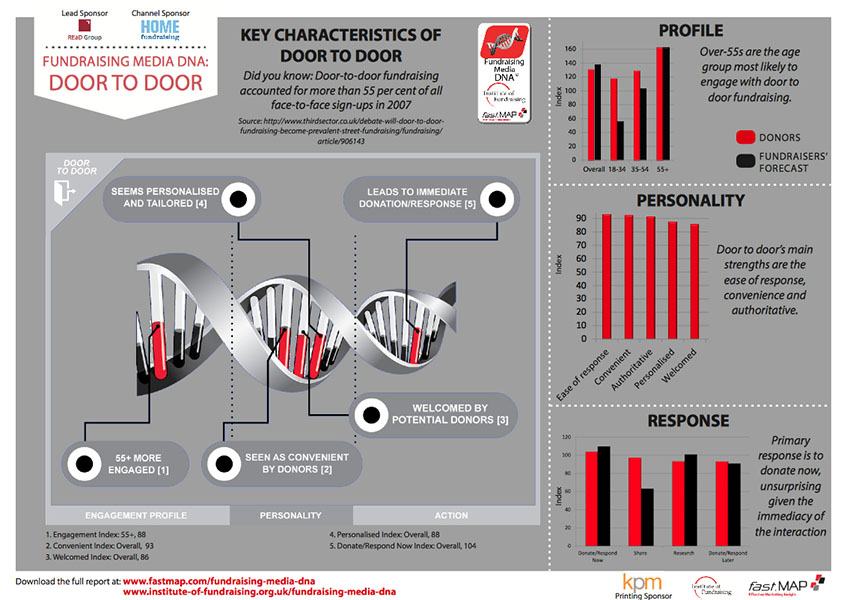
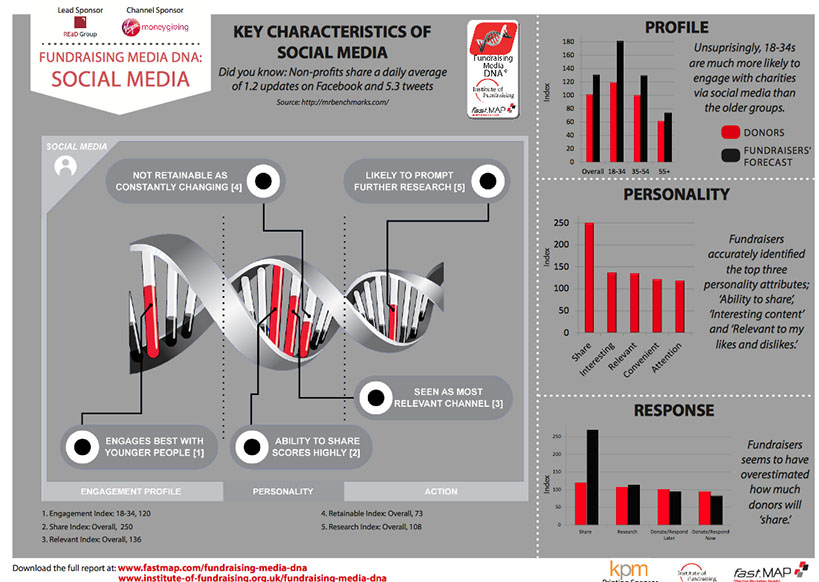
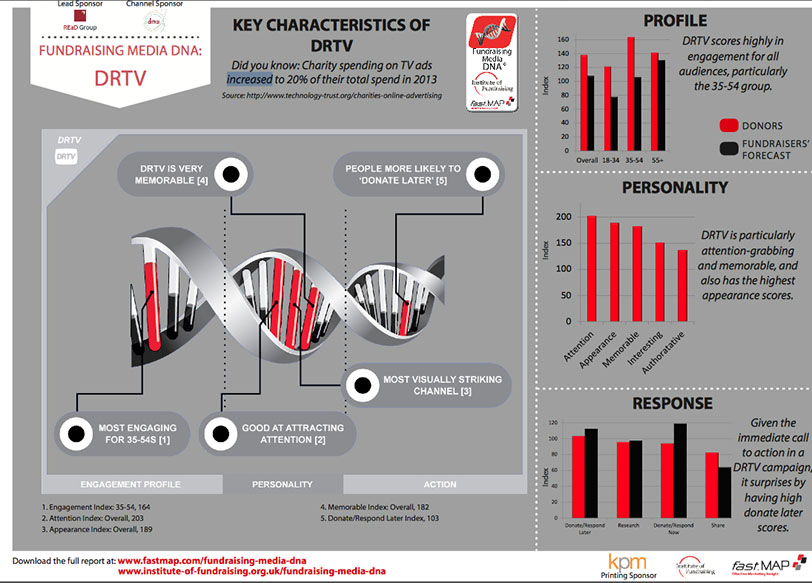
Almost 3,000 of the adults on fast.MAP’s exclusive 30,000-person panel were surveyed in the first wave of what will become an annual study to track people’s changing views.
This breadth of the data allows fundraisers to study media attributes in detail and learn, for example, that:
Women are more likely than men to hold onto an email (Retainable Index; Females, 212 vs Males, 116)
Men and 18 to 34-year-olds engage most with SMS (Engagement Index: Males, 70. Engagement Index: 18-34, 85)
Fundraisers significantly underestimate direct mail’s appeal among 18-34-year-olds (Engagement Index: Estimated 57 vs 118 Actual)
Low-donation givers score social media highest for convenience (Convenient Index: Low Donors, 137)
DRTV is universally regarded as authoritative (Authoritative Index: Overall, 137) and trustworthy (Trustworthy Index: Overall, 132)
If your interest has been aroused, download the Fundraising Media DNA Report and visit fast.MAP to access charity research case histories and fundraising data.